

 Librería Samer Atenea
 Kálamo Books
 Librería Elías (Asturias)
 Librería Kolima (Madrid)
 Librería Proteo (Málaga)
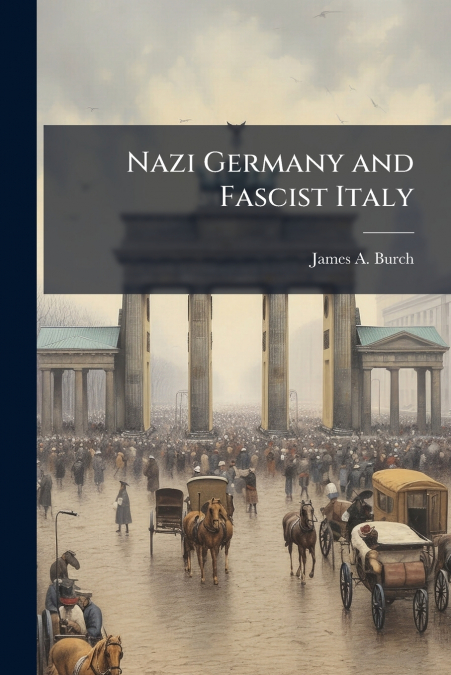
Italy’s invasion of Ethiopia in 1935 irrevocably changed the European geopolitical framework. After 1935, Mussolini would come increasingly under Hitler’s influence. Hitler would also begin to free Germany from the restrictions imposed by the Treaty of Versailles and Anglo-French encirclement. Using 1935 as a point of departure, this thesis traces the development of the Italo-German coalition, its strategic interests, outlook, commonalities, and areas of contention. The advance of Italo-German interests during from 1935 to the beginning of the Second World War--an era characterized by the Great Depression and appeasement--also created an aura of totalitarian success and collaboration. The Spanish Civil War (1936-1939), Rhineland (1936), Austria (1937), Czechoslovakia (1938), and Albania (1939) lent credence to this perception. This period was also critical to Germany and Italy’s efforts in building a coalition. Based on an examination of strategic interests and outlooks, this thesis analyzes Germany and Italy’s mutual efforts at developing their partnership. It also examines their strategic decision-making apparatus to determine their ability to effectively implement strategic decisions. Thus, this thesis examines the relationship between the Axis partners, the basis of their coalition based on strategic interests, and the organizational environment in their respective countries to develop and implement strategy.This work has been selected by scholars as being culturally important, and is part of the knowledge base of civilization as we know it. This work was reproduced from the original artifact, and remains as true to the original work as possible. Therefore, you will see the original copyright references, library stamps (as most of these works have been housed in our most important libraries around the world), and other notations in the work.This work is in the public domain in the United States of America, and possibly other nations. Within the United States, you may freely copy and distribute this work, as no entity (individual or corporate) has a copyright on the body of the work.As a reproduction of a historical artifact, this work may contain missing or blurred pages, poor pictures, errant marks, etc. Scholars believe, and we concur, that this work is important enough to be preserved, reproduced, and made generally available to the public. We appreciate your support of the preservation process, and thank you for being an important part of keeping this knowledge alive and relevant.





