

 Librería Samer Atenea
 Kálamo Books
 Librería Elías (Asturias)
 Librería Kolima (Madrid)
 Librería Proteo (Málaga)
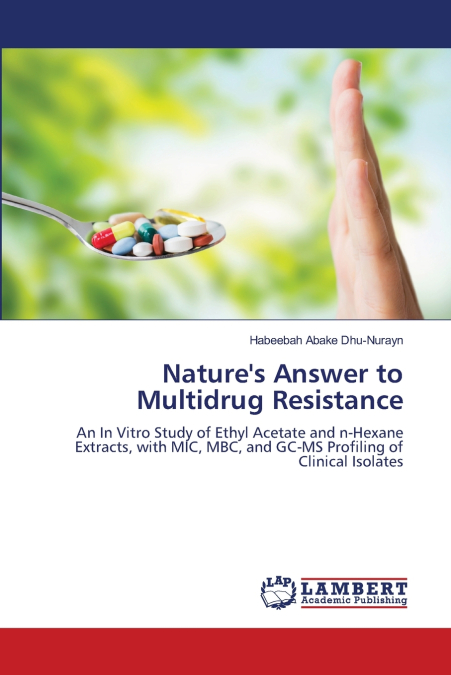
Antimicrobial resistance has been called a 'silent pandemic,' and Pseudomonas aeruginosa is one of its most notorious culprits: a resilient, biofilm-forming pathogen that shrugs off many frontline antibiotics. This book asks a practical question: can common foods help? Drawing on clinical isolates collected at the Kwara State University Clinic, the study tests ethyl-acetate and n-hexane extracts of ginger (Zingiber officinale) and carrot (Daucus carota) against multidrug-resistant Pseudomonas. It profiles the isolates’ resistance to 14 antibiotics, measures inhibition zones, and determines the minimum inhibitory and bactericidal concentrations of each extract. GC-MS analysis then reveals the bioactive compounds, including terpenoids, aldehydes, phenolics, and fatty acids, that may drive the antibacterial effect. The findings show that both plants are active, with ginger’s ethyl acetate extract the most effective (MIC 25 mg/mL; MBC 50 mg/mL; inhibition zone 19 mm). The book closes with recommendations for future work, including safety testing, purified-compound studies, and synergy with existing antibiotics. Essential reading for students, researchers, and curious minds.





