Inicio > Lenguas > Lingüistica > Natural Language Processing for Historical Texts
Natural Language Processing for Historical Texts

Natural Language Processing for Historical Texts

Michael Piotrowski

48,54 €
IVA incluido
Disponible
Editorial:
Springer Nature B.V.
Año de edición:
2012
Materia
Lingüistica
ISBN:
9783031010187
48,54 €
IVA incluido
Disponible

Selecciona una librería:

  • Librería Samer Atenea
  • Librería Aciertas (Toledo)
  • Kálamo Books
  • Librería Perelló (Valencia)
  • Librería Elías (Asturias)
  • Donde los libros
  • Librería Kolima (Madrid)
  • Librería Proteo (Málaga)

More and more historical texts are becoming available in digital form. Digitization of paper documents is motivated by the aim of preserving cultural heritage and making it more accessible, both to laypeople and scholars. As digital images cannot be searched for text, digitization projects increasingly strive to create digital text, which can be searched and otherwise automatically processed, in addition to facsimiles. Indeed, the emerging field of digital humanities heavily relies on the availability of digital text for its studies. Together with the increasing availability of historical texts in digital form, there is a growing interest in applying natural language processing (NLP) methods and tools to historical texts. However, the specific linguistic properties of historical texts -- the lack of standardized orthography, in particular -- pose special challenges for NLP. This book aims to give an introduction to NLP for historical texts and an overview of the state of the art in this field. The book starts with an overview of methods for the acquisition of historical texts (scanning and OCR), discusses text encoding and annotation schemes, and presents examples of corpora of historical texts in a variety of languages. The book then discusses specific methods, such as creating part-of-speech taggers for historical languages or handling spelling variation. A final chapter analyzes the relationship between NLP and the digital humanities. Certain recently emerging textual genres, such as SMS, social media, and chat messages, or newsgroup and forum postings share a number of properties with historical texts, for example, nonstandard orthography and grammar, and profuse use of abbreviations. The methods and techniques required for the effective processing of historical texts are thus also of interest for research in other domains. Table of Contents: Introduction / NLP and Digital Humanities / Spelling in Historical Texts / Acquiring Historical Texts / Text Encoding and Annotation Schemes / Handling Spelling Variation / NLP Tools for Historical Languages / Historical Corpora / Conclusion / Bibliography

Artículos relacionados

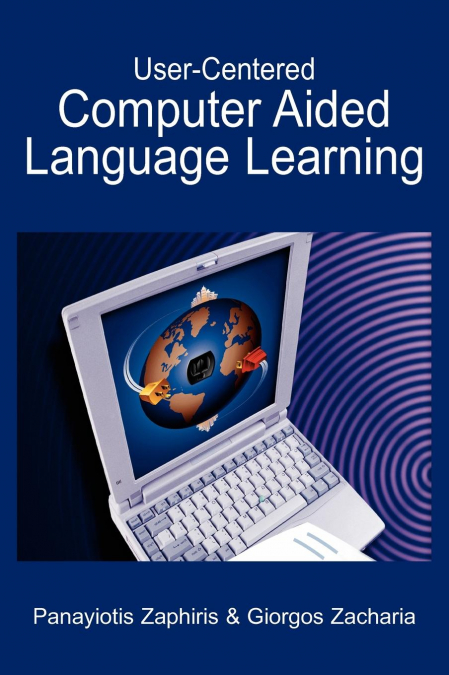
  • User-Centered Computer Aided Language Learning
    Giorgos Zacharia / Panayiotis Zaphiris
    ...
  • Deep Learning for Natural Language Processing
    Marco Antonio Valenzuela-Escárcega / Mihai Surdeanu
    ...
    Disponible

    47,60 €

  • Deep Learning for Natural Language Processing
    Marco Antonio Valenzuela-Escárcega / Mihai Surdeanu
    ...
  • Lecciones sobre espinosa medrano
    Luis Jaime Cisneros Vizquerra
    La obra de Juan de Espinosa Medrano, apodado en su tiempo «El Lunarejo» (c. 1629-1688), fue uno de los mayores focos de interés académico de Luis Jaime Cisneros (1921-2011). En 1980 aparecieron sus primeros trabajos dedicados a estudiar los textos capitales de Espinosa Medrano (el Apologético en favor de don Luis de Góngora, la Panegírica declamación por la protección de las ci...
    Disponible

    17,63 €

  • Lyre Book
    Matthew Kilbane
    Redefines modern lyric poetry at the intersection of literary and media studies.In The Lyre Book, Matthew Kilbane urges literary scholars to consider lyric not as a genre or a reading practice but as a media condition: the generative tension between writing and sound. In addition to clarifying issues central to the study of modern poetry--including its proximity to popular song...
    Disponible

    50,84 €

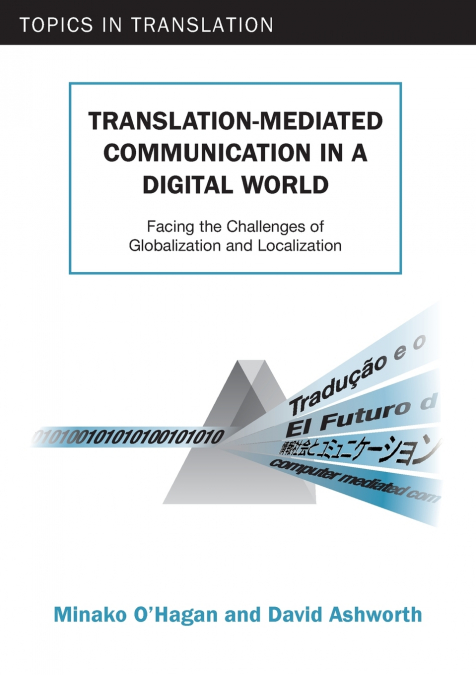
  • Translation-mediated Communication in a Digital World
    David Ashworth / Minako O’Hagan
    The Internet is accelerating globalization by exposing organizations and individuals to global audiences. This in turn is driving teletranslation and teleinterpretation, new types of multilingual support, which are functional in digital communications environments. The book describes teletranslation and teleinterpretation by exploring a number of key emerging contexts for langu...
    Disponible

    45,19 €

Otros libros del autor

  • Natural Language Processing for Historical Texts
    Michael Piotrowski
    More and more historical texts are becoming available in digital form. Digitization of paper documents is motivated by the aim of preserving cultural heritage and making it more accessible, both to laypeople and scholars. As digital images cannot be searched for text, digitization projects increasingly strive to create digital text, which can be searched and otherwise automatic...
    Disponible

    51,00 €