
Inicio > Lenguas > Lingüistica > Natural Language Generation
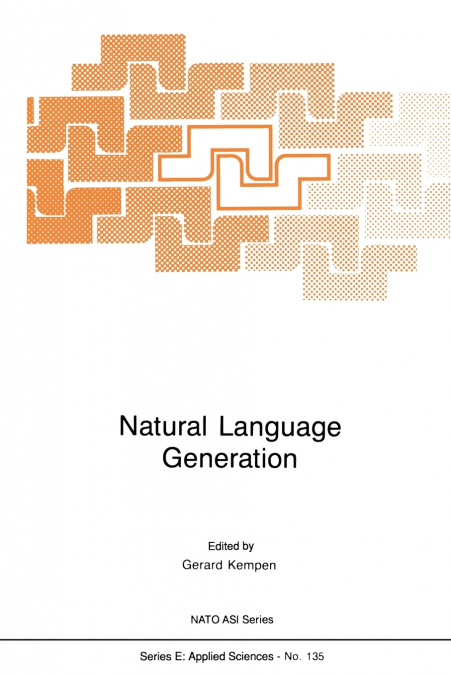
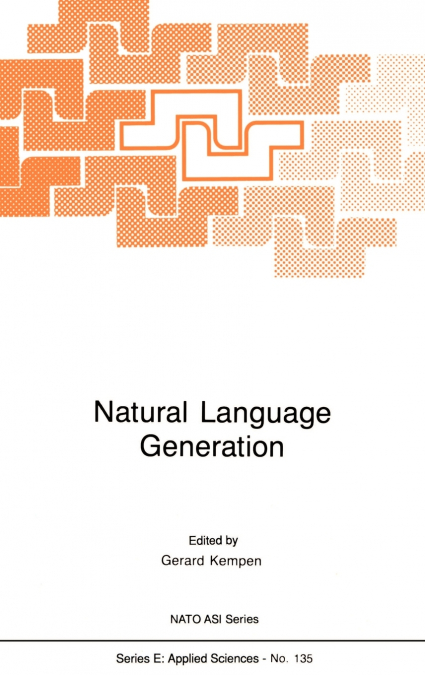
Natural Language Generation

Natural Language Generation

G.A. Kempen

402,17 €
IVA incluido
Consulta disponibilidad
Editorial:
Springer Nature B.V.
Año de edición:
1987
Materia
Lingüistica
ISBN:
9789024735587

Selecciona una librería:

  • Librería Samer Atenea
  • Librería Aciertas (Toledo)
  • Kálamo Books
  • Librería Perelló (Valencia)
  • Librería Elías (Asturias)
  • Donde los libros
  • Librería Kolima (Madrid)
  • Librería Proteo (Málaga)

Authors and Participants xi I Pragmatic Aspects 1 1. Some pragmatic decision criteria in generation 3 EduardH. Hovy 2. How to appear to be conforming to the ’maxims’ even if you prefer to violate them 19 Antlwny Jameson 43 3. Contextual effects on responses to misconceptions Kathleen F. McCoy 4. Generating understandable explanatory sentences 55 Domenico Parisi & Donatella Ferrante 5. Toward a plan-based theory of referring actions 63 Douglas E. Appelt Generating referring expressions and pointing gestures 71 6. Norben Reithinger II Generation of Connected Discourse 83 7. Rhetorical Structure Theory: description and construction of text structures 85 William C. Mann & Sandra A. Tlwmpson 8. Discourse strategies for describing complex physical objects 97 Cecile L. Paris & Kathleen R. McKeown 9. Strategies for generating coherent descriptions of object movements in street scenes 117 Hans-Joachim Novak 133 10. The automated news agency: SEMTEX - a text generator for German Dietmar ROsner 149 11. A connectionist approach to the generation of abstracts KOiti Hasida, Shun Ishizald & Hitoshi Isahara III Generator Design 157 159 12. Factors contributing to efficiency in natural language generation DavidD. McDonald, Marie M. Vaughan & James D. Pustejovsky 183 13. Reviewing as a component of the text generation process Masoud Yazdani A French and English syntactic component for generation 191 14. Laurence Danlos KING: a knowledge-intensive natural language generator 219 15. Paul S. Jacobs vii 231 IV Grammars and Grammatical Formalisms 233 16. The relevance of Tree Adjoining Grammar to generation Aravind K.

Artículos relacionados

  • User-Centered Computer Aided Language Learning
    Giorgos Zacharia / Panayiotis Zaphiris
    ...
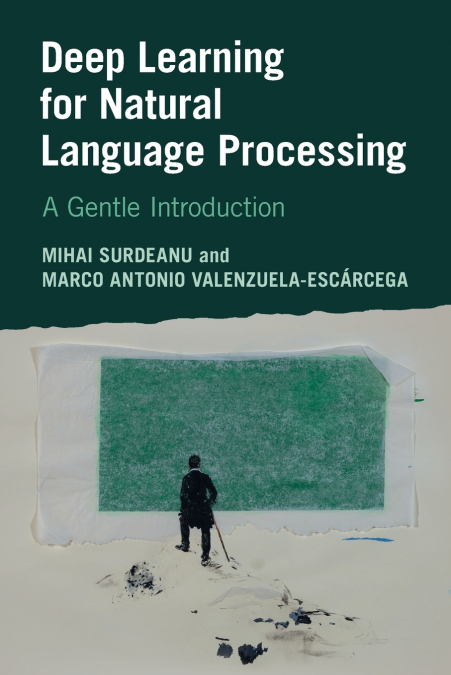
  • Deep Learning for Natural Language Processing
    Marco Antonio Valenzuela-Escárcega / Mihai Surdeanu
    ...
    Disponible

    47,60 €

  • Deep Learning for Natural Language Processing
    Marco Antonio Valenzuela-Escárcega / Mihai Surdeanu
    ...
  • Lecciones sobre espinosa medrano
    Luis Jaime Cisneros Vizquerra
    La obra de Juan de Espinosa Medrano, apodado en su tiempo «El Lunarejo» (c. 1629-1688), fue uno de los mayores focos de interés académico de Luis Jaime Cisneros (1921-2011). En 1980 aparecieron sus primeros trabajos dedicados a estudiar los textos capitales de Espinosa Medrano (el Apologético en favor de don Luis de Góngora, la Panegírica declamación por la protección de las ci...
    Disponible

    17,63 €

  • Lyre Book
    Matthew Kilbane
    Redefines modern lyric poetry at the intersection of literary and media studies.In The Lyre Book, Matthew Kilbane urges literary scholars to consider lyric not as a genre or a reading practice but as a media condition: the generative tension between writing and sound. In addition to clarifying issues central to the study of modern poetry--including its proximity to popular song...
    Disponible

    50,84 €

  • Translation-mediated Communication in a Digital World
    David Ashworth / Minako O’Hagan
    The Internet is accelerating globalization by exposing organizations and individuals to global audiences. This in turn is driving teletranslation and teleinterpretation, new types of multilingual support, which are functional in digital communications environments. The book describes teletranslation and teleinterpretation by exploring a number of key emerging contexts for langu...
    Disponible

    45,19 €

Otros libros del autor