
NATO’s Meaning and Existence

NATO’s Meaning and Existence

Yunus Emre Ozigci

125,15 €
IVA incluido
Disponible
Editorial:
Vernon Art and Science
Año de edición:
2026
Materia
Relaciones internacionales
ISBN:
9798261600626
125,15 €
IVA incluido
Disponible

Selecciona una librería:

  • Librería Samer Atenea

  • Kálamo Books
  • Librería Elías (Asturias)
  • Librería Kolima (Madrid)
  • Librería Proteo (Málaga)

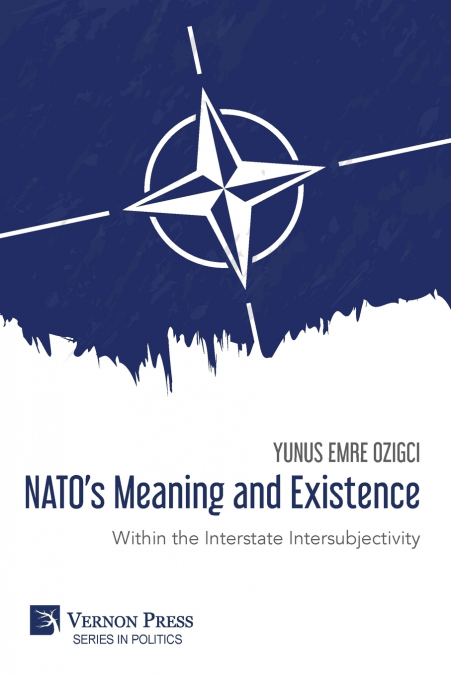
Entities, events, phenomena and states of affairs of the sphere of international relations/ interstate interactions are purely intersubjective recognisances. Their 'subjects', in particular the States, are themselves pre-theoretically, intersubjectively co-constituted and temporalised, ascribed with subject qualities especially in their 'interactions' and experienced as such through intentional acts of perceiving, defining, remembering, anticipating, judging and so on. The said ascription includes their own community-building dynamics within an also intersubjectively given environment of interstate interactions. NATO is one of the most prominent State-communities. It has not only been defined by but has also been a constituent of the environment in which it existed. It gained its meaning from its existential relationship with its constituent State-subjects, its interactional counterparts and the meaningful appearance of its 'environment', and also made part of their meaningful appearances. NATO existed through transformations of environment and counterpart(s), continuing to be valid and viable in different identities and temporalisations. It is currently being re-identified and re-temporalised face to a new transformation of the interstate environment. Studying NATO requires co-studying its constituents, counterparts and environment in their substances and temporal states as they are given pre-theoretically, immediately, intersubjectively, which form parts of an expanded, existential kind of reality lived and lived-within by true subjects, replacing the objectivity in its narrow sense with meaningfulness, appearing as objectivity itself on the ground of a universal, pre-theoretical, immediate familiarity and intelligibility ground. Studying NATO 'as is' in its identities and temporalisations with its environment, constituents and counterparts requires access to that pre-theoretical ground of meaningful, intersubjective appearances. Here, phenomenology and the phenomenological ontology offer useful concepts and tools which, due to the particular nature of the IR field, complement each other for conducting such a study of the 'being and time' of NATO. 6

Artículos relacionados

  • Realism in Practice
    The purpose of this book is to appraise the current relevance and validity of realism as an interpretative tool in contemporary International Relations. All chapters of the book are animated by a theoretical effort to define the conceptual aspects of realism and attempt to establish whether the tradition still provides the necessary conceptual tools to scholars.The chapters add...
    Disponible

    20,36 €

  • Predicting gender violence in India
    Shritha K Vasudevan
    In this provocative new book, Shritha Vasudevan argues that feminist international relations (IR) theory has inadvertently resulted in a biased worldview, the very opposite of what feminist IR set out to try to rectify. This book contests theoretical presumptions of Western feminist IR and attempts to reformulate it in contexts of non-Western cultures. Vasudevan deftly utilizes...
  • Contemporary security issues in Africa
    Isiaka Alani Badmus / Lere Amusan
    In volume, an emerging generation of African scholars examines specific states in Africa where instability is the order of the day. Considerations of African instability are highly relevant in today’s world, where one examines the types of regimes that were put in place after the Cold War and their effects on Africa. Multiparty systems introduced in Africa, rather than bringing...
  • Chronicles of the first and second chechen wars
    Ilya Milyukov
    Presented by Russian author and attorney Ilya Milyukov, Chronicles of the First and Second Chechen War presents the main events of the First (1994-1996) and Second (1999-2009) Wars in Chechnya, Russia’s deadliest conflicts since World War II. The First War began in December 1994 and lasted for one year and nine months, ending in August 1996. There were two major urban battles -...
  • Political instability in Africa
    Isiaka Alani Badmus / Lere Amusan
    This book offers broad-gauged analyses of the causes, nature, and changing patterns of armed conflict in Africa as well as the reasons for these patterns. It also situates conflicts that have been haunting the African continent since the time of decolonization within the various theoretical schools such as 'new war,' 'economic war,' 'neo-patrimonial,' and 'globalization.' It be...
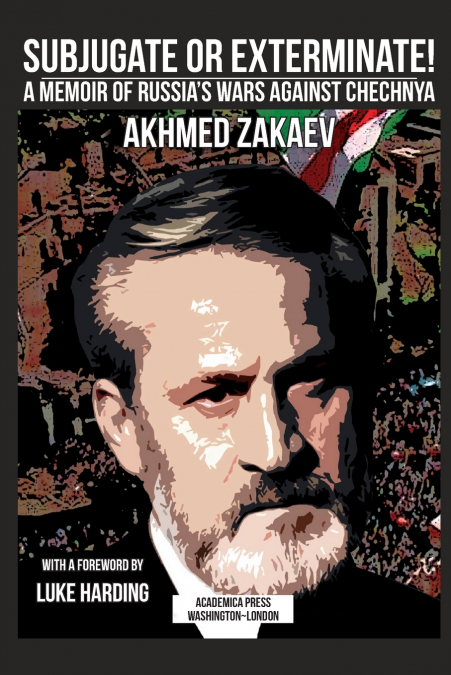
  • Subjugate or exterminate!
    Akhmed Zakaev / Arch Tait
    Foreword by Luke HardingAkhmed Zakaev is a symbol of the indomitable will of the Chechen nation. In this important memoir, he tells the story of the Chechen struggle as he experienced it, describing the conflict in human terms and providing a detailed documentary record of little known or badly understood events that will be of benefit to historians for generations to come.- Da...
    Disponible

    41,63 €