
Inicio > Matemáticas y ciencia > Química > Nano-Biofortification for Human and Environmental Health
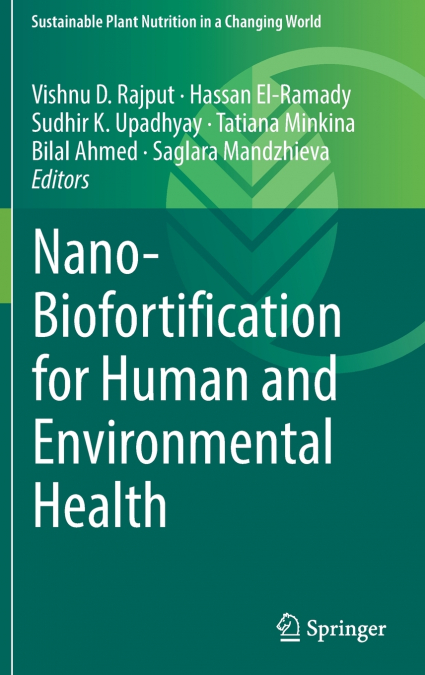
Nano-Biofortification for Human and Environmental Health

Nano-Biofortification for Human and Environmental Health


221,23 €
IVA incluido
Consulta disponibilidad
Editorial:
Springer Nature B.V.
Año de edición:
2023
Materia
Química
ISBN:
9783031351464

Selecciona una librería:

  • Librería Samer Atenea
  • Librería Aciertas (Toledo)
  • Kálamo Books
  • Librería Perelló (Valencia)
  • Librería Elías (Asturias)
  • Donde los libros
  • Librería Kolima (Madrid)
  • Librería Proteo (Málaga)

Nanotechnology has shown great potential to alleviate increasing pressure to meet food needs for our increasing human population, Novel agricultural innovations are required to enhance the health of edible crops and per unit area yield without impacting the associated environment in a negative way. Recent advancements in nanotechnology-based agricultural solutions have proven to help overcome the problems in agriculture that are associated with run-off of essential fertilizers from agricultural soils, low nutrient accumulation by crops, as well as to control insects, pests, and seasonal biotic factors, treatment of wastewater used for irrigation, plant uptake of xenobiotics (heavy metals, pesticides, industrial chemicals, drugs, and so on) that may be present in contaminated soils. Additionally, the consumption of such food crops may result in malnourishment and plant-mediated transfer of toxic substances among humans especially in underprivileged and rural populations.  Agents to stimulate plant growth include various types of nanomaterials such as carbon nanotubes, metal, and metal-oxide nanoparticles. Applications of particular nutrients or elements in crop plants can be shown to aid human nourishment (either by directly inducing its uptake or indirectly through enhancing the intracellular levels of other associated elements that ultimately boost the synthesis of the desired nutrient in plants). It is also important to consider the competence and fate of nanomaterials in soil ecosystems. The entry route of nanomaterials into the environment includes both natural and anthropogenic sources. In order to achieve sustainable and safe use of nanotechnological products in agriculture, similar environmental conditions must be simulated on lab scale with the careful selection of organisms related to agriculture. Thus, emphasis should be placed on the judicial use of nano-enabled products without compromising the sustainability of the environment and human health.  This comprehensive book highlights recent field research as well as contributions from academicians in the lab. This book addresses the major aspects related to nanotechnology, biofortification of crops, and human and environmental health.


Artículos relacionados

  • Suzuki-Miyaura Cross-Coupling Reaction and Potential Applications
    Suzuki–Miyaura cross-coupling remains a powerful tool in organic synthesis for C–C bond formation and has various industrial applications, for example, the synthesis of pharmaceuticals and materials. Intensive research efforts are being made into finding ways of improving and expanding the scope of this process, and the development of more efficient catalytic systems for this e...
    Disponible

    67,89 €

  • Catalysis for Low Temperature Fuel Cells
    Today, the development of active and stable catalysts still represents a challenge to overcome in the research field of low temperature fuel cells. Operation at low temperatures demands the utilization of highly active catalysts to reduce the activation energy of the electrochemical reactions involved at the electrodes, and thus obtain practical performances and high efficienci...
    Disponible

    59,74 €

  • Trends in Microextraction Techniques for Sample Preparation
    Micro-extraction techniques in sample preparation are gaining interest among analytical chemists as they comply with green analytical chemistry demands and ensure environmental protection and public safety. Savings in cost and time are considered as valuable benefits by using novel micro-extraction approaches in sample handling. Selectivity, sensitivity and lower detection limi...
    Disponible

    59,87 €

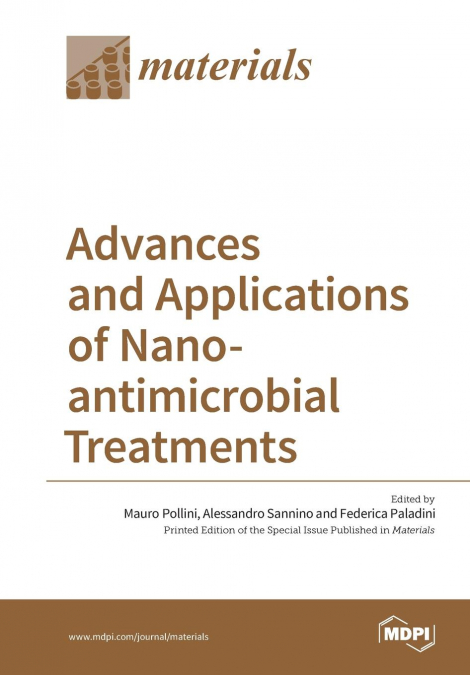
  • Advances and Applications of Nano-antimicrobial Treatments
    Nowadays, great concerns are associated with the resistance demonstrated by many microorganisms towards the conventional antibiotic therapies. The failure of traditional antimicrobials, and the increasing healthcare costs, have encouraged scientific research and the development of novel antimicrobial agents. Particularly, there is a great deal of interest in nanotechnologies an...
    Disponible

    51,68 €

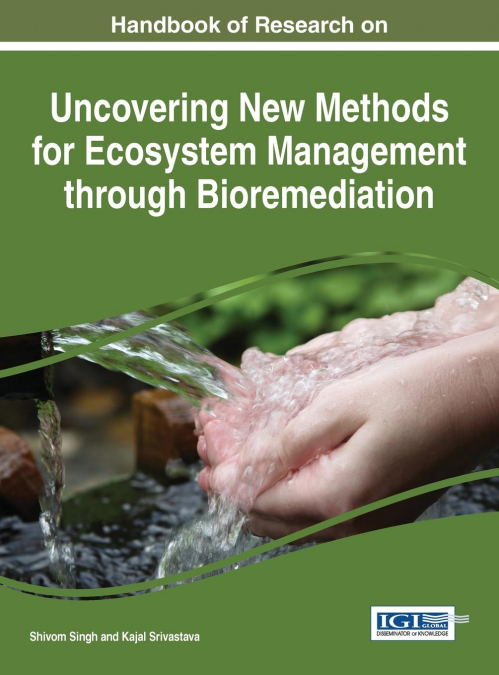
  • Handbook of Research on Uncovering New Methods for Ecosystem Management through Bioremediation
    Kajal Srivastava / Shivom Singh
    Maintaining and preserving the environment is a crucial consideration in an era where climate change and rising sea levels are common knowledge. It is important for researchers and developers alike to explore potential solutions for a steadily warming world. The Handbook of Research on Uncovering New Methods for Ecosystem Management through Bioremediation focuses on the agricul...
  • Structural Design and Properties of Coordination Polymers
    The assembly of organic ligands and metal centres yields coordination polymers, many of which find applications in conductivity, catalysis, magnetism, gas sorption, biological sensing and luminescence. The structure and topology of coordination polymers may be manipulated by changing the reaction conditions, leading to a large variety of structurally and topologically unique pr...
    Disponible

    43,77 €