
Mutual Aid

Mutual Aid

Mutual Aid

Peter Kropotkin

20,72 €
IVA incluido
Disponible
Editorial:
Cosimo
Año de edición:
2009
Materia
Ética y filosofía moral
ISBN:
9781605206639
20,72 €
IVA incluido
Disponible

Selecciona una librería:

  • Librería Samer Atenea
  • Librería Aciertas (Toledo)
  • Kálamo Books
  • Librería Perelló (Valencia)
  • Librería Elías (Asturias)
  • Donde los libros
  • Librería Kolima (Madrid)
  • Librería Proteo (Málaga)

Oscar Wilde deemed his life 'perfect,' and described him as a man with 'a soul of that beautiful white Christ which seems coming out of Russia.' He is PETER ALEXEYEVICH KROPOTKIN (1842-1921), communist advocate and 'anarchist prince.'Mutual Aid: A Factor of Evolution, first published in 1902, is his best known book. Written as a series of essays for a British literary journal, this intriguing work filters concepts of evolution through Kropotkin’s appreciation for altruism and anarchy, positing cooperation not merely as a beneficial political concept but as an approach that has been-and will continue to be-vital to the long-term survival of humanity.Kropotkin explores 'mutual aid' among 'animals,' 'savages,' 'barbarians,' and in the medieval and modern world, and also discusses nesting associations, checks to overmultiplication, adaptations to avoid competition, the origin of the family, the origin of the guilds, and other related issues.Anyone interested in the science of evolution and its influence on the shape of human societies will find this a fascinated read.


Artículos relacionados

  • Ka Ab Ba Building The Lighted Temple
    Dr Terri R. Nelson / Dr Terri RNelson
    The book KaAbBa Building The Lighted Temple/Metaphysical Keys to the Tree of Life draws a circle that is inclusive of the Afrikan origin of the Ancient Kemetic/Egyptian wisdom. It reveals the undeniable root and link of Ancient Africa to all the religious systems that would develop worldwide. This book is explosive in its power to convey the meaning of KaAbBa, the Medu Neter  (...
    Disponible

    37,41 €

  • Technoethics and the Evolving Knowledge Society
    Rocci Luppicini
    Recently, there has been a major push to rediscover the ethical dimension of technology across the sciences, social sciences, and humanities. Technoethics and the Evolving Knowledge Society: Ethical Issues in Technological Design, Research, Development, and Innovation examines human processes and practices connected to technology embedded within social, political, and moral sph...
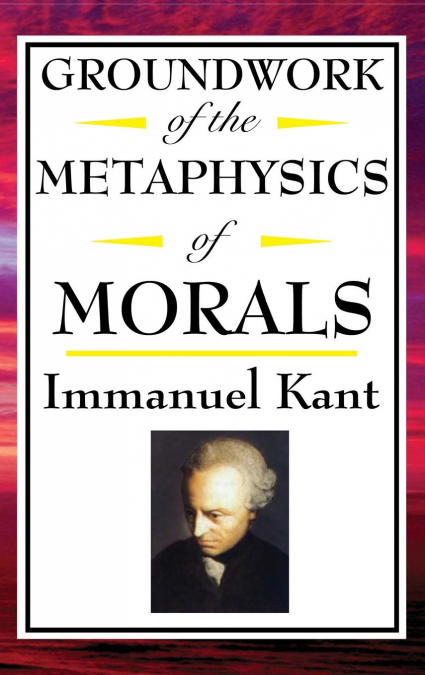
  • Kant
    Immanuel Kant
    Kant’s Groundwork of the Metaphysics of Morals is one of the most important works in modern moral philosophy. It belongs beside Plato, Aristotle, Machiavelli, and Hobbes. Here Kant sets out to articulate and defend the Categorical Imperative - the fundamental principle that underlies moral reasoning - and to lay the foundation for a comprehensive account of justice and human vi...
  • On the Duty of Civil Disobedience
    HENRY DAVID THOREAU
    Civil Disobedience argues that citizens should not permit their governments to overrule their consciences, and that they have a duty to avoid allowing their acquiescence to enable the government to make them the agents of injustice. Thoreau was motivated in part by his disgust with slavery and the Mexican-American War, but the sentiments he expresses here are just as pertinent ...
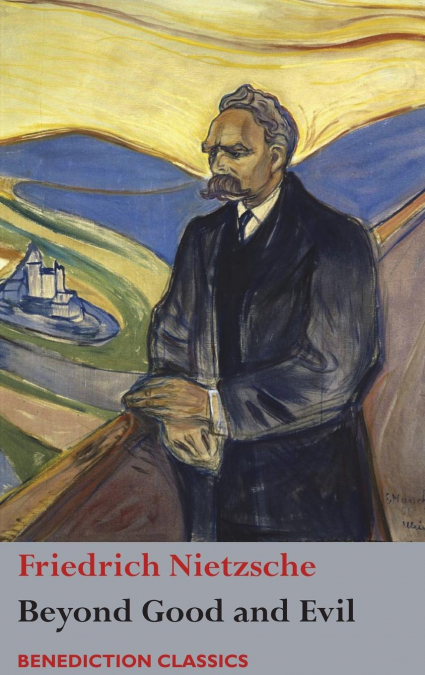
  • Beyond Good and Evil
    Friedrich Nietzsche
    Nietzsche, though primarily a philosopher, wrote widely on art, philology, history, religion, tragedy, culture, and science.  In 1886, at the height of his powers, he published Beyond Good and Evil.  Here he examines much of the best of human thought--dogmatic philosophy, Judeo-Christian morality, science and democracy – and finds it lacking.  Rejecting “slave-morality” he pres...
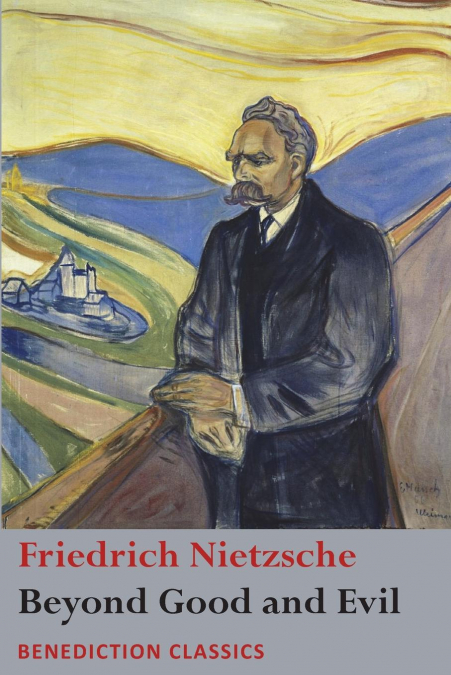
  • Beyond Good and Evil
    Friedrich Nietzsche
    Nietzsche, though primarily a philosopher, wrote widely on art, philology, history, religion, tragedy, culture, and science.  In 1886, at the height of his powers, he published Beyond Good and Evil.  Here he examines much of the best of human thought--dogmatic philosophy, Judeo-Christian morality, science and democracy – and finds it lacking.  Rejecting “slave-morality” he pres...
    Disponible

    9,99 €

Otros libros del autor

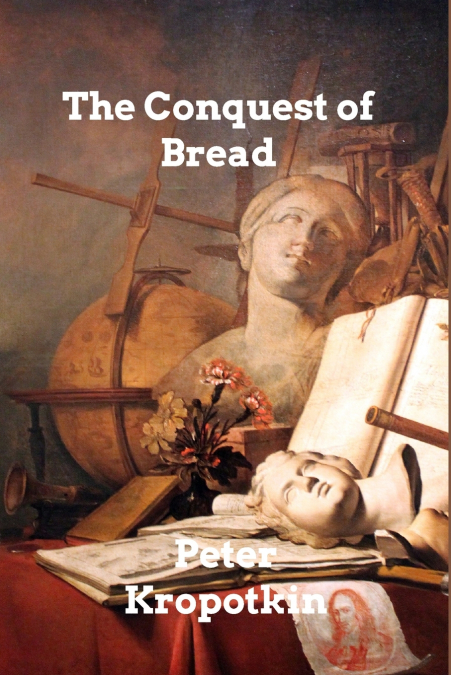
  • The Conquest of Bread
    Peter Kropotkin
    The Conquest of Bread also known colloquially as The Bread Book, is an 1892 book by the Russian anarcho-communist Peter Kropotkin. Originally written in French, it first appeared as a series of articles in the anarchist journal Le Révolté. It was first published in Paris with a preface by Élisée Reclus, who also suggested the title. Between 1892 and 1894, it was serialized in p...
  • The Conquest of Bread
    Peter Kropotkin
    The Conquest of Bread (1892) by Peter Kropotkin is a foundational anarchist text that argues for a society based on anarchist communism. Kropotkin criticizes capitalism and the state for creating artificial scarcity and inequality despite abundant productive capacity. He contends that wealth is collectively produced and therefore should be shared according to need, not owned pr...
    Disponible

    19,15 €

  • The Conquest of Bread
    Peter Kropotkin
    The Conquest of Bread (1892) by Peter Kropotkin is a foundational anarchist text that argues for a society based on anarchist communism. Kropotkin criticizes capitalism and the state for creating artificial scarcity and inequality despite abundant productive capacity. He contends that wealth is collectively produced and therefore should be shared according to need, not owned pr...
  • Mutual Aid
    Peter Kropotkin
    Mutual Aid: A Factor of Evolution (1902) by Peter Kropotkin argues that cooperation, rather than competition alone, is a major force in evolution and social progress. Drawing on examples from animal life, early human societies, medieval guilds, and modern communities, Kropotkin shows that mutual support enhances survival and well-being. He challenges Social Darwinist ideas that...
    Disponible

    24,10 €

  • Mutual Aid
    Peter Kropotkin
    Mutual Aid: A Factor of Evolution (1902) by Peter Kropotkin argues that cooperation, rather than competition alone, is a major force in evolution and social progress. Drawing on examples from animal life, early human societies, medieval guilds, and modern communities, Kropotkin shows that mutual support enhances survival and well-being. He challenges Social Darwinist ideas that...
  • Memoirs of a Revolutionist
    Peter Kropotkin
    Memoirs of a Revolutionist is Peter Kropotkin’s autobiographical account of his journey from a Russian aristocrat and army officer to a leading anarchist thinker. The book traces his disillusionment with autocratic rule, his growing sympathy for peasants and workers, and his involvement in revolutionary activities across Russia and Europe. Kropotkin reflects on imprisonment, ex...
    Disponible

    34,86 €