 Librería Samer Atenea
 Kálamo Books
 Librería Elías (Asturias)
 Librería Kolima (Madrid)
 Librería Proteo (Málaga)
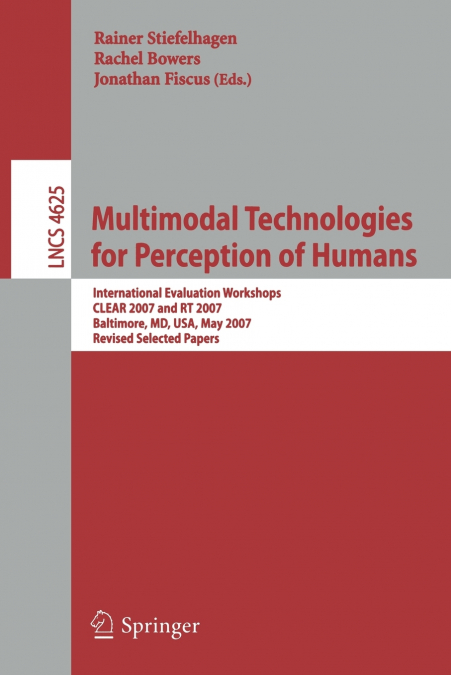
ThesecondannualClassi?cationofEventsActivitiesandRelationships(CLEAR) and the 2007 Rich Transcription (RT) evaluations took place during the winter and earlyspring of 2007.This wasa co-locationof complementaryevaluation - forts;CLEARfor theevaluationofhuman activities,events,andrelationshipsin multiple multimodal data domains (e.g., meetings,surveillance,etc.); RT for the evaluation of speech transcription-relatedtechnologies from meeting roomaudio collections.Throughthesecollaborativespeech-andvideo-basedevaluationtasks, wehopetoprovideresourcesthathelpthespeechandvisionresearchcommunities establisha basefor fostering moremultimedia researche?orts inthe future. CLEAR targets the evaluation of systems for the perception of people, their identities, activities, interactions, and relationships in human-to-human int- action and related scenarios in various multimodal data domains (meetings, surveillance, etc.). RT targets the evaluation of meeting domain speech te- nologies including: speech-to-text transcription, 'who-spoke-when' speaker - arization, and speaker attributed speech-to-text. As part of the evaluation, two workshops were held, during May 8-9, 2007 for CLEAR, and May 10-11, 2007 for RT, in Baltimore, Maryland,where the participating systems were presented and the evaluation results were discussed in detail. Both CLEAR and RT were open to any institution interested in participating and drew over 50 participants for their individual workshops. The book is broken down into two sections: CLEAR and RT. Each gives an overview of the data, evaluation protocol, the individual evaluation tasks, and the participants’ results. This is followed by the papers that describe details of the algorithms that were scored. Thoughyoumaybedrawntotheproceedingsfromaspeci?cworkshopwe- courageyouto exploreallthe workpresentedin this publication.Therearec- plementary aspects between the research evaluated in CLEAR and RT, which we hope will stimulate new ideas for multimedia-based research, as well as new multimedia evaluation.