 Librería Samer Atenea
 Kálamo Books
 Librería Elías (Asturias)
 Librería Kolima (Madrid)
 Librería Proteo (Málaga)
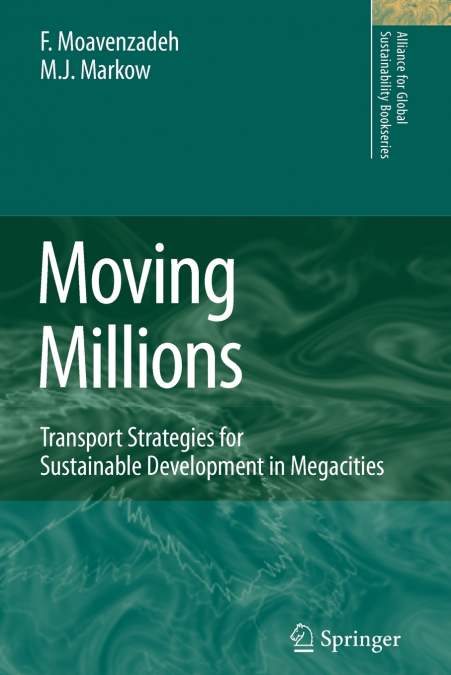
Preface; Chapter 1: Introduction; 1.1 Megacities; 1.2 Transportation Policies and Sustainability; 1.3 Outline of this Book; Chapter 2: Sustainability; 2.1 What Is Sustainability?; 2.2 Methods to Analyze Policies and Projects; 2.3 Context for This Study; Chapter 3: Achieving Sustainable Development; 3.1 Sustainable Cities; 3.2 Sustainable Development as a Resource Management Problem; 3.3 Sustainable Development as a Pollution Control Problem; 3.4 Criticisms of Economic or Market-Based Incentives; 3.5 Other Perspectives on Sustainable Development; 3.6 Sustainable Transportation as an Integrated Concept;Chapter 4: Transportation Policy and Environmental Sustainability; 4.1 Role ofTransportation; 4.2 Managing Transportation Supply; 4.3 Managing Transportation Demand; 4.4 Land-Use Planning Strategies; 4.5 Advanced Technologies: ITS; 4.6 Advanced Technologies: Alternative Fuels; Chapter 5: Public-Private Partnerships to Deliver Sustainable Transportation Projects; 5. 1 Background and Rationale; 5.2 Spectrum ofPartnership Arrangements; 5.3 Evaluation of Service Delivery Methods; 5.4 Divestiture or Denationalization; 5.5 Government’s Role; 5.6 Ensuring the Public Good; 5.7 Capital Formation, Project Selection, and Investment Stimulation; 5.8 Risk Allocation; 5.9 Environmental Mutual Funds; Chapter 6: Transportation Policies: Examples and Lessons; 6.1 Introduction; 6.2 Bogota; 6.3 Singapore; 6.4 Portland; 6.5 Washington DC Metro; 6.6 São Paulo; Chapter 7: Guangzhou Case Study; 7.1 The City; 7.2 Policy and Regulatory Framework Regarding Sustainability; 7.3 Institutional and Financial Aspects; 7.4 Case Study: Guangzhou’s Transportation Future; Chapter 8: Conclusion; References; Index.