
Inicio > Humanidades > Filosofía > Ética y filosofía moral > Moral Philosophy, from Hippocrates to the 21st Aeon
Moral Philosophy, from Hippocrates to the 21st Aeon

Moral Philosophy, from Hippocrates to the 21st Aeon

Moral Philosophy, from Hippocrates to the 21st Aeon

Andreas Sofroniou

83,29 €
IVA incluido
Disponible
Editorial:
Lulu Press
Año de edición:
2007
Materia
Ética y filosofía moral
ISBN:
9781847534637
83,29 €
IVA incluido
Disponible

Selecciona una librería:

  • Librería Samer Atenea
  • Librería Aciertas (Toledo)
  • Kálamo Books
  • Librería Perelló (Valencia)
  • Librería Elías (Asturias)
  • Donde los libros
  • Librería Kolima (Madrid)
  • Librería Proteo (Málaga)

This book covers Moral Philosophy from the ancient times to the modern concepts of professional Ethics. Its all-embracing practical nature links it with many other areas of study, including anthropology, biology, medicine, economics, history, politics, psychology, sociology and theology. The historical survey of ethics from Socrates and Hippocrates to the 21st century covering various constant themes: . Disagreements over ethical judgments; . Scepticism as to whether it is the rational thing to do; . Repeated debates over what right and wrong might be. The 21st century has seen new twists to these themes and an increased attention to the application of ethics to practical problems faced by many professions. Andreas Sofroniou is a practicing psychotherapist, an executive with international organizations, an adviser to governments and an affiliated professor to universities. His published books include Information Technology, Management, Psychology, Poetry, Philosophy, and Fiction.


Artículos relacionados

  • Ka Ab Ba Building The Lighted Temple
    Dr Terri R. Nelson / Dr Terri RNelson
    The book KaAbBa Building The Lighted Temple/Metaphysical Keys to the Tree of Life draws a circle that is inclusive of the Afrikan origin of the Ancient Kemetic/Egyptian wisdom. It reveals the undeniable root and link of Ancient Africa to all the religious systems that would develop worldwide. This book is explosive in its power to convey the meaning of KaAbBa, the Medu Neter  (...
    Disponible

    37,41 €

  • Technoethics and the Evolving Knowledge Society
    Rocci Luppicini
    Recently, there has been a major push to rediscover the ethical dimension of technology across the sciences, social sciences, and humanities. Technoethics and the Evolving Knowledge Society: Ethical Issues in Technological Design, Research, Development, and Innovation examines human processes and practices connected to technology embedded within social, political, and moral sph...
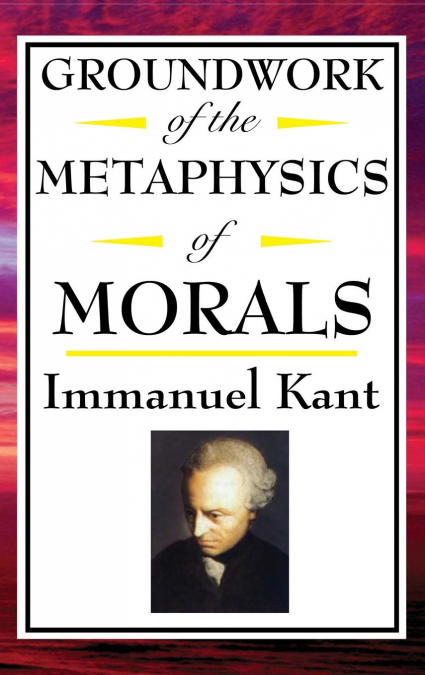
  • Kant
    Immanuel Kant
    Kant’s Groundwork of the Metaphysics of Morals is one of the most important works in modern moral philosophy. It belongs beside Plato, Aristotle, Machiavelli, and Hobbes. Here Kant sets out to articulate and defend the Categorical Imperative - the fundamental principle that underlies moral reasoning - and to lay the foundation for a comprehensive account of justice and human vi...
  • On the Duty of Civil Disobedience
    HENRY DAVID THOREAU
    Civil Disobedience argues that citizens should not permit their governments to overrule their consciences, and that they have a duty to avoid allowing their acquiescence to enable the government to make them the agents of injustice. Thoreau was motivated in part by his disgust with slavery and the Mexican-American War, but the sentiments he expresses here are just as pertinent ...
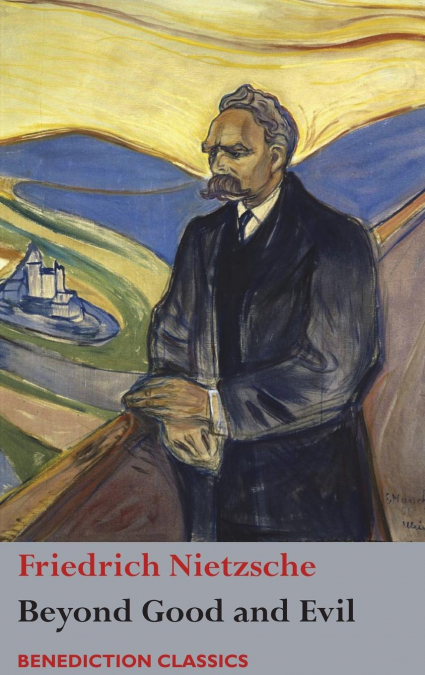
  • Beyond Good and Evil
    Friedrich Nietzsche
    Nietzsche, though primarily a philosopher, wrote widely on art, philology, history, religion, tragedy, culture, and science.  In 1886, at the height of his powers, he published Beyond Good and Evil.  Here he examines much of the best of human thought--dogmatic philosophy, Judeo-Christian morality, science and democracy – and finds it lacking.  Rejecting “slave-morality” he pres...
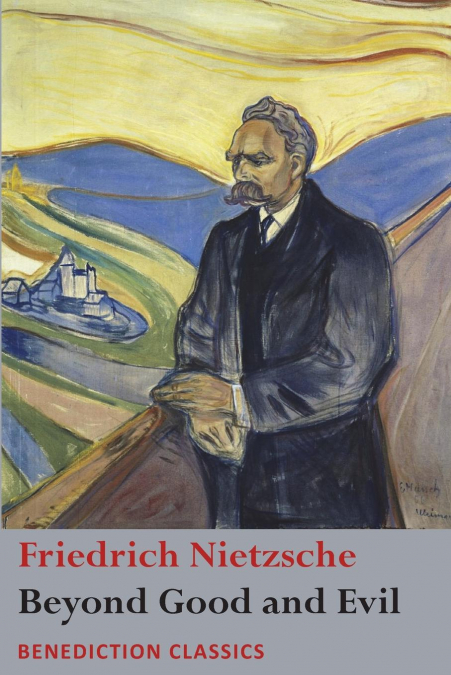
  • Beyond Good and Evil
    Friedrich Nietzsche
    Nietzsche, though primarily a philosopher, wrote widely on art, philology, history, religion, tragedy, culture, and science.  In 1886, at the height of his powers, he published Beyond Good and Evil.  Here he examines much of the best of human thought--dogmatic philosophy, Judeo-Christian morality, science and democracy – and finds it lacking.  Rejecting “slave-morality” he pres...
    Disponible

    9,99 €

Otros libros del autor

  • Democracy
    Andreas Sofroniou
    The importance of democracy as a system of government the reader must remember that this sovereignty rests with the whole people, who rule either directly or through representatives. In the contemporary world, democracy is closely associated with the idea of choosing governments by periodic free multiparty elections.The chief elements of representative democracy are: Freedom of...
    Disponible

    27,03 €

  • Towering Misfeasance
    Andreas Sofroniou
    A young, handsome Cypriot Turk called Yusuf is tossed by fate into the vortex of a bitter conflict.Following his many adventures, the young Turk is forced to continue his quest for his future in unexpected circumstances and places. What follows is love, lust, violence, philosophy, architecture, battle, poetry, psychology and politics; from alpha to omega. Yusuf, a dazzlingly ha...
    Disponible

    36,56 €

  • TECHNOLOGICAL INTEGRATIONS
    Andreas Sofroniou
    The application of technology and its integrations includes the scientific knowledge to the practical aims of human life or to the change and manipulation of the human environment. Circa 3000 years BC many new technologies were developed; irrigation systems, road networks and wheeled vehicles, a pictographic form of writing and new building techniques. The new ideas and techniq...
    Disponible

    19,88 €

  • Philosophy of Mind
    Andreas Sofroniou
    The philosophy of the mind deals with the examination of problems revolving around the concept of the mind. The mental may be distinguished from the physical in various ways: intentionality and consciousness provide important features of mental states. An important part of the argument is the claim that mental states are known in a special way: they are directly given, transpar...
    Disponible

    22,08 €

  • Human Nature
    Andreas Sofroniou
    Human nature is in abundance of fundamental dispositions and traits. Theories about the nature of humankind form a part of every culture. One traditional question centred on whether humans are naturally selfish and competitive. Philosophers have tried to explain human nature in its ability to behave morally and yet selfish enough to compete for more. A broader problem is that o...
    Disponible

    20,89 €

  • Religions, Cultures and Politics
    Andreas Sofroniou
    Religion is a crucial source of legitimacy and Political mobilisation in Cultures. Conflict between groups is often within one state, based upon different religion, race, language, culture, history and ethnicity. Chaos may be caused due to scarce resources or in forms of oppression and prejudice, racism, segregation, and discrimination; culminating in civil war.Language differe...
    Disponible

    20,39 €