Models to Measure Intellectual Capital

Models to Measure Intellectual Capital

Sarra Bouguesri

29,08 €
IVA incluido
Disponible
Editorial:
KS OmniScriptum Publishing
Año de edición:
2025
Materia
Gestión y técnicas de gestión
ISBN:
9783330798489
29,08 €
IVA incluido
Disponible

Selecciona una librería:

  • Librería Samer Atenea
  • Librería Aciertas (Toledo)
  • Kálamo Books
  • Librería Perelló (Valencia)
  • Librería Elías (Asturias)
  • Donde los libros
  • Librería Kolima (Madrid)
  • Librería Proteo (Málaga)

As intellectual capital is a new concept for many organizations and one that may be difficult to embrace, identifying ways of measuring it are likely to appear daunting. The famous saying: 'what you manage you must be able to measure' also applies to intellectual capital. Researchers, consultants, accountants and managers soon discovered, however, that the traditional financial accounting measures, such as return on investments and earnings per share, could not be adequately utilized for intellectual capital, as they were out of step with the skills and competencies companies were trying to measure. (Ulrich, 2001)Numerous suggestions were made to solve this problem. For example, some wanted to adjust the traditional financial measures to make them more relevant, while others suggested adapting operational measures like cycle times and defect rates. Some even suggested a combination of the two approaches. However, researchers soon realized that, because of the nature of intellectual capital, new measures had to be developed to determine the value-creating potential of the workforce.
Artículos relacionados

  • Cases on Management and Organizational Behavior in an Arab Context
    Khoury
    In the era of globalization and ease of international connectivity and business interactions, professionals from all over the world benefit from having a well-rounded view of business culture and organizational practice at the regional level. Cases on Management and Organizational Behavior in an Arab Context provides a presentation of teaching cases emphasizing the positive and...
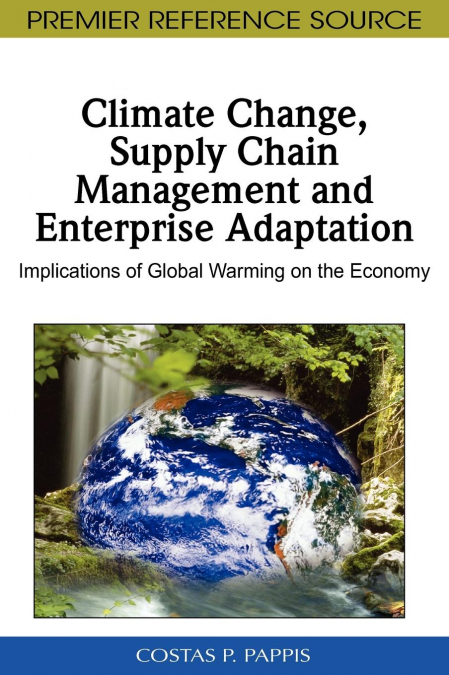
  • Climate Change, Supply Chain Management and Enterprise Adaptation
    Costas P. Pappis / Costas PPappis
    Mounting scientific evidence shows that Earth’s climate is dramatically changing due to the greenhouse emissions caused by human activities, notably by burning fossil fuels for energy production and transport. Climate Change, Supply Chain Management and Enterprise Adaptation: Implications of Global Warming on the Economy aims to provide one among many diverse responses to a gro...
  • # BUSINESS SAVVY PM tweet Book01
    Cinda Voegtli
    Does your job require you to manage projects? If yes, wouldn’t you like to be described as a project manager who is a successful, influential and respected leader of important efforts in the organization? Now if that already sounds like you, great! But if not, what you need to get there is known as ’business savvy.’Business savvy does not mean a bagful of academic credentials, ...
    Disponible

    22,55 €

  • Advanced Topics in Global Information Management Volume 2
    Felix Tan
    ...
  • Managing Business with SAP
    Linda Lau
    ...
  • Advances in Electronic Business, Volume I
    ...

Otros libros del autor

  • Human Resources Accounting
    Sarra Bouguesri
    Society in the current era has turned into a knowledge-based economy, as it requires high-level technological services and very advanced technologies resulting fro advanced modern scientific discoveries, and therefore requires human labor at a high level of education, training and expertise in the fields of specialization, and from here The recognition of the large and importan...
    Disponible

    28,70 €