
Inicio > Humanidades > Filosofía > Ética y filosofía moral > Misalignment Dynamics in Modern Societies
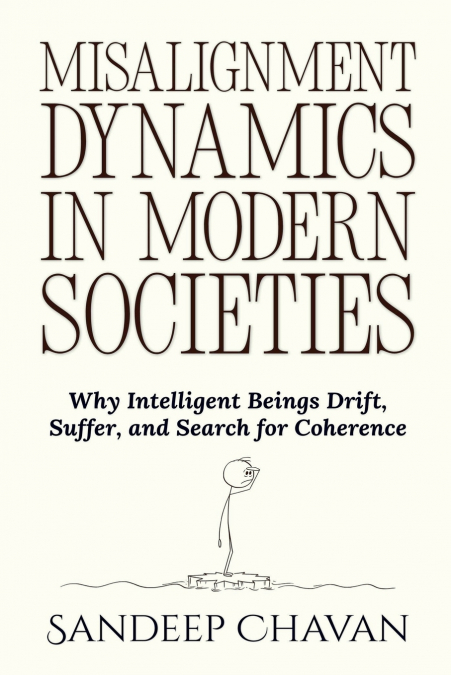
Misalignment Dynamics in Modern Societies

Misalignment Dynamics in Modern Societies

Sandeep Chavan

86,16 €
IVA incluido
Consulta disponibilidad
Editorial:
Gyrus Vision
Año de edición:
2026
Materia
Ética y filosofía moral
ISBN:
9798235216419

Selecciona una librería:

  • Librería Samer Atenea

  • Kálamo Books
  • Librería Elías (Asturias)
  • Librería Kolima (Madrid)
  • Librería Proteo (Málaga)

Why do so many people feel anxious, exhausted, lonely, distracted, pressured, and uncertain despite living in societies with greater knowledge, technology, opportunity, and material capacity than ever before?Misalignment Dynamics in Modern Societies explores the hidden relationship between personal suffering and the wider structures of modern life.Human beings are not born into an empty world. We enter families, cultures, educational systems, markets, technologies, religions, political narratives, and inherited ideas of success already in motion. Before we can consciously question them, these structures begin shaping how we understand belonging, responsibility, achievement, security, identity, and worth.The family becomes the first place where society turns personal. Economic uncertainty appears as parental fear. Educational competition becomes pressure around marks and careers. Social status enters through comparison and reputation. Technology changes attention, connection, and visibility. Work becomes more than livelihood and begins organising identity.Over time, useful structures can expand beyond their original purpose. Education becomes performance. Work becomes the whole self. Protection becomes control. Responsibility becomes exhaustion. Belonging becomes conformity. Visibility replaces connection. Consumption becomes identity. And Good intentions begin producing harmful consequences.The result is often experienced privately-as anxiety, overthinking, burnout, loneliness, resentment, comparison, scattered attention, family conflict, or loss of direction. Yet the architecture behind these experiences may be relational, institutional, economic, technological, and collective.This book does not argue that every problem is caused by society. Biology, mental health, trauma, physical conditions, personal history, habits, and individual decisions remain important. Nor does it remove personal responsibility by blaming systems.Instead, it develops a layered view.The individual is both receiver and transmitter.We inherit stories, roles, fears, and expectations. We also pass them forward through parenting, teaching, leadership, work, relationships, and public participation.Through twenty chapters, reflective interludes, practical appendices, and self-observation questions, the book examines:how inherited stories become identity,why intelligence creates possibilities of psychological and social drift,how schools, workplaces, markets, technology, politics, and religion amplify partial truths,why modern people feel lost despite having more choices,how family pressure moves across generations,why thoughts continue when responsibility and uncertainty remain unresolved,how burnout and loneliness can reflect shared structural conditions,why misalignment does not always require villains,and how coherent participation can replace both escape and blind adaptation.The goal is not perfect alignment.Human beings will continue to make mistakes, act from fear, repeat old patterns, and participate in imperfect systems.The practical aim is reduced drift: to notice earlier, correct sooner, set clearer boundaries, return responsibility to the proper person, remain open to feedback, and transmit less unconscious pressure to the next generation.Misalignment Dynamics in Modern Societies is for readers of social psychology, sociology, philosophy, family systems, modern anxiety, workplace burnout, education, technology, identity, and human behaviour.It asks one central question: How can we remain human inside the structures we have created-and prevent our unexamined participation from becoming the inheritance of those who come after us?


Artículos relacionados

  • Ka Ab Ba Building The Lighted Temple
    Dr Terri R. Nelson / Dr Terri RNelson
    The book KaAbBa Building The Lighted Temple/Metaphysical Keys to the Tree of Life draws a circle that is inclusive of the Afrikan origin of the Ancient Kemetic/Egyptian wisdom. It reveals the undeniable root and link of Ancient Africa to all the religious systems that would develop worldwide. This book is explosive in its power to convey the meaning of KaAbBa, the Medu Neter  (...
    Disponible

    37,41 €

  • Technoethics and the Evolving Knowledge Society
    Rocci Luppicini
    Recently, there has been a major push to rediscover the ethical dimension of technology across the sciences, social sciences, and humanities. Technoethics and the Evolving Knowledge Society: Ethical Issues in Technological Design, Research, Development, and Innovation examines human processes and practices connected to technology embedded within social, political, and moral sph...
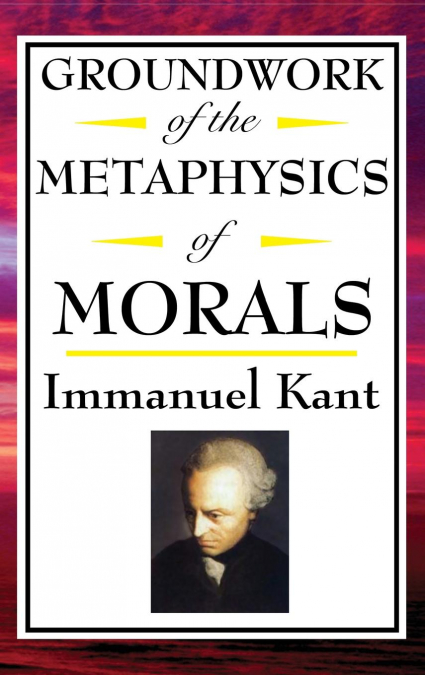
  • Kant
    Immanuel Kant
    Kant’s Groundwork of the Metaphysics of Morals is one of the most important works in modern moral philosophy. It belongs beside Plato, Aristotle, Machiavelli, and Hobbes. Here Kant sets out to articulate and defend the Categorical Imperative - the fundamental principle that underlies moral reasoning - and to lay the foundation for a comprehensive account of justice and human vi...
  • On the Duty of Civil Disobedience
    HENRY DAVID THOREAU
    Civil Disobedience argues that citizens should not permit their governments to overrule their consciences, and that they have a duty to avoid allowing their acquiescence to enable the government to make them the agents of injustice. Thoreau was motivated in part by his disgust with slavery and the Mexican-American War, but the sentiments he expresses here are just as pertinent ...
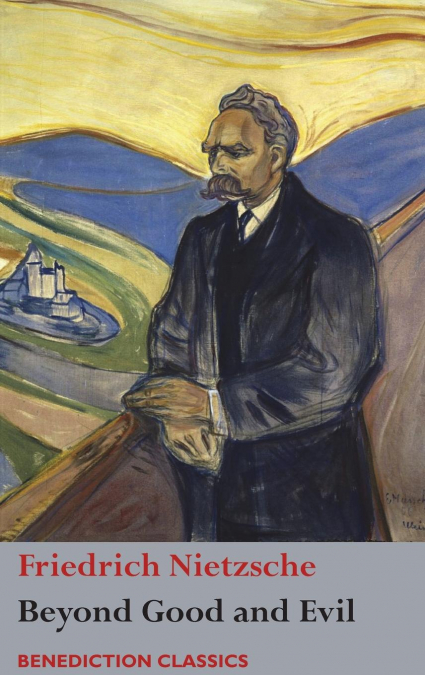
  • Beyond Good and Evil
    Friedrich Nietzsche
    Nietzsche, though primarily a philosopher, wrote widely on art, philology, history, religion, tragedy, culture, and science.  In 1886, at the height of his powers, he published Beyond Good and Evil.  Here he examines much of the best of human thought--dogmatic philosophy, Judeo-Christian morality, science and democracy – and finds it lacking.  Rejecting “slave-morality” he pres...
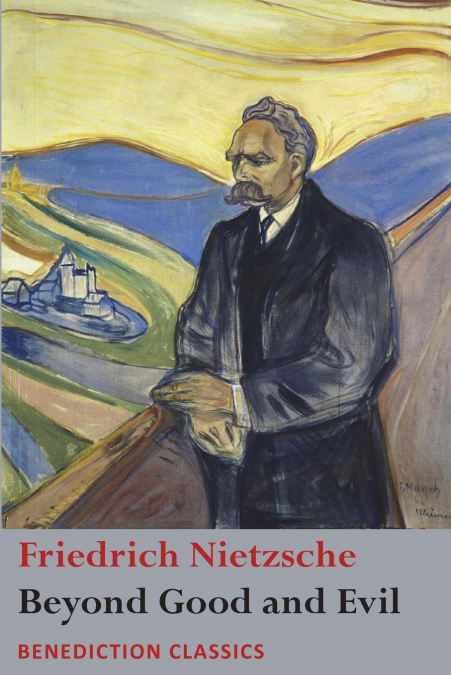
  • Beyond Good and Evil
    Friedrich Nietzsche
    Nietzsche, though primarily a philosopher, wrote widely on art, philology, history, religion, tragedy, culture, and science.  In 1886, at the height of his powers, he published Beyond Good and Evil.  Here he examines much of the best of human thought--dogmatic philosophy, Judeo-Christian morality, science and democracy – and finds it lacking.  Rejecting “slave-morality” he pres...
    Disponible

    9,99 €

Otros libros del autor

  • Resolution Architecture
    Sandeep Chavan
    A company has skilled employees, capable machines, established procedures, and powerful AI. Yet the result it needs remains out of reach.What is missing when the capabilities seem to be present?In Resolution Architecture, independent researcher and author Sandeep Chavan examines the gap between possessing resources and achieving intended consequences. More expertise, technology...
    Disponible

    99,33 €

  • The Aspiration Economy
    Sandeep Chavan
    India has no shortage of ambition. Millions of young people study, compete, earn degrees and pursue better futures. Yet a difficult question remains: How effectively does the economy convert that aspiration into meaningful work, capability and economic independence?In The Aspiration Economy, the second volume of The Pathways to India 2047, Sandeep Chavan examines the powerful r...
    Disponible

    43,35 €

  • Unresolved India
    Sandeep Chavan
    What if some of India’s most important economic possibilities are hidden in what still does not work well?A farmer loses value after harvest. A manufacturing firm cannot find reliable tooling or testing. A road is built but poorly maintained. A family travels far for diagnosis. A growing town struggles with waste, water and care. These are familiar problems. But what capabiliti...
    Disponible

    40,88 €

  • Tuka Says
    Sandeep Chavan
    What if the purpose of a lifetime of striving is not to achieve more, but to arrive at peace with life itself?In Tuka Says: For This Alone I Had Striven, Sandeep Chavan returns to a profound abhang by Sant Tukaram, the celebrated Marathi saint-poet whose devotional wisdom continues to speak across generations.'For this alone I had striven-that the final day might be sweet.'From...
    Disponible

    45,00 €

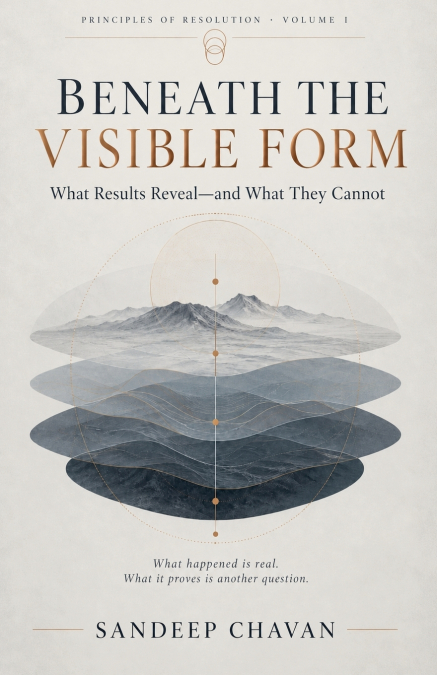
  • Beneath the Visible Form
    Sandeep Chavan
    What happened is real. What it proves is another question.A team exceeds its performance target, yet unfinished work continues to accumulate. A monitoring system reports success while important information remains unprotected. A modernized institution looks transformed, but the conditions delaying its decisions remain largely unchanged.The results are genuine. The difficulty li...
  • Dnyaneshwar
    Sandeep Chavan
    Dnyaneshwar entered a civilization already rich in philosophy, devotion and inherited wisdom. The Bhagavad Gita, the Upanishadic tradition, Bhakti, Yoga and sophisticated systems of thought were already present. What remained unresolved was the distance between knowledge and participation.DNYANESHWAR: The Resolution That Remained asks a different question from conventional biog...
    Disponible

    44,91 €