 Librería Samer Atenea
 Kálamo Books
 Librería Elías (Asturias)
 Librería Kolima (Madrid)
 Librería Proteo (Málaga)
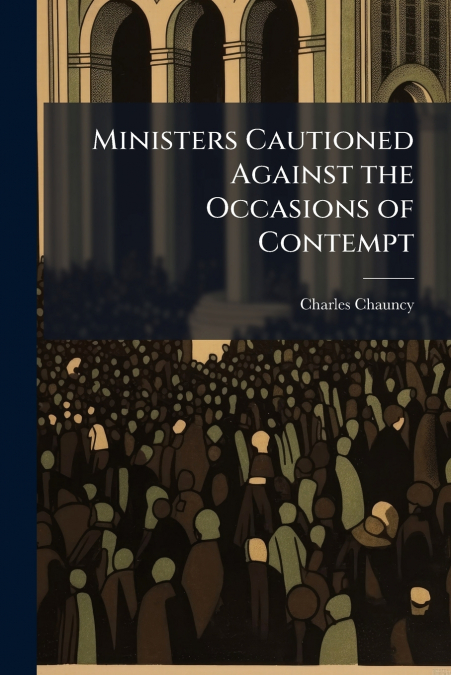
'Ministers Cautioned Against the Occasions of Contempt' is a powerful sermon delivered by Charles Chauncy before the ministers of the Province of Massachusetts-Bay in New England on May 31, 1744. This sermon provides a fascinating glimpse into the religious and social landscape of colonial America, offering insights into the challenges and responsibilities faced by ministers of the time. Chauncy’s discourse urges ministers to conduct themselves with the utmost integrity and wisdom, cautioning them against behaviors that might diminish their authority or bring the ministry into disrepute. This historically significant sermon offers valuable perspectives on the role of religion in early American society and the expectations placed upon its leaders, making it an essential read for historians, theologians, and anyone interested in the religious foundations of the United States.This work has been selected by scholars as being culturally important, and is part of the knowledge base of civilization as we know it. This work was reproduced from the original artifact, and remains as true to the original work as possible. Therefore, you will see the original copyright references, library stamps (as most of these works have been housed in our most important libraries around the world), and other notations in the work.This work is in the public domain in the United States of America, and possibly other nations. Within the United States, you may freely copy and distribute this work, as no entity (individual or corporate) has a copyright on the body of the work.As a reproduction of a historical artifact, this work may contain missing or blurred pages, poor pictures, errant marks, etc. Scholars believe, and we concur, that this work is important enough to be preserved, reproduced, and made generally available to the public. We appreciate your support of the preservation process, and thank you for being an important part of keeping this knowledge alive and relevant.