 Librería Samer Atenea
 Kálamo Books
 Librería Elías (Asturias)
 Librería Kolima (Madrid)
 Librería Proteo (Málaga)
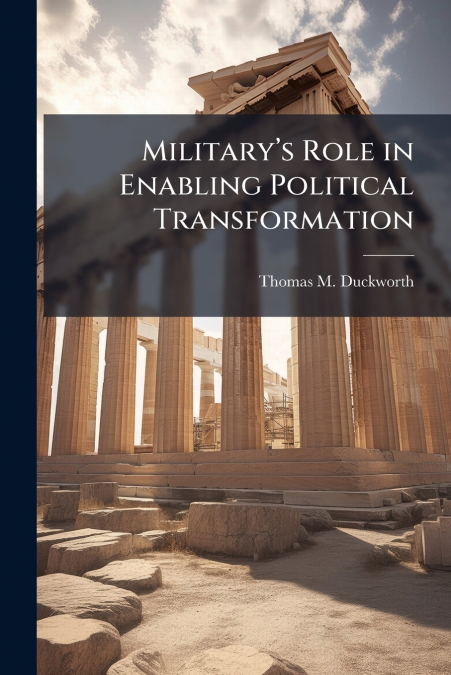
This study explores the role of the military as an instrument of national power in the transformation of Republics to Empires. It concentrates on two case studies. The first is the Athenian transformation from Radical Democracy to an Informal Empire during the period following the Second Greco-Persian war to the end of the Peloponnesian War (479-404 B.C.). The second is the Roman Republican Empire’s transformation to Formal Empire during the period from the Marian military reforms to the Augustan Principate (107-27 B.C.). The central thesis of this study is that the professionalization of a republican military resulting from a transformation required to face an extraordinary threat to the existence of the state, enables expansionist imperial foreign policy when the immediate threat passes. The now fully professional force becomes increasingly dissociated from and exerts an indirect or direct transformative influence upon the parent state. The implication is that the forces that changed republics to empires in classical antiquity operate still yet. There are parallels between the Athenian, Roman, and American experiences. The study concludes that an understanding of macro historical factors is important for the military professional in the service of the United States as it exercises de facto imperial practice.This work has been selected by scholars as being culturally important, and is part of the knowledge base of civilization as we know it. This work was reproduced from the original artifact, and remains as true to the original work as possible. Therefore, you will see the original copyright references, library stamps (as most of these works have been housed in our most important libraries around the world), and other notations in the work.This work is in the public domain in the United States of America, and possibly other nations. Within the United States, you may freely copy and distribute this work, as no entity (individual or corporate) has a copyright on the body of the work.As a reproduction of a historical artifact, this work may contain missing or blurred pages, poor pictures, errant marks, etc. Scholars believe, and we concur, that this work is important enough to be preserved, reproduced, and made generally available to the public. We appreciate your support of the preservation process, and thank you for being an important part of keeping this knowledge alive and relevant.