

 Librería Samer Atenea
 Kálamo Books
 Librería Elías (Asturias)
 Librería Kolima (Madrid)
 Librería Proteo (Málaga)
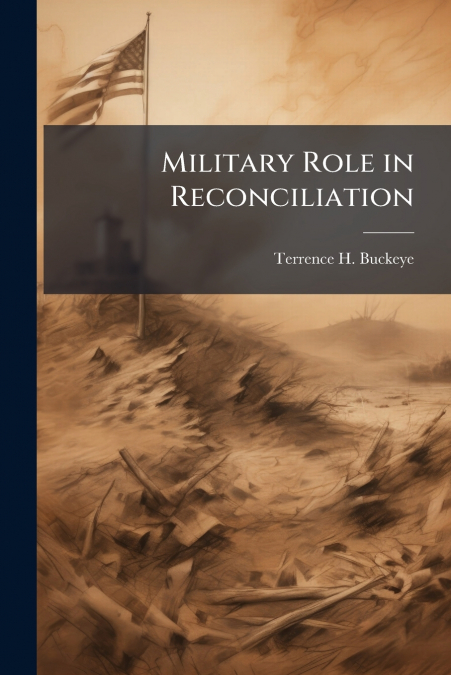
Reconciliation remains an elusive concept in both domestic and international contexts as well as academic and governmental contexts. The military role in reconciliation remains even more elusive. As such, this monograph seeks to clarify what the appropriate role is for the US military in a reconciliation process. Moreover, it seeks to discount the role of the military as an enforcer of a reconciliation process. To do so, it first defines reconciliation and establishes a framework for understanding the process. Next, it assesses the adequacy of reconciliation’s treatment in current US government doctrine. Finally, it evaluates three case studies of different reconciliation methods to illustrate the application of reconciliation and demonstrate the appropriateness of military force in these methods. The primary finding of this monograph is that military force plays a very small role in a reconciliation process beyond providing a secure environment. Neither military forces, nor any external actors for that matter, can force a divided society to reconcile. External actors who wish to facilitate a reconciliation process must predicate intervention on a clear understanding of the opposing sides’; intentions regarding reconciliation. The secondary finding is that the US government’s understanding of reconciliation is unclear and its treatment of reconciliation is inconsistent.This work has been selected by scholars as being culturally important, and is part of the knowledge base of civilization as we know it. This work was reproduced from the original artifact, and remains as true to the original work as possible. Therefore, you will see the original copyright references, library stamps (as most of these works have been housed in our most important libraries around the world), and other notations in the work.This work is in the public domain in the United States of America, and possibly other nations. Within the United States, you may freely copy and distribute this work, as no entity (individual or corporate) has a copyright on the body of the work.As a reproduction of a historical artifact, this work may contain missing or blurred pages, poor pictures, errant marks, etc. Scholars believe, and we concur, that this work is important enough to be preserved, reproduced, and made generally available to the public. We appreciate your support of the preservation process, and thank you for being an important part of keeping this knowledge alive and relevant.





