Inicio > Humanidades > Filosofía > Ética y filosofía moral > Migration in the Age of Genocide
Migration in the Age of Genocide

Migration in the Age of Genocide

Alastair Davidson

66,56 €
IVA incluido
Disponible
Editorial:
Springer Nature B.V.
Año de edición:
2016
Materia
Ética y filosofía moral
ISBN:
9783319359816
66,56 €
IVA incluido
Disponible

Selecciona una librería:

  • Librería Samer Atenea
  • Librería Aciertas (Toledo)
  • Kálamo Books
  • Librería Perelló (Valencia)
  • Librería Elías (Asturias)
  • Donde los libros
  • Librería Kolima (Madrid)
  • Librería Proteo (Málaga)

This book presents a novel proposal for establishing justice and social harmony in the aftermath of genocide. It argues that justice should be determined by the victims of genocide rather than a detached legal system, since such a form of justice is more consistent with a socially grounded ethics, with a democracy that privileges citizen decision-making, and with human rights.The book covers the Holocaust; genocides in Argentina, South Africa, Rwanda, Latin America, and Australia, as well as crimes against humanity in Italy and France. From show trials to state- enforced forgiveness, the book examines various methods that have been used since 1945 to punish the individuals and groups responsible for genocide and how they have ultimately failed to deliver true justice to the victims.The only way to end this failure, the book points out, is to return justice to the victims. This simple proposition; however, challenges the Enlightenment tradition of Western law which was built on the refusal to allow victims to determine the measure of justice. That would amount, according to Bacon, Hegel, and Kant to a revenge system and bring social chaos. But, as this book points out, forgiveness is only something victims can give, no-one can demand it. In order to establish a lasting peace, it is necessary to re-examine the philosophical and theoretical refusal to return justice to the victims. The engaging argument put forth in this book can help deliver true justice and re-establish international social harmony in the aftermath of genocide.Genocide is ubiquitous in the modern, global world. It’s understanding is highly relevant for the understanding of specific and perpetuating challenges in migration. Genocide forces the migration of millions to avoid crimes against humanity. When they flee war zones they bring their fears, hates, and misery with them. So migration research must engage fully with the experience of genocide, its human consequences and the ethical dilemmas it poses to all societies. Not to do so, will make it more difficult to understand and live with newcomers and to achieve some sort of harmony in host countries, as well as those which are centers of genocide.

Artículos relacionados

  • Ka Ab Ba Building The Lighted Temple
    Dr Terri R. Nelson / Dr Terri RNelson
    The book KaAbBa Building The Lighted Temple/Metaphysical Keys to the Tree of Life draws a circle that is inclusive of the Afrikan origin of the Ancient Kemetic/Egyptian wisdom. It reveals the undeniable root and link of Ancient Africa to all the religious systems that would develop worldwide. This book is explosive in its power to convey the meaning of KaAbBa, the Medu Neter  (...
    Disponible

    37,41 €

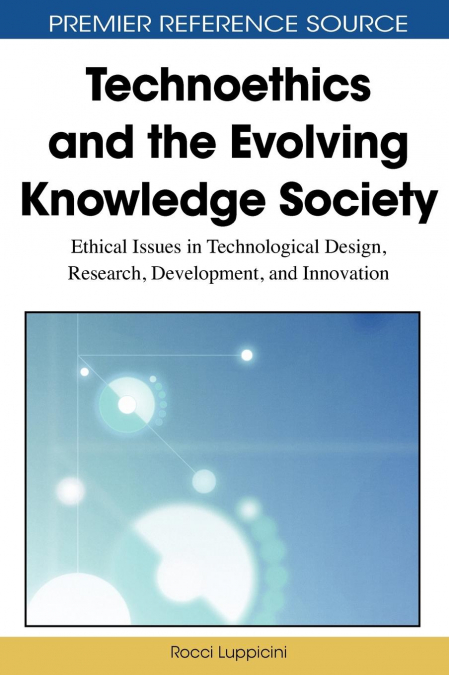
  • Technoethics and the Evolving Knowledge Society
    Rocci Luppicini
    Recently, there has been a major push to rediscover the ethical dimension of technology across the sciences, social sciences, and humanities. Technoethics and the Evolving Knowledge Society: Ethical Issues in Technological Design, Research, Development, and Innovation examines human processes and practices connected to technology embedded within social, political, and moral sph...
  • Kant
    Immanuel Kant
    Kant’s Groundwork of the Metaphysics of Morals is one of the most important works in modern moral philosophy. It belongs beside Plato, Aristotle, Machiavelli, and Hobbes. Here Kant sets out to articulate and defend the Categorical Imperative - the fundamental principle that underlies moral reasoning - and to lay the foundation for a comprehensive account of justice and human vi...
  • On the Duty of Civil Disobedience
    HENRY DAVID THOREAU
    Civil Disobedience argues that citizens should not permit their governments to overrule their consciences, and that they have a duty to avoid allowing their acquiescence to enable the government to make them the agents of injustice. Thoreau was motivated in part by his disgust with slavery and the Mexican-American War, but the sentiments he expresses here are just as pertinent ...
  • Beyond Good and Evil
    Friedrich Nietzsche
    Nietzsche, though primarily a philosopher, wrote widely on art, philology, history, religion, tragedy, culture, and science.  In 1886, at the height of his powers, he published Beyond Good and Evil.  Here he examines much of the best of human thought--dogmatic philosophy, Judeo-Christian morality, science and democracy – and finds it lacking.  Rejecting “slave-morality” he pres...
  • Beyond Good and Evil
    Friedrich Nietzsche
    Nietzsche, though primarily a philosopher, wrote widely on art, philology, history, religion, tragedy, culture, and science.  In 1886, at the height of his powers, he published Beyond Good and Evil.  Here he examines much of the best of human thought--dogmatic philosophy, Judeo-Christian morality, science and democracy – and finds it lacking.  Rejecting “slave-morality” he pres...
    Disponible

    9,99 €

Otros libros del autor

  • Migration in the Age of Genocide
    Alastair Davidson
    This book presents a novel proposal for establishing justice and social harmony in the aftermath of genocide. It argues that justice should be determined by the victims of genocide rather than a detached legal system, since such a form of justice is more consistent with a socially grounded ethics, with a democracy that privileges citizen decision-making, and with human rights.T...
  • The Immutable Laws of Mankind
    Alastair Davidson
    The key question for the history of universal human rights is why it took so long for them to become established as law. The main theme of this book is that the attainment of universal human rights required heroic struggle, first by individuals and then by ever-increasing numbers of people who supported those views against the major historical trends. Universal human rights are...
    Disponible

    267,91 €

  • The Immutable Laws of Mankind
    Alastair Davidson
    The key question for the history of universal human rights is why it took so long for them to become established as law. The main theme of this book is that the attainment of universal human rights required heroic struggle, first by individuals and then by ever-increasing numbers of people who supported those views against the major historical trends. Universal human rights are...
  • The Invisible State
    Alastair Davidson
    ...
    Disponible

    96,16 €

  • From Subject to Citizen
    Alastair Davidson
    ...
    Disponible

    49,99 €

  • The Invisible State
    Alastair Davidson
    ...