 Librería Samer Atenea
 Kálamo Books
 Librería Elías (Asturias)
 Librería Kolima (Madrid)
 Librería Proteo (Málaga)
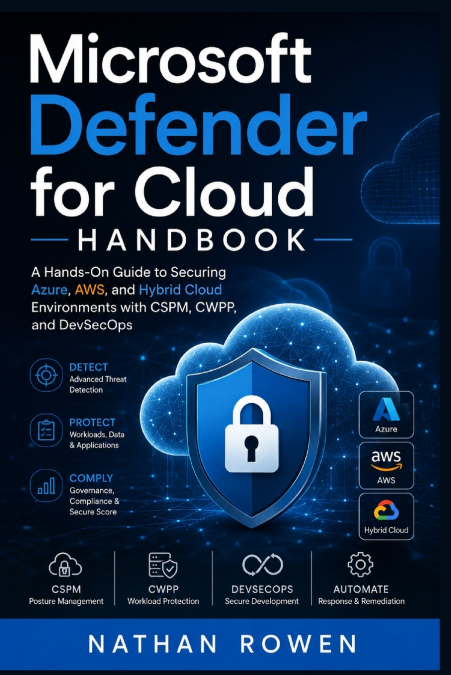
Modern cloud environments demand more than reactive security controls. As organizations expand across Azure, hybrid infrastructure, and multicloud platforms, security teams must continuously assess posture, protect workloads, automate governance, and respond to evolving threats without sacrificing scalability or operational efficiency.This book provides a practical, architecture-driven approach to implementing Microsoft Defender for Cloud in enterprise environments. Rather than focusing on interface walkthroughs or introductory tutorials, it explores the architectural principles, design patterns, operational models, and engineering practices required to build resilient cloud security programs at scale.You’ll learn how to design secure cloud landing zones, implement Cloud Security Posture Management (CSPM) and Cloud Workload Protection (CWPP), establish governance with Azure Policy, secure hybrid environments through Azure Arc, integrate Microsoft Defender XDR and Microsoft Sentinel, automate security operations, and develop repeatable security architectures for modern enterprises.Inside this guide, you’ll explore:Microsoft Defender for Cloud architecture and enterprise deployment strategiesDesigning secure Azure landing zones and governance frameworksImplementing Cloud Security Posture Management (CSPM) for continuous risk reductionProtecting servers, containers, databases, storage, APIs, and AI workloads with Cloud Workload Protection (CWPP)Securing Azure, hybrid, AWS, and Google Cloud environments through unified security managementUsing Azure Policy, management groups, and role-based access control to enforce organizational standardsApplying Zero Trust principles across cloud infrastructure and application workloadsLeveraging Attack Path Analysis, vulnerability assessment, and contextual risk prioritizationIntegrating Microsoft Defender XDR and Microsoft Sentinel for advanced detection, investigation, and incident responseAutomating remediation and security operations with Logic Apps, workflows, and continuous exportBuilding secure Kubernetes platforms and protecting cloud-native applications throughout the software delivery lifecycleDesigning resilient security architectures that support disaster recovery, business continuity, and operational excellenceOptimizing Defender plans, improving Secure Score, and managing enterprise security at scalePreparing for emerging cloud security capabilities while building a sustainable long-term security strategyThroughout the book, emphasis is placed on architecture, governance, automation, operational excellence, and real-world implementation practices that remain valuable as cloud platforms evolve. The discussions focus on why security controls should be designed a certain way, how they interact across the Microsoft security ecosystem, and what architectural decisions lead to scalable, maintainable, and resilient enterprise deployments.Whether you are a cloud security architect, cybersecurity consultant, SOC analyst, DevSecOps engineer, platform engineer, Azure administrator, or enterprise IT professional, this guide provides the technical depth and architectural perspective needed to implement Microsoft Defender for Cloud as a strategic component of a modern cloud security program.