
Microbial Degradation of Xenobiotics

Microbial Degradation of Xenobiotics

Shree Nath Singh

206,70 €
IVA incluido
Disponible
Editorial:
Springer Nature B.V.
Año de edición:
2013
Materia
Geología y la litosfera
ISBN:
9783642269837
206,70 €
IVA incluido
Disponible

Selecciona una librería:

  • Librería Samer Atenea
  • Librería Aciertas (Toledo)
  • Kálamo Books
  • Librería Perelló (Valencia)
  • Librería Elías (Asturias)
  • Donde los libros
  • Librería Kolima (Madrid)
  • Librería Proteo (Málaga)

Our interest in the microbial biodegradation of xenobiotics has increased many folds in recent years to find out sustainable ways for environmental cleanup. Bioremediation and biotransformation processes harness the naturally occurring ability of microbes to degrade, transform or accumulate a wide range of organic pollutants. Major methodological breakthroughs in recent years through detailed genomic, metagenomic, proteomic, bioinformatic and other high-throughput analyses of environmentally relevant microorganisms have provided us unprecedented insights into key biodegradative pathways and the ability of organisms to adapt to changing environmental conditions. The degradation of a wide spectrum of organic pollutants and wastes discharged into the environment by anthropogenic activities is an emerging need today to promote sustainable development of our society with low environmental impact. Microbial processes play a major role in the removal of recalcitrant compounds taking advantage of the astonishing catabolic versatility of microorganisms to degrade or transform such compounds. New breakthroughs in sequencing, genomics, proteomics, bioinformatics and imaging are generating vital information which opens a new era providing new insights of metabolic and regulatory networks, as well as clues to the evolution of degradation pathways and to the molecular adaptation strategies to changing environmental conditions. Functional genomic and metagenomic approaches are increasing our understanding of the relative importance of different pathways and regulatory networks to carbon flux in particular environments and for particular compounds. New approaches will certainly accelerate the development of bioremediation technologies and biotransformation processes in coming years for natural attenuation of contaminated environments

Artículos relacionados

  • Exploration Science
    Dr Peter T Scott
    About Exploration ScienceHave you wondered what the science of geology is all about?Together we will explore of the surface and sub-surface of the Earth, the sub-branches of geology, including mineralogy, petrology (rocks), palaeontology (fossils), geochemistry, seismology (earthquakes), engineering geology, and many more.The scientific method used by all scientists as well as ...
    Disponible

    30,12 €

  • Fossils, Dinosaurs and Cave Men
    Patrick Nurre
    This textbook is a high school, semester study of the differences between the Biblcal and secular views of fossils, dinosaurs, and cave men.  Topics include the cause and mechanism for a global flood, the geologic time table, living fossils, the Tower of Babel, modern classification of dinosaurs, and more.  Students will also learn to interpret the geologic column from a Biblic...
    Disponible

    43,86 €

  • Adventures in Earth Science
    Dr Peter T Scott
    ADVENTURES in EARTH SCIENCE is not just an in-depth textbook but a series of adventures across seven continents and beyond in the sciences of astronomy, geology, meteorology and oceanography. It has been written with over forty years of experience in studying, researching and teaching earth science. Whilst it has been designed for senior high school and junior university or col...
    Disponible

    142,25 €

  • Timefulness
    Marcia Bjornerud
    Why an awareness of Earth’s temporal rhythms is critical to our planetary survivalFew of us have any conception of the enormous timescales in our planet’s long history, and this narrow perspective underlies many of the environmental problems we are creating for ourselves. The passage of nine days, which is how long a drop of water typically stays in Earth’s atmosphere, is somet...
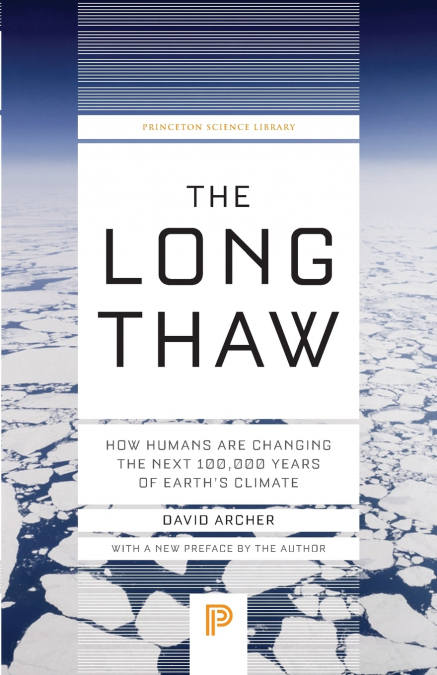
  • The Long Thaw
    David Archer
    Why a warmer climate may be humanity’s longest-lasting legacyThe human impact on Earth’s climate is often treated as a hundred-year issue lasting as far into the future as 2100, the year in which most climate projections cease. In The Long Thaw, David Archer, one of the world’s leading climatologists, reveals the hard truth that these changes in climate will be 'locked in,' ess...
    Disponible

    24,10 €

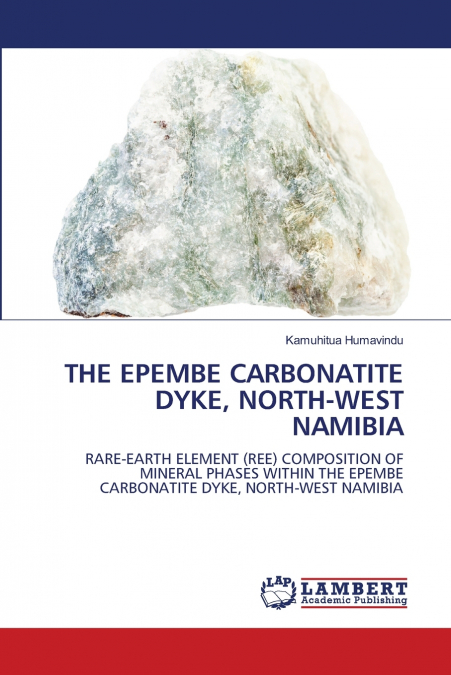
  • THE EPEMBE CARBONATITE DYKE, NORTH-WEST NAMIBIA
    Kamuhitua Humavindu
    This book gives a bright perspective on the nature of carbonatites along with different magmatic and hydrothermal processes that affect the distribution of these dykes. In the past there has been several debates on the enrichment mechanisms of rare-earth elements, making it a significant book especially now with the increase in technology. The research is filled with exciting f...
    Disponible

    75,64 €

Otros libros del autor

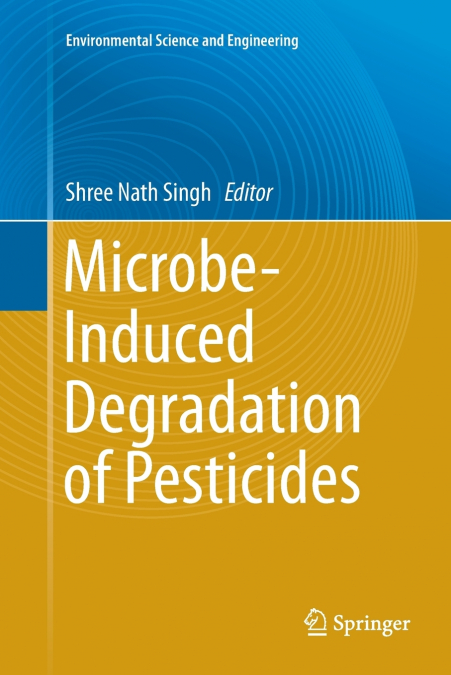
  • Microbe-Induced Degradation of Pesticides
    Shree Nath Singh
    This book focuses on the microbial degradation of endosulfan, lindane, chlorophenols, organochlorine, aldrin, dieldrin, isoproturon and atrazine, etc. which are commonly used in crop fields to kill the pests. Further, it illustrates the role of degradative enzymes, metabolic pathways of degradation, toxicity of metabolites, and the factors regulating the pesticide degradation.I...
    Disponible

    136,13 €

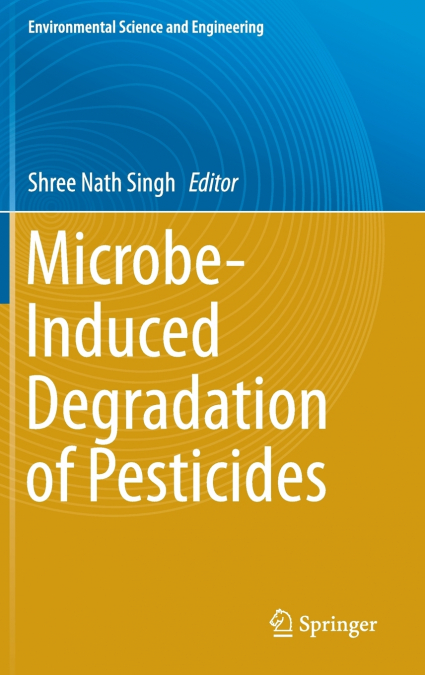
  • Microbe-Induced Degradation of Pesticides
    Shree Nath Singh
    This book focuses on the microbial degradation of endosulfan, lindane, chlorophenols, organochlorine, aldrin, dieldrin, isoproturon and atrazine, etc. which are commonly used in crop fields to kill the pests. Further, it illustrates the role of degradative enzymes, metabolic pathways of degradation, toxicity of metabolites, and the factors regulating the pesticide degradation.I...
  • Microbial Degradation of Synthetic Dyes in Wastewaters
    Shree Nath Singh
    Today synthetic dyes are used extensively in the textile dyeing, paper printing, color photography, pharmaceuticals, food and drink, cosmetic and leather industries. As of now, over 100,000 different dyes are available, with an annual production of over 700,000 metric tons. These industries discharge an enormous amount of colored effluents into natural water bodies, with or wit...
    Disponible

    136,57 €

  • Biological Remediation of Explosive Residues
    Shree Nath Singh
    Microbial degradation, Phytoremediation, Remediation, Explosive residues, Biotransformation, Mineralization, Degradative Enzymes, Degradation Pathways, Energetics, Soil contamination, Water contamination. ...
    Disponible

    210,46 €

  • Microbial Degradation of Synthetic Dyes in Wastewaters
    Shree Nath Singh
    Today synthetic dyes are used extensively in the textile dyeing, paper printing, color photography, pharmaceuticals, food and drink, cosmetic and leather industries. As of now, over 100,000 different dyes are available, with an annual production of over 700,000 metric tons. These industries discharge an enormous amount of colored effluents into natural water bodies, with or wit...
  • Biological Remediation of Explosive Residues
    Shree Nath Singh
    Microbial degradation, Phytoremediation, Remediation, Explosive residues, Biotransformation, Mineralization, Degradative Enzymes, Degradation Pathways, Energetics, Soil contamination, Water contamination. ...