
Methods for Risk Assessment of Transgenic Plants

Methods for Risk Assessment of Transgenic Plants


134,37 €
IVA incluido
Disponible
Editorial:
Springer Nature B.V.
Año de edición:
2012
Materia
Árboles, flores silvestres y plantas
ISBN:
9783034894135
134,37 €
IVA incluido
Disponible

Selecciona una librería:

  • Librería Samer Atenea
  • Librería Aciertas (Toledo)
  • Kálamo Books
  • Librería Perelló (Valencia)
  • Librería Elías (Asturias)
  • Donde los libros
  • Librería Kolima (Madrid)
  • Librería Proteo (Málaga)

For centuries, TK has been used almost exclusively by its creators, that is, indigenous and local communities. Access to, use of and handing down of TK has been regulated by local laws, customs and tmditions. Some TK has been freely accessible by all members of an indigenous or local community and has been freely exchanged with other communities; other TK has only been known to particular individuals within these communities such as shamans, and has been handed down only to particular individuals of thc next generation. Over many generations, indigenous and local communities have accumulated a great deal of TK which has generally been adapted, developed and improved by the generations that followed. For a long time, Western anthropologists and other scientists have generally been able to freely access TK and have documented it in their works. Still, this TK was only seldom used outside the indigenous and local communities that created it. More recently, however, Western scientists have become aware that TK is neither outdated nor valueless knowledge, but, instead, 1 can be useful to solve some of the problems facing today’s world. Modem science, for example, has shown an increased interest in some fornls ofTK as knowledge that can be used in 4 research and development (R&D) activities and be integrated in modem innovations. This holds especially true for TK regarding genetic resources, which has been integrated in modem 6 phannaceuticals,s agro-chemicals and seed.
Artículos relacionados

  • Bog-Trotting for Orchids
    Grace Greylock Niles
    Grace Greylock Niles’ classic Bog-Trotting for Orchids opens a view into the world of a female student of nature, and her love for the flora and fauna of the Northeast. Focusing on her search for orchids in the bogs of Vermont, it offers a look back (over a century) at the history and natural history of this well-known region, and the earlier poetry and prose that influenced he...
    Disponible

    33,65 €

  • Vision of the Honeybee Mimic
    Adrian Horridge
    Among the fly family Syrphidae are many examples of bee mimics, mostly of the genus Eristalis, among which we found the world-wide common dronefly, Eristalis tenax, most convenient for detailed study, as there is no sting. As would be expected for a fly, the eye is much larger than that of the honeybee.Our analysis revealed it as a typical fly visual system with some specialise...
    Disponible

    13,04 €

  • Organic Ingredients Explained
    Shahaan Merchant
    Ever wondered what’s really in your skincare stuff? Well, wonder no more! 'Organic Ingredients Explained' is your cool guide to all those ingredients you see on the back of your favorite beauty products. In this book, I break down the deets on Aloe Vera Gel, Shea Butter, and loads more. We’re talking about the natural goodies that make your skin happy. Ever heard of Turmeric Po...
    Disponible

    17,52 €

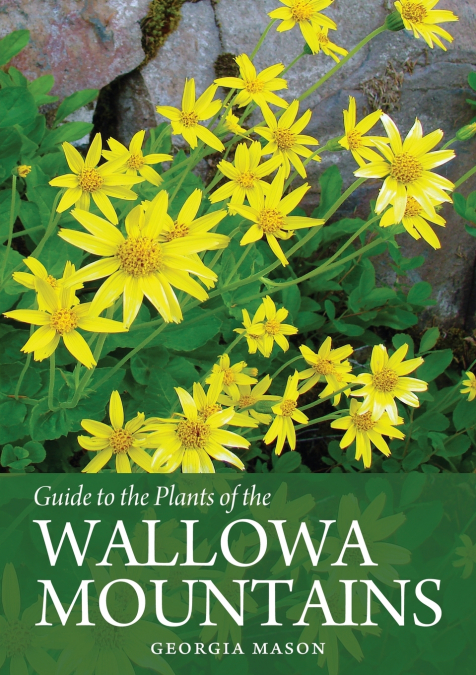
  • Guide to the Plants of the Wallowa Mountains of Northeastern Oregon
    Georgia Mason
    Guide to the Plants of the Wallowa Mountains of Northeastern Oregon, first published in 1975, is acomprehensive flora of the botanically rich Wallowa Mountains of northeast Oregon. Introductory sections discuss the natural history of the Wallowa Mountains, and their geology, vegetation zones and botanical history. Keys to each family, genus, and species are provided, as are des...
    Disponible

    25,10 €

  • Camp’s Botany by the Numbers
    Kenneth R Camp
    Camp’s Botany by the Numbers provides a succinct, yet comprehensive walk through the plant kingdom in study outline form. Camp’s Biology by the Numbers guide series provide advanced high school students or college students with reliable, information-packed study tools that can save the reader from many hours of scouring dry textbooks. If you have a professor you can’t understan...
    Disponible

    32,31 €

  • Field Guide to the Palms of the Americas
    Andrew Henderson / Gloria Galeano / Rodrigo Bernal
    This user-friendly and authoritative book will serve scientists, growers, and sightseers as a guide to the 67 genra and 550 species of naturally occurring palms found in the Americas. Its purpose is to give an introduction to the diversity of palms and allow almost anyone to identify a palm from this part of the world.Andrew Henderson is Assistant Scientist at the New York Bota...