
Inicio > Tecnología, ingeniería, agricultura > Tecnología: cuestiones generales > Methods and Concepts for Designing and Validating Smart Grid Systems
Methods and Concepts for Designing and Validating Smart Grid Systems

Methods and Concepts for Designing and Validating Smart Grid Systems

Methods and Concepts for Designing and Validating Smart Grid Systems


91,89 €
IVA incluido
Disponible
Editorial:
MDPI AG
Año de edición:
2019
Materia
Tecnología: cuestiones generales
ISBN:
9783039216482
91,89 €
IVA incluido
Disponible

Selecciona una librería:

  • Librería Samer Atenea
  • Librería Aciertas (Toledo)
  • Kálamo Books
  • Librería Perelló (Valencia)
  • Librería Elías (Asturias)
  • Donde los libros
  • Librería Kolima (Madrid)
  • Librería Proteo (Málaga)

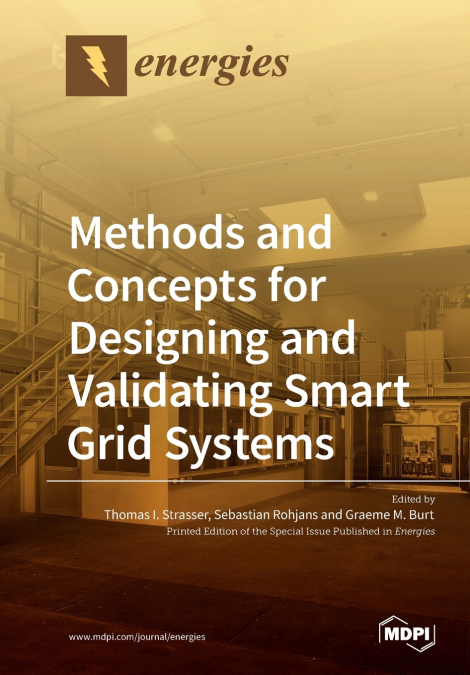
Energy efficiency and low-carbon technologies are key contributors to curtailing the emission of greenhouse gases that continue to cause global warming. The efforts to reduce greenhouse gas emissions also strongly affect electrical power systems. Renewable sources, storage systems, and flexible loads provide new system controls, but power system operators and utilities have to deal with their fluctuating nature, limited storage capabilities, and typically higher infrastructure complexity with a growing number of heterogeneous components. In addition to the technological change of new components, the liberalization of energy markets and new regulatory rules bring contextual change that necessitates the restructuring of the design and operation of future energy systems. Sophisticated component design methods, intelligent information and communication architectures, automation and control concepts, new and advanced markets, as well as proper standards are necessary in order to manage the higher complexity of such intelligent power systems that form smart grids. Due to the considerably higher complexity of such cyber-physical energy systems, constituting the power system, automation, protection, information and communication technology (ICT), and system services, it is expected that the design and validation of smart-grid configurations will play a major role in future technology and system developments. However, an integrated approach for the design and evaluation of smart-grid configurations incorporating these diverse constituent parts remains evasive. The currently available validation approaches focus mainly on component-oriented methods. In order to guarantee a sustainable, affordable, and secure supply of electricity through the transition to a future smart grid with considerably higher complexity and innovation, new design, validation, and testing methods appropriate for cyber-physical systems are required. Therefore, this book summarizes recent research results and developments related to the design and validation of smart grid systems.


Artículos relacionados

  • Science and the Big Issues of Our Time
    Martin Gellender
    Within the last few generations, our world has been shaped by technological change enabled by scientific advances. This is particularly evident to the 'baby boomer' generation, who have lived through and witnessed huge changes in society over the course of their lifetimes. Although many have little education in science, or have forgotten what they learned in high school, they u...
    Disponible

    26,58 €

  • Statics+++
    James W Dally / Robert J Bonenberger
    This textbook has been prepared to support a course offering for Statics at the University of Nevada at Reno.  Statics provides the first exposure of engineering students to the study of mechanics.  While Statics is a relatively simple subject, many students find it difficult, and they often perform far below our expectations.  In an effort to improve the curriculum, several me...
    Disponible

    101,22 €

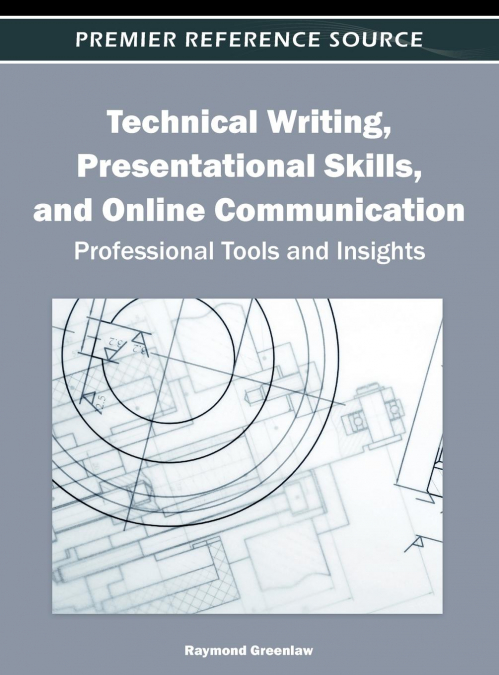
  • Technical Writing, Presentational Skills, and Online Communication
    Raymond Greenlaw
    This book addresses four main topics: professional ethics, technical writing, presentation skills, and online writing. These topics are woven throughout the book and some of them are the main subjects of one or more chapters. The overarching theme of this book is to provide well-tested, best-practice techniques and strategies for main topic areas while focusing on information t...
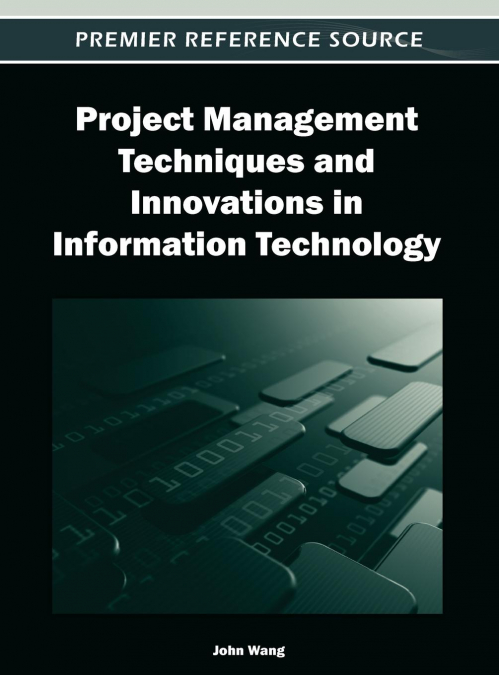
  • Project Management Techniques and Innovations in Information Technology
    John Wang
    Managing cost, time, and quality of a project can be a challenging task for any project manager, but especially in times of an ever-changing and burgeoning field of IT. Project Management Techniques and Innovations in Information Technology offers a vital compendium of the latest research, case studies, best practices, and methodologies within the field of IT project management...
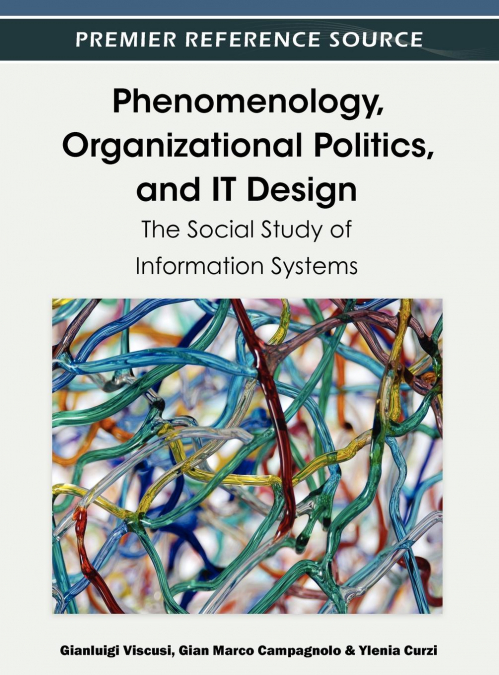
  • Phenomenology, Organizational Politics, and IT Design
    Information systems are researched, published on, and utilized as an extremely broad and vital sector of current technology development, usually studied from the scientific or technological viewpoints therein. Phenomenology, Organizational Politics, and IT Design: The Social Study of Information Systems offers a new look at the latest research and critical issues within the fie...
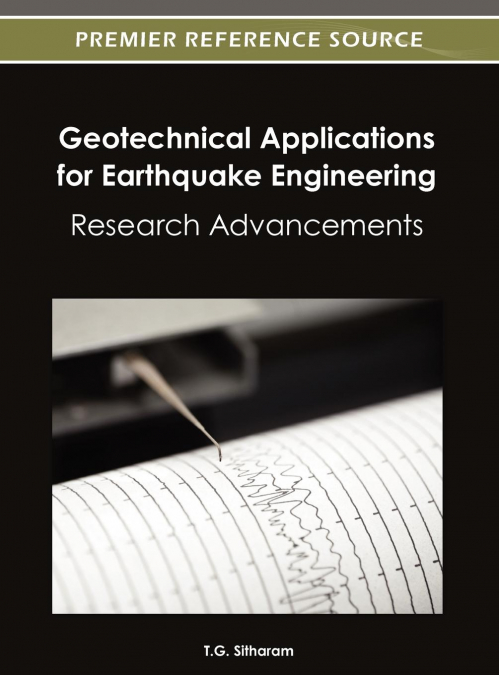
  • Geotechnical Applications for Earthquake Engineering
    Disaster preparedness and response management is a burgeoning field of technological research, and staying abreast of the latest developments within the field is a difficult task. Geotechnical Applications for Earthquake Engineering: Research Advancements has collected chapters from experts from around the world in a variety of applications, frameworks, and methodologies, and p...