 Librería Samer Atenea
 Kálamo Books
 Librería Elías (Asturias)
 Librería Kolima (Madrid)
 Librería Proteo (Málaga)
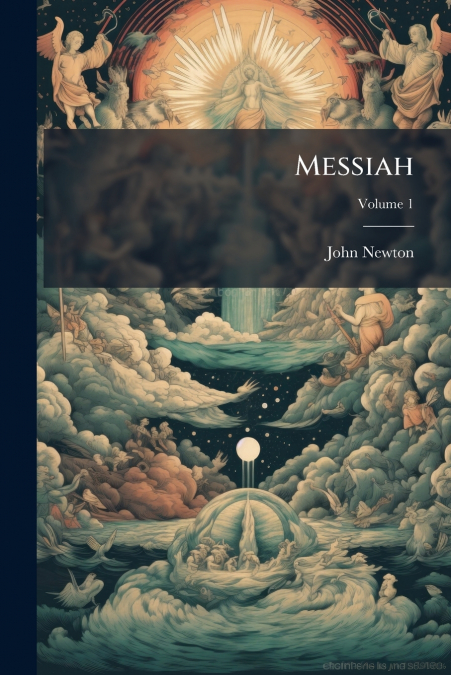
Messiah, Volume 1 presents fifty expository discourses by John Newton, focusing on the scriptural passages that form the foundation of Handel’s celebrated oratorio, 'Messiah.' This profound work delves into the theological and spiritual significance of the biblical text, offering readers a deeper understanding of the prophecies and narratives that inspired Handel’s masterpiece. Newton’s insightful commentary illuminates the rich layers of meaning within the scriptures, providing a valuable resource for both religious scholars and enthusiasts of classical music. This volume explores themes of redemption, salvation, and the divine plan as revealed through the life, death, and resurrection of Jesus Christ. Newton’s writing combines scholarly rigor with pastoral sensitivity, making these discourses accessible and engaging for a wide audience. 'Messiah' serves as an enduring testament to the power of faith and the beauty of sacred music, offering timeless wisdom and spiritual enrichment.This work has been selected by scholars as being culturally important, and is part of the knowledge base of civilization as we know it. This work was reproduced from the original artifact, and remains as true to the original work as possible. Therefore, you will see the original copyright references, library stamps (as most of these works have been housed in our most important libraries around the world), and other notations in the work.This work is in the public domain in the United States of America, and possibly other nations. Within the United States, you may freely copy and distribute this work, as no entity (individual or corporate) has a copyright on the body of the work.As a reproduction of a historical artifact, this work may contain missing or blurred pages, poor pictures, errant marks, etc. Scholars believe, and we concur, that this work is important enough to be preserved, reproduced, and made generally available to the public. We appreciate your support of the preservation process, and thank you for being an important part of keeping this knowledge alive and relevant.