Merchants and Entrepreneurs in Imperial Russia

Merchants and Entrepreneurs in Imperial Russia

Merchants and Entrepreneurs in Imperial Russia

Alfred J. Rieber / Alfred JRieber

76,41 €
IVA incluido
Disponible
Editorial:
Longleaf on behalf of Univ of N. Carolina Press
Año de edición:
1991
Materia
Historia de otras regiones
ISBN:
9780807843055
76,41 €
IVA incluido
Disponible

Selecciona una librería:

  • Librería Samer Atenea
  • Librería Aciertas (Toledo)
  • Kálamo Books
  • Librería Perelló (Valencia)
  • Librería Elías (Asturias)
  • Donde los libros
  • Librería Kolima (Madrid)
  • Librería Proteo (Málaga)

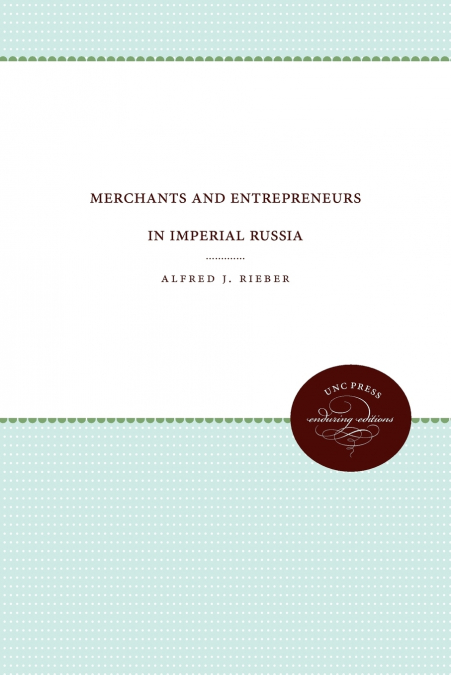
This book is the first general history of Russian 'businessmen' from Peter the Great to the Revolution of 1917. It is also a challenging new interpretation of the nature of social change in tsarist Russia.Alfred Rieber seeks to explain how Russia developed a capitalist economy and launched a major industrialization without giving rise to a mature bourgeoisie. His analysis concentrates on the deep-seated social divisions that prevented the political unity of the Russian middle classes even when their vital interests were threatened by powerful bureaucrats and a workers’ revolution. He concludes that the fate of the Russian merchants and industrialists was part of a larger social fragmentation in Russia on the eve of World War I.Rieber argues that the merchantry was throughout its history the most unstable and politically passive group in Russian society. Periodically swamped by an influx of peasants, the merchants were never able to free themselves from state tutelage or their own traditional values. Surrounded by ethnic rivals, the Great Russian merchantry adopted the mentality of a besieged camp. The real innovators in Russia’s industrialization were social deviants--Old Believer peasants, declasse nobles, and non-Russian peoples on the periphery of the empire. But even these 'entrepreneurial groups' failed to provide the leadership for a strong middle class because they were deeply marked by competing regional and ethnic attachments. In Rieber’s analysis the Russian bureaucracy shares much of the blame for the absence of a cohesive class structure in Russia. It feared and opposed the emergence of a bourgeoisie, and it was deeply split over the question of industrialization. Rieber concludes that the bureaucracy helped to maintain the legal distinctions within Russian society that contributed to its fragmentation.This work touches on almost every aspect of imperial Russian society--its political and legal institutions, social movements, intellectual currents, and economic development. Rieber has drawn on a wide range of sources including Soviet archives, merchant memoirs, contemporary journals, pamphlets and newspapers, and the proceedings and reports of many specialized societies and organizations.Originally published in 1991.A UNC Press Enduring Edition -- UNC Press Enduring Editions use the latest in digital technology to make available again books from our distinguished backlist that were previously out of print. These editions are published unaltered from the original, and are presented in affordable paperback formats, bringing readers both historical and cultural value.

Artículos relacionados

  • Negotiating the NWT Devolution of Lands & Resources
    Hal J. Gerein / Hal JGerein
    In this story, the author is the GNWT's Chief Negotiator for the devolution of lands and resources from Canada. Devolution means the transfer of authority from a senior level of government to a junior level. Many national governments today areinvolved with devolution as a means to "subsidiarity", the principle that politicalpower should be exercised by the least central or ...
    Disponible

    44,75 €

  • 'THE TRIPLE WHAMMY' AND OTHER RUSSIAN STORIES
    Louis Menashe
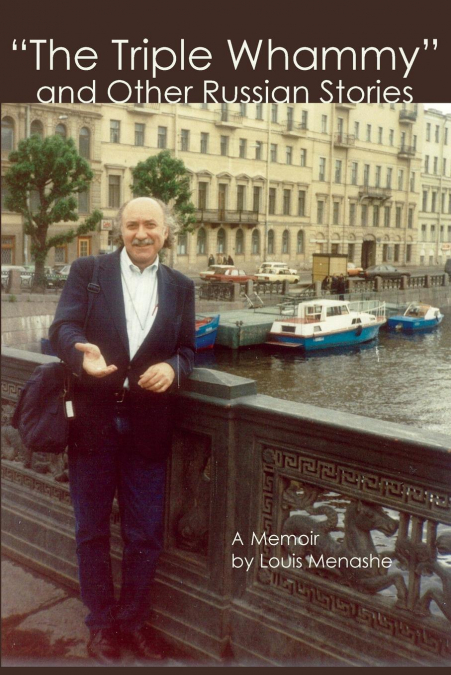
    A captivating lifetime of personal and professional experiences by an American historian, film specialist and documentary filmmaker in the Soviet Union and post-Soviet Russia. The author’s experiences as a radical in the turbulent 1960s, and his eventual disenchantment offer some precedents and perspectives to all those on the Left, Center or Right interested in the fluctuation...
    Disponible

    26,31 €

  • In Defence of Lenin
    Alan Woods / Rob Sewell
    John Reed, the author of Ten Days that Shook the World, once said that Lenin was the most loved and the most hated person alive. He was loved by tens of millions who wanted to change society, but hated by the ruling class and their apologists.As the creator of the Bolshevik Party and leader of the Russian Revolution, Lenin was a man who changed the world and translated the idea...
    Disponible

    23,85 €

  • The peoples of Ancient Siberia
    Aleksei P Okladnikov / Richard L Bland
    Foreword: Elena A. Okladnikova, Herzen University, St. Petersburg (Russia), Deputy Director for Museum Work at the Peter the Great Museum of Anthropology and Ethnography (Kunstkamera)Translators: Richard L. Bland, Archeologist (retired), U.S. National Park Service, Heritage Research Associates, University of Oregon Museum of Natural and Cultural History; Yaroslav V. Kuzmin, Ins...
  • The Oldest Art of Siberia
    Liudmila V Lbova / Pavel V Volkov / Richard L Bland
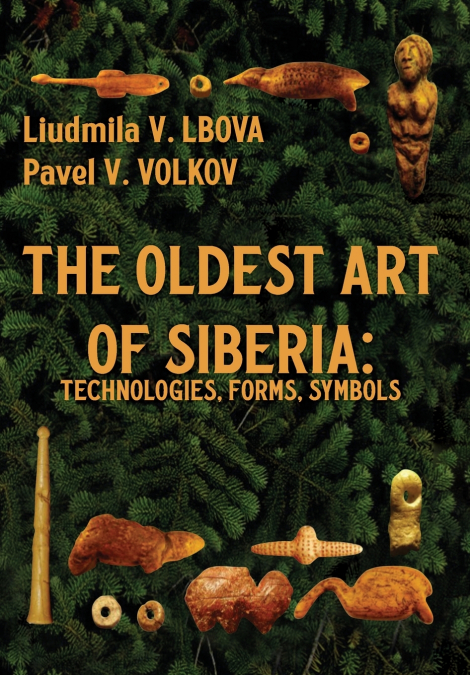
    Primitive art is inseparable from primitive consciousness and can be correctly understood only with the correct socio-cultural context. This book examines the ancient art of Siberia as part of the integral whole of ancient society. ...
  • The Depths of Russia
    Douglas Rogers / Polina Shubina
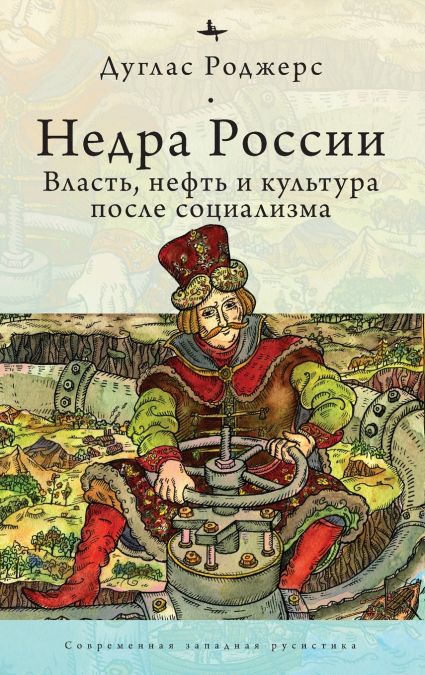
    In The Depths of Russia, Yale anthropologist and historian Douglas Rogers tells the history of Russian oil from the perspective of the Perm region of the Urals. From the discovery of world’s first socialist oil in 1929 to the oil-fueled social and cultural politics of the 2000s, he shows how Permian oil illuminates the place of oil in the modern world in new ways. Rogers pays p...

Otros libros del autor