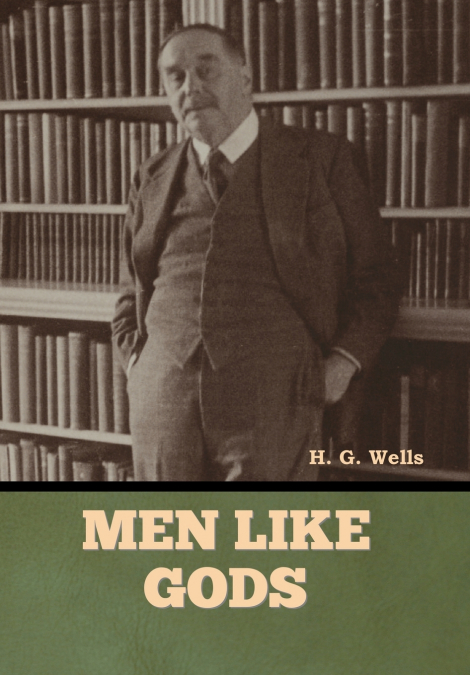

Men Like Gods

Men Like Gods

H. G. Wells

29,31 €
IVA incluido
Consulta disponibilidad
Editorial:
IndoEuropeanPublishing
Año de edición:
2023
Materia
Ficción clásica
ISBN:
9798889421788

Selecciona una librería:

  • Librería Samer Atenea
  • Librería Aciertas (Toledo)
  • Kálamo Books
  • Librería Perelló (Valencia)
  • Librería Elías (Asturias)
  • Donde los libros
  • Librería Kolima (Madrid)
  • Librería Proteo (Málaga)

Men Like Gods (1923) is a novel, referred to by the author as a 'scientific fantasy', by English writer H. G. Wells. It features a utopia located in a parallel universe.  Men Like Gods is set in the summer of 1921. Its protagonist is Mr. Barnstaple (his first name is either Alfred or William), a journalist working in London and living in Sydenham. He has grown dispirited at a newspaper called The Liberal and resolves to take a holiday. Taking leave of his wife and family, his plans are disrupted when his and two other automobiles are accidentally transported with their passengers into 'another world,' which the 'Earthlings' call Utopia. A sort of advanced Earth, Utopia is some three thousand years ahead of humanity in its development. For the 200,000,000 Utopians who inhabit this world, the 'Days of Confusion' are a distant period studied in history books, but their past resembles humanity’s in its essentials, differing only in incidental details: their Christ, for example, died on the wheel, not on the cross. Utopia lacks any world government and functions as a successfully realised anarchy. 'Our education is our government,' a Utopian named Lion says. Sectarian religion, like politics, has died away, and advanced scientific research flourishes. Life in Utopia is governed by 'the Five Principles of Liberty', which are privacy, free movement, unlimited knowledge, truthfulness, and free discussion (allowing criticism). Men Like Gods is divided into three books. Details of life in Utopia are given in Books I and III. In Book II, the Earthlings are quarantined on a rocky crag after infections they have brought cause a brief epidemic in Utopia. There they begin to plot the conquest of Utopia, despite Mr. Barnstaple’s protests. He betrays them when his fellows try to take two Utopians hostage, forcing Mr. Barnstaple to escape execution for treason by fleeing perilously. In Book III, Mr. Barnstaple longs to stay, but when he asks how he can best serve Utopia, he is told that he can do this 'by returning to your own world'. Regretfully he accepts and ends his month-long stay in Utopia. But he brings with him back to Earth a renewed determination to contribute to the effort to make a terrestrial Utopia: 'He belonged now soul and body to the Revolution, to the Great Revolution that is afoot on Earth; that marches and will never desist nor rest again until old Earth is one city and Utopia set up therein. He knew clearly that this Revolution is life, and that all other living is a trafficking of life with death.'  Contemporary reviews of the novel were largely positive, though some found the story weakly plotted. As is often the case in his later fiction, Wells’s utopian enthusiasm exceeded his interest in scientific romance or fantasy (his own terms for what is now called science fiction). The novel was yet another vehicle for Wells to propagate ideas of a possible better future society, also attempted in several other works, notably in A Modern Utopia (1905). Men Like Gods and other novels like it provoked Aldous Huxley to write Brave New World (1932), a parody and critique of Wellsian utopian ideas. Wells himself later commented on the novel: 'It did not horrify or frighten, was not much of a success, and by that time, I had tired of talking in playful parables to a world engaged in destroying itself.' (wikipedia.org)
Artículos relacionados

  • Black Beauty
    Anna Sewell
    Black Beauty is the autobiography of a horse. This gentle book follows the life a well bred horse, from his early childhood in a pleasant meadow, through a myriad of owners—some kind and some cruel—until fate returns him to the meadow in which he was born. A wonderful story that will remain with you and your child. ...
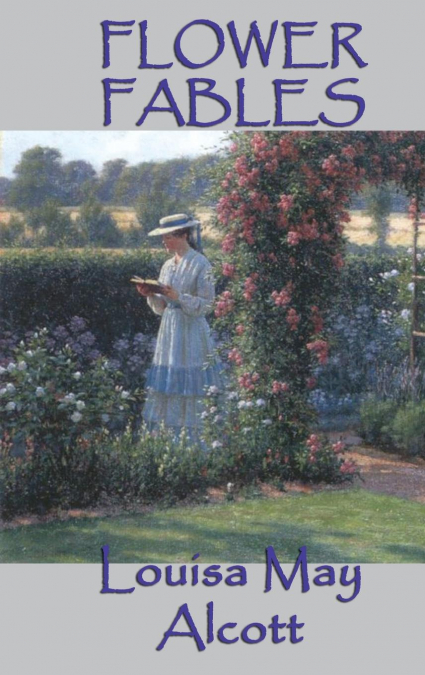
  • Flower Fables
    Louisa May Alcott
    Louisa May Alcott was an American novelist best known as author of the novel Little Women. In the mid-1860s, Alcott wrote passionate, fiery novels and sensational stories. She also produced wholesome stories for children, and after their positive reception, she did not generally return to creating works for adults. Alcott continued to write until her death. ...
  • Civil War Stories
    Ambrose Bierce
    Bierce was considered a master of pure English by his contemporaries, and virtually everything that came from his pen was notable for its judicious wording and economy of style. He wrote in a variety of literary genres. His short stories are held among the best of the 19th century, providing a popular following based on his roots. He wrote realistically of the terrible things h...
  • Jonas on a Farm in Winter
    Jacob Abbott
    ...
  • A Message to Garcia
    Elbert Hubbard
    A Message to Garcia is one of the most widely read inspirational stories of all time. Since it’s publication it has sold more than 40 million copies. This is the touching story of an American soldier who must get a message through enemy lines to General Garcia. The lessons contained within it have changed the lives of countless people. Prepare to be inspired. This edition also ...
  • Beyond the Gates
    Elizabeth Stuart Phelps
    I had been ill for several weeks with what they called brain fever. The events which I am about to relate happened on the fifteenth day of my illness. ...

Otros libros del autor

  • The Salvaging of Civilization (Esprios Classics)
    H. G. Wells
    Herbert George Wells (21 September 1866 - 13 August 1946) was an English writer. Prolific in many genres, he wrote dozens of novels, short stories, and works of social commentary, history, satire, biography and autobiography. His work also included two books on recreational war games. Wells is now best remembered for his science fiction novels and is often called the 'father of...
  • The New Machiavelli (Esprios Classics)
    H. G. Wells
    Herbert George Wells (21 September 1866 - 13 August 1946) was an English writer. Prolific in many genres, he wrote dozens of novels, short stories, and works of social commentary, history, satire, biography and autobiography. His work also included two books on recreational war games. Wells is now best remembered for his science fiction novels and is often called the 'father of...
  • The Island of Doctor Moreau (Esprios Classics)
    H. G. Wells
    Herbert George Wells (21 September 1866 - 13 August 1946) was an English writer. Prolific in many genres, he wrote dozens of novels, short stories, and works of social commentary, history, satire, biography and autobiography. His work also included two books on recreational war games. Wells is now best remembered for his science fiction novels and is often called the 'father of...
  • Large Print - The War of the Worlds - Grand Type Collector’s Edition - Matte Hardcover with Dust Jacket
    H. G. Wells
    Experience timeless classics like never before in this Grand Type Collector’s EditionWith clear, easy-to-read formatting, this edition is designed for readers who prefer or require larger text without sacrificing the excitement of the original.Large Print Features:18-point font: Generously sized text for maximum readability and comfort.Sans-serif font: Clean, modern typeface de...
  • The World Set Free (Esprios Classics)
    H. G. Wells
    Herbert George Wells (21 September 1866 - 13 August 1946) was an English writer. Prolific in many genres, he wrote dozens of novels, short stories, and works of social commentary, history, satire, biography and autobiography. His work also included two books on recreational war games. Wells is now best remembered for his science fiction novels and is often called the 'father of...
  • The War of the Worlds (Esprios Classics)
    H. G. Wells
    Herbert George Wells (21 September 1866 - 13 August 1946) was an English writer. Prolific in many genres, he wrote dozens of novels, short stories, and works of social commentary, history, satire, biography and autobiography. His work also included two books on recreational war games. Wells is now best remembered for his science fiction novels and is often called the 'father of...