 Librería Samer Atenea
 Kálamo Books
 Librería Elías (Asturias)
 Librería Kolima (Madrid)
 Librería Proteo (Málaga)
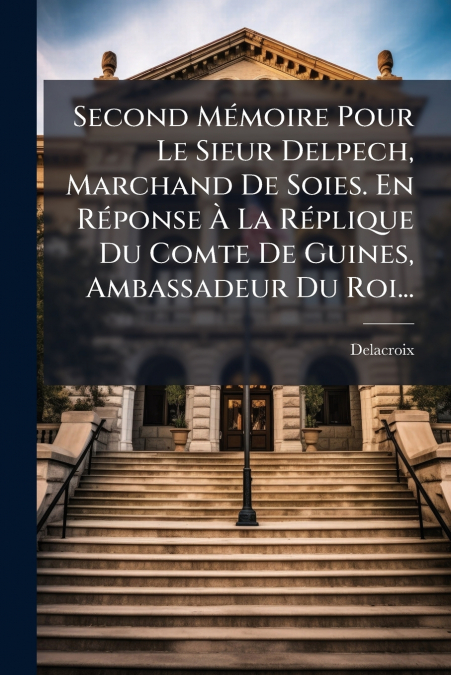
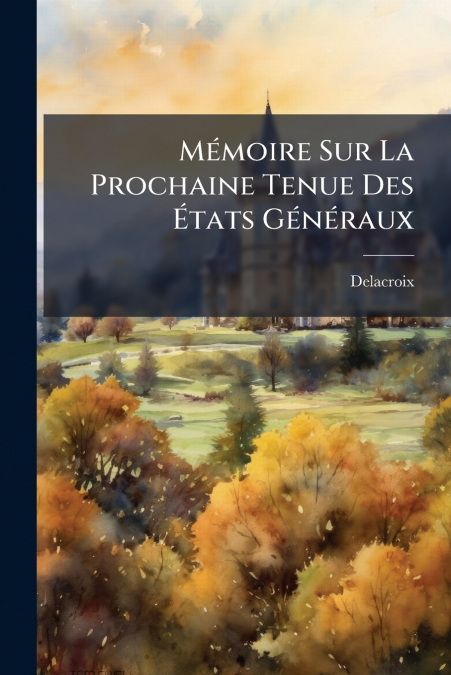
Mémoire Sur La Prochaine Tenue Des États Généraux, Et Sur Les Objets Qui Doivent Y Être Mis En Délibération, written by Delacroix and published in 1788, offers a crucial insight into the political and social climate of pre-revolutionary France. This historical document delves into the pressing issues surrounding the convocation of the Estates-General, exploring the subjects deemed essential for deliberation. As a primary source, this memoir provides invaluable context for understanding the grievances and aspirations of the French people on the eve of the French Revolution. It remains a significant text for scholars and historians interested in the origins of modern political thought and the dynamics of late 18th-century Europe. Its historical value lies in its ability to transport readers back to a pivotal moment in history, offering a first-hand account of the debates and concerns that shaped the course of France.This work has been selected by scholars as being culturally important, and is part of the knowledge base of civilization as we know it. This work was reproduced from the original artifact, and remains as true to the original work as possible. Therefore, you will see the original copyright references, library stamps (as most of these works have been housed in our most important libraries around the world), and other notations in the work.This work is in the public domain in the United States of America, and possibly other nations. Within the United States, you may freely copy and distribute this work, as no entity (individual or corporate) has a copyright on the body of the work.As a reproduction of a historical artifact, this work may contain missing or blurred pages, poor pictures, errant marks, etc. Scholars believe, and we concur, that this work is important enough to be preserved, reproduced, and made generally available to the public. We appreciate your support of the preservation process, and thank you for being an important part of keeping this knowledge alive and relevant.