 Librería Samer Atenea
 Kálamo Books
 Librería Elías (Asturias)
 Librería Kolima (Madrid)
 Librería Proteo (Málaga)
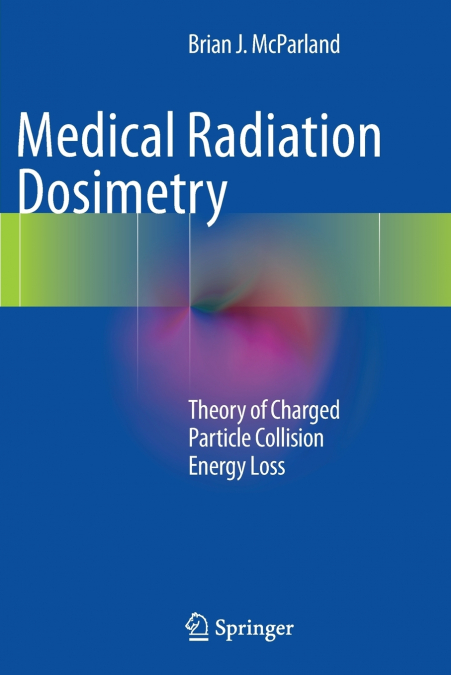
Accurate radiation dosimetry is a requirement of radiation oncology, diagnostic radiology and nuclear medicine. It is necessary so as to satisfy the needs of patient safety, therapeutic and diagnostic optimisation, and retrospective epidemiological studies of the biological effects resulting from low absorbed doses of ionising radiation. The radiation absorbed dose received by the patient is the ultimate consequence of the transfer of kinetic energy through collisions between energetic charged particles and atoms of the tissue being traversed. Thus, the ability of the medical physicist to both measure and calculate accurately patient dosimetry demands a deep understanding of the physics of charged particle interactions with matter. Interestingly, the physics of charged particle energy loss has an almost exclusively theoretical basis, thus necessitating an advanced theoretical understanding of the subject in order to apply it appropriately to the clinical regime. Each year, about one-third of the world’s population is exposed to ionising radiation as a consequence of diagnostic or therapeutic medical practice. The optimisation of the resulting radiation absorbed dose received by the patient and the clinical outcome sought, whether diagnostic or therapeutic, demands accuracy in the evaluation of the radiation absorbed doses resulting from such exposures. This requirement arrises primarily from two broadly-encompassing factors:The requirement in radiation oncology for a 5% or less uncertainty in the calculation and measurement of absorbed dose so as to optimise the therapeutic ratio of the probabilities of tumour control and normal tissue complications; andThe establishment and further refinement of dose reference levels used in diagnostic radiology and nuclear medicine to minimise the amount of absorbed dose for a required degree of diagnostic benefit.The radiation absorbed dose is the outcome of energetic charged particles decelerating and transferring their kinetic energy to tissue. The calculation of this energy deposition, characterised by the stopping power, is unique in that it is derived entirely from theoretical principles. This dominant role of the associated theory makes its understanding of fundamental to the calculation of the radiation absorbed dose to the patient.The theoretical development of charged particle energy loss recognised in medical physics textbooks is in general limited to basic derivations based upon classical theory, generally a simplified form of the Bohr theory. More advanced descriptions of, for example, the Bethe-Bloch quantum result usually do not go beyond the simple presentation of the result without full explanation of the theoretical development of the theory and consideration of its limitations, its dependencies upon the Born perturbation theory and the various correction factors needed to correct for the failures of that Born theory at higher orders. This is not appropriate for a full understanding of the theory that its importance deserves. The medical radiation physicist should be aware of the details of the theoretical derivations of charged particle energy loss in order to appreciate the levels of accuracy in tabular data provided in reports and the calculation methodologies used in modern Monte Carlo calculations of radiation dosimetry.