
Means, Ends and Medical Care

Means, Ends and Medical Care

H.G. Wright

195,86 €
IVA incluido
Disponible
Editorial:
Springer Nature B.V.
Año de edición:
2010
Materia
Ética y filosofía moral
ISBN:
9789048173327
195,86 €
IVA incluido
Disponible

Selecciona una librería:

  • Librería Samer Atenea
  • Librería Aciertas (Toledo)
  • Kálamo Books
  • Librería Perelló (Valencia)
  • Librería Elías (Asturias)
  • Donde los libros
  • Librería Kolima (Madrid)
  • Librería Proteo (Málaga)

Overview: Broad Considerations in the Relation of Means and Ends, Treating and Healing. 1. Cognitive Semantic Structures in Informal Means/Ends Reasoning. a. Formal as Opposed to Informal Approaches to Decision Making. b. Imaginative Structures Used in Informal Clinical Reasoning. c. The Embodied Basis of Valuation. d. Conclusion. 2. Health and Disease: Fluid Concepts Evolved Non-Literally. a. An Overview. b. Why and (Provisionally) How Disease Is a Radial Category. c. Central Members of the Disease Category. d. Non-Central Members of the Disease Category. e. Conclusion. 3. John Dewey’s Perspective on Means and Ends: the Setting which makes Informal Deliberation Necessary. a. Naturalism. b. Antifoundationalism. c. Qualities Unquantifiable. d. Qualities Fully Real. e. Values Interactional, Not Rigidly Compartmental. f. Broad View of Rationality. g. The Importance of Context. h. Conclusion.4. John Dewey’s View of Situations, Problems, Means and Ends. a. Situations. b. Tertiary Qualities. c. Settled and Unsettled Situations. d. Means and Ends. e. The Strengths of Dewey’s Theory, In Summary. f. Problems of Dewey’s Means and Ends Theory. 5. Preference, Utility and Value in Means and Ends Reasoning. a. Introduction. b. General Assumptions of Expected Utility Theory. c. The Axioms of Expected Utility Theory. d. Utility Is Not Fulfillment. Fulfillment Is Not Utility. e. Utility and the Past. f. Reasoning about Ends. g. Conclusion. 6. Full Spectrum Means and Ends Reasoning: its Place in Medicine. First Part: Informal Judgment and the Art of Medicine. a. Judgments. About the Setting. b. Defining the Problematic Situation. c. Judgments about the Problem.d. Judgments about Ends and Values. e. Judgments about Treatment. Second Part: Providing for the Art of Medicine. a. Medical Education and Health Care Education in General. b. The Course of Medical Care. c. The Integrity of the Health Care Profession. Third Part: General Conclusion.


Artículos relacionados

  • Ka Ab Ba Building The Lighted Temple
    Dr Terri R. Nelson / Dr Terri RNelson
    The book KaAbBa Building The Lighted Temple/Metaphysical Keys to the Tree of Life draws a circle that is inclusive of the Afrikan origin of the Ancient Kemetic/Egyptian wisdom. It reveals the undeniable root and link of Ancient Africa to all the religious systems that would develop worldwide. This book is explosive in its power to convey the meaning of KaAbBa, the Medu Neter  (...
    Disponible

    37,41 €

  • Technoethics and the Evolving Knowledge Society
    Rocci Luppicini
    Recently, there has been a major push to rediscover the ethical dimension of technology across the sciences, social sciences, and humanities. Technoethics and the Evolving Knowledge Society: Ethical Issues in Technological Design, Research, Development, and Innovation examines human processes and practices connected to technology embedded within social, political, and moral sph...
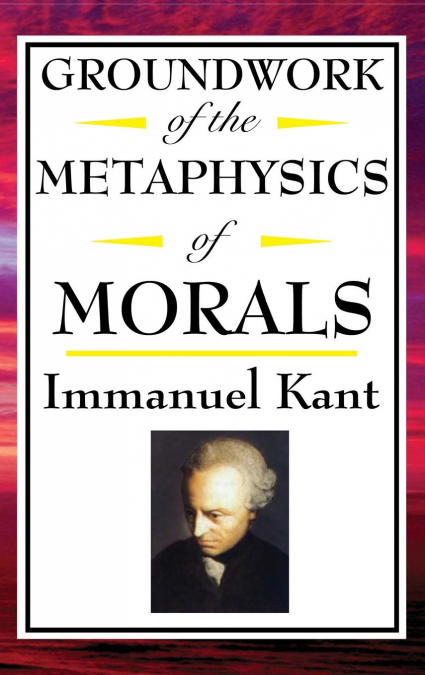
  • Kant
    Immanuel Kant
    Kant’s Groundwork of the Metaphysics of Morals is one of the most important works in modern moral philosophy. It belongs beside Plato, Aristotle, Machiavelli, and Hobbes. Here Kant sets out to articulate and defend the Categorical Imperative - the fundamental principle that underlies moral reasoning - and to lay the foundation for a comprehensive account of justice and human vi...
  • On the Duty of Civil Disobedience
    HENRY DAVID THOREAU
    Civil Disobedience argues that citizens should not permit their governments to overrule their consciences, and that they have a duty to avoid allowing their acquiescence to enable the government to make them the agents of injustice. Thoreau was motivated in part by his disgust with slavery and the Mexican-American War, but the sentiments he expresses here are just as pertinent ...
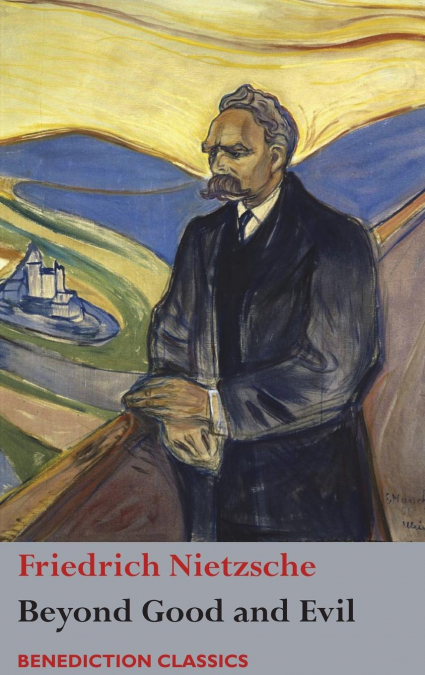
  • Beyond Good and Evil
    Friedrich Nietzsche
    Nietzsche, though primarily a philosopher, wrote widely on art, philology, history, religion, tragedy, culture, and science.  In 1886, at the height of his powers, he published Beyond Good and Evil.  Here he examines much of the best of human thought--dogmatic philosophy, Judeo-Christian morality, science and democracy – and finds it lacking.  Rejecting “slave-morality” he pres...
  • Beyond Good and Evil
    Friedrich Nietzsche
    Nietzsche, though primarily a philosopher, wrote widely on art, philology, history, religion, tragedy, culture, and science.  In 1886, at the height of his powers, he published Beyond Good and Evil.  Here he examines much of the best of human thought--dogmatic philosophy, Judeo-Christian morality, science and democracy – and finds it lacking.  Rejecting “slave-morality” he pres...
    Disponible

    9,99 €

Otros libros del autor

  • Means, Ends and Medical Care
    H.G. Wright
    In this remarkable book, Gary Wright focuses thirty years’ experience as a family physician, and his Ph.D. in philosophy, to address the nature of good medical reasoning. Wright folds cognitive science into a pragmatist framework developed by John Dewey; this alternative view of mind and medical judgment leads to a model of reasoning that offers realistic guidance for medical d...