 Librería Samer Atenea
 Kálamo Books
 Librería Elías (Asturias)
 Librería Kolima (Madrid)
 Librería Proteo (Málaga)
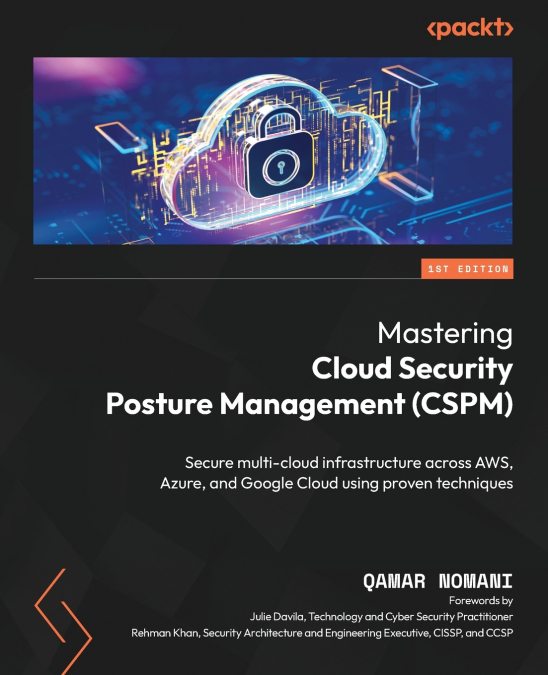
Strengthen your security posture in all aspects of CSPM technology, from security infrastructure design to implementation strategies, automation, and remedial actions using operational best practices across your cloud environmentKey FeaturesChoose the right CSPM tool to rectify cloud security misconfigurations based on organizational requirementsOptimize your security posture with expert techniques for in-depth cloud security insightsImprove your security compliance score by adopting a secure-by-design approach and implementing security automationPurchase of the print or Kindle book includes a free PDF eBookBook DescriptionThis book will help you secure your cloud infrastructure confidently with cloud security posture management (CSPM) through expert guidance that’ll enable you to implement CSPM effectively, ensuring an optimal security posture across multi-cloud infrastructures.The book begins by unraveling the fundamentals of cloud security, debunking myths about the shared responsibility model, and introducing key concepts such as defense-in-depth, the Zero Trust model, and compliance. Next, you’ll explore CSPM’s core components, tools, selection criteria, deployment strategies, and environment settings, which will be followed by chapters on onboarding cloud accounts, dashboard customization, cloud assets inventory, configuration risks, and cyber threat hunting.As you progress, you’ll get to grips with operational practices, vulnerability and patch management, compliance benchmarks, and security alerts. You’ll also gain insights into cloud workload protection platforms (CWPPs). The concluding chapters focus on Infrastructure as Code (IaC) scanning, DevSecOps, and workflow automation, providing a thorough understanding of securing multi-cloud environments.By the end of this book, you’ll have honed the skills to make informed decisions and contribute effectively at every level, from strategic planning to day-to-day operations.What you will learnFind out how to deploy and onboard cloud accounts using CSPM toolsUnderstand security posture aspects such as the dashboard, asset inventory, and risksExplore the Kusto Query Language (KQL) and write threat hunting queriesExplore security recommendations and operational best practicesGet to grips with vulnerability, patch, and compliance management, and governanceFamiliarize yourself with security alerts, monitoring, and workload protection best practicesManage IaC scan policies and learn how to handle exceptionsWho this book is forIf you’re a cloud security administrator, security engineer, or DevSecOps engineer, you’ll find this book useful every step of the way-from proof of concept to the secured, automated implementation of CSPM with proper auto-remediation configuration. This book will also help cybersecurity managers, security leads, and cloud security architects looking to explore the decision matrix and key requirements for choosing the right product. Cloud security enthusiasts who want to enhance their knowledge to bolster the security posture of multi-cloud infrastructure will also benefit from this book.Table of ContentsCloud Security Fundamentals Understanding CSPM and the Threat LandscapeCSPM Tools and FeaturesCSPM Tool Selection Deploying the CSPM ToolOnboarding Cloud AccountsOnboarding ContainersExploring Environment SettingsExploring Cloud Asset InventoryDashboard OverviewMajor Configuration RisksInvestigating Threats with Query Explorers and KQL(N.B. Please use the Look Inside option to see further chapters)