Market Madness

Market Madness

Blake C Clayton

40,81 €
IVA incluido
Consulta disponibilidad
Editorial:
Oxford University Press
Año de edición:
2015
Materia
Economía medioambiental
ISBN:
9780199990054

Selecciona una librería:

  • Librería Samer Atenea
  • Librería Aciertas (Toledo)
  • Kálamo Books
  • Librería Perelló (Valencia)
  • Librería Elías (Asturias)
  • Donde los libros
  • Librería Kolima (Madrid)
  • Librería Proteo (Málaga)

Stock market booms are cause for celebration. But when oil prices soar because supplies are failing to keep up with demand, the response is nearly always apocalyptic. Predictions of the end of oil can create anxiety on Wall Street and in Washington, stoking fears that production has hit a ceiling and prices will rise in perpetuity. Yet these dire visions have always proven wrong.Market Madness is the story of four waves of American anxiety over the last 100 years about a looming end to oil reserves. Their sweeping pattern-as large price increases lead to widespread shortage fears that eventually dissipate when oil production rises again and prices moderate-has defined the wild price swings in the oil market down to the present day.Blake Clayton, a Wall Street stock analyst and adjunct fellow at the Council on Foreign Relations, makes the case for the need for better information, communication and transparency. While these measures will not eliminate volatility and unpredictability completely, they would mitigate unnecessary price spikes and improve both investor and government decision-making.Market Madness is the first study to employ Nobel Laureate economist Robert Shiller's "new era economics" beyond the markets to which he famously applied it-the 1990s dot-com equity market and the mid-2000s housing market-in order to better understand the dynamics of speculative bubbles and irrationality in the commodities markets. In so doing, it breaks new ground in illuminating how mass beliefs about the future of a vital asset like oil take shape and what the future of energy may hold.


Artículos relacionados

  • Technological Change and the British Iron Industry, 1700-1870
    Charles K. Hyde
    This book describes technological change in an industry that played a central role in the Indsutrial Revolution. While earlier scholars have examined isolated aspects of ironmaking in the eighteenth- and nineteenth-century Britain, Charles Hyde surveys all aspects of its development. Costs, prices, profits, shrewd leaders, competition, new inventions, and productivity all figur...
    Disponible

    71,94 €

  • Corporate Governance in Asia
    ...
    Disponible

    72,99 €

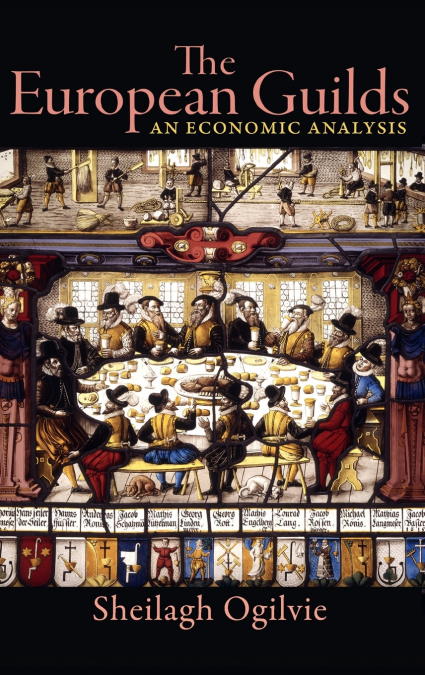
  • The European Guilds
    Sheilagh Ogilvie
    A comprehensive analysis of European craft guilds through eight centuries of economic historyGuilds ruled many crafts and trades from the Middle Ages to the Industrial Revolution, and have always attracted debate and controversy. They were sometimes viewed as efficient institutions that guaranteed quality and skills. But they also excluded competitors, manipulated markets, and ...
  • Technological Change and the British Iron Industry, 1700-1870
    Charles K. Hyde
    This book describes technological change in an industry that played a central role in the Indsutrial Revolution. While earlier scholars have examined isolated aspects of ironmaking in the eighteenth- and nineteenth-century Britain, Charles Hyde surveys all aspects of its development. Costs, prices, profits, shrewd leaders, competition, new inventions, and productivity all figur...
  • Technology Differences over Space and Time
    Francesco Caselli
    Technology Differences over Space and Time looks at how countries use their productive resources-such as workers, skills, equipment and structures, and natural resources. Francesco Caselli develops methods to assess the efficiency with which productive inputs are used, and how these efficiencies vary across countries and over time.Caselli finds that richer countries use skilled...
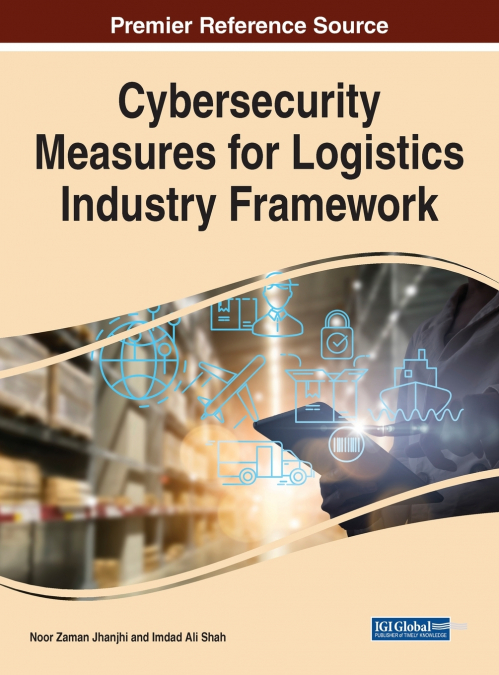
  • Cybersecurity Measures for Logistics Industry Framework
    Global supply chains are becoming more customer-centric and sustainable thanks to next-generation logistics management technologies. Automating logistics procedures greatly increases the productivity and efficiency of the workflow. There is a need, however, to create flexible and dynamic relationships among numerous stakeholders and the transparency and traceability of the supp...