 Librería Samer Atenea
 Kálamo Books
 Librería Elías (Asturias)
 Librería Kolima (Madrid)
 Librería Proteo (Málaga)
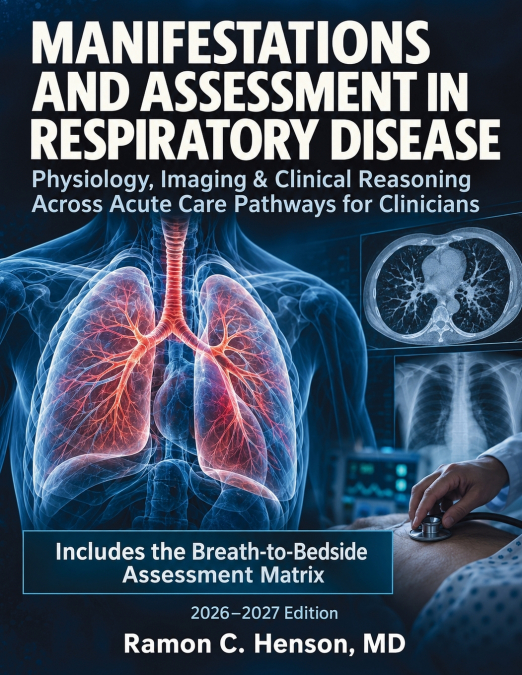
Connect Respiratory Findings to the Next Clinical Decision Manifestations and Assessment in Respiratory Disease develops a disciplined method for moving from symptoms and bedside findings to physiologic localization, technically valid testing, and risk-proportionate action. Written for clinicians who need to interpret overlapping pulmonary presentations, it integrates respiratory mechanics, gas exchange, examination, pulmonary-function testing, imaging, laboratory methods, invasive sampling, and serial reassessment across acute and longitudinal care. The recurring Breath-to-Bedside Assessment Matrix links each presenting pattern with its physiologic signal, high-value alternatives, workup pivot, and decision anchor. Clinical capabilities developed throughout the book include: Mechanism-based symptom interpretation - localize dyspnea, cough, chest pain, hemoptysis, wheeze, stridor, and exercise limitation before selecting tests Structured respiratory examination - combine inspection, palpation, percussion, auscultation, and trajectory into clinically meaningful sign clusters Gas-exchange reasoning - interpret oximetry, blood gases, hypoxemia mechanisms, hypercapnia, and mixed acid-base patterns in context Pulmonary-function interpretation - assess technical quality, spirometry, bronchodilator response, lung volumes, gas transfer, and exercise physiology Imaging correlation - apply fixed search patterns to radiography, thoracic ultrasound, computed tomography, and vascular imaging Laboratory and procedural selection - match microbiology, biomarkers, bronchoscopy, pleural studies, and tissue sampling to defined decisions Integrated syndrome recognition - distinguish airway, parenchymal, pleural, vascular, neuromuscular, and acute respiratory-failure patterns Longitudinal reassessment - document baseline reserve, treatment response, unresolved discordance, escalation thresholds, and follow-up responsibility Use this clinical reference to convert complex respiratory presentations into clear, physiologically grounded assessment pathways.