
Inicio > Humanidades > Filosofía > Ética y filosofía moral > Making Sense of Advance Directives
Making Sense of Advance Directives

Making Sense of Advance Directives

N.M. King

66,58 €
IVA incluido
Disponible
Editorial:
Springer Nature B.V.
Año de edición:
2012
Materia
Ética y filosofía moral
ISBN:
9789401054959
66,58 €
IVA incluido
Disponible

Selecciona una librería:

  • Librería Samer Atenea
  • Librería Aciertas (Toledo)
  • Kálamo Books
  • Librería Perelló (Valencia)
  • Librería Elías (Asturias)
  • Donde los libros
  • Librería Kolima (Madrid)
  • Librería Proteo (Málaga)

The first time I read the medical consent and authorization. it had registered in my mind simply as a legal document. Now I began to understand what it meant. It was a letter of ultimate love and trust. (Schucking. 1985. p. 268) Ever since Karen Ann Quinlan slipped into permanent unconsciousness in 1975 and her father agonized publicly over whether she should remain indefinitely on a respirator (In re Quinlan, 1976), the desires of patients, their families, and their friends to limit the application of apparently limitless medical technology have been a pressing concern for ethics, law, and public policy. Ms. Quinlan’s case contained nearly all the elements of the problems we still face: vague, general, but sincere prior oral statements suggesting that she would not want continued treatment; a family attempting to do what they saw as best for her; and physicians uncertain whether to use medical judgment alone (and if so, what the 'right' medical decision was), to preserve her life at all costs, or to honor the family’s interpretation of their daughter’s choice. Most ironically, once she was removed from her respirator, she did not die. Karen Quinlan - like dozens of other names made famous by court decisions, newspaper stories, and television evening news - has come to symbolize a tangled knot of issues surrounding the end of life and who controls it.

Artículos relacionados

  • Ka Ab Ba Building The Lighted Temple
    Dr Terri R. Nelson / Dr Terri RNelson
    The book KaAbBa Building The Lighted Temple/Metaphysical Keys to the Tree of Life draws a circle that is inclusive of the Afrikan origin of the Ancient Kemetic/Egyptian wisdom. It reveals the undeniable root and link of Ancient Africa to all the religious systems that would develop worldwide. This book is explosive in its power to convey the meaning of KaAbBa, the Medu Neter  (...
    Disponible

    37,41 €

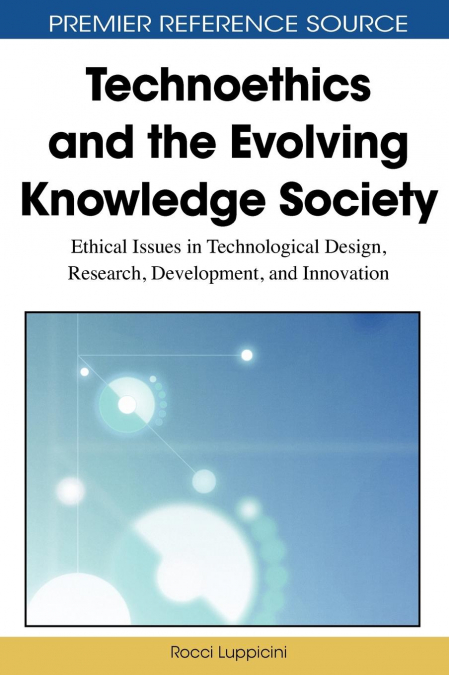
  • Technoethics and the Evolving Knowledge Society
    Rocci Luppicini
    Recently, there has been a major push to rediscover the ethical dimension of technology across the sciences, social sciences, and humanities. Technoethics and the Evolving Knowledge Society: Ethical Issues in Technological Design, Research, Development, and Innovation examines human processes and practices connected to technology embedded within social, political, and moral sph...
  • Kant
    Immanuel Kant
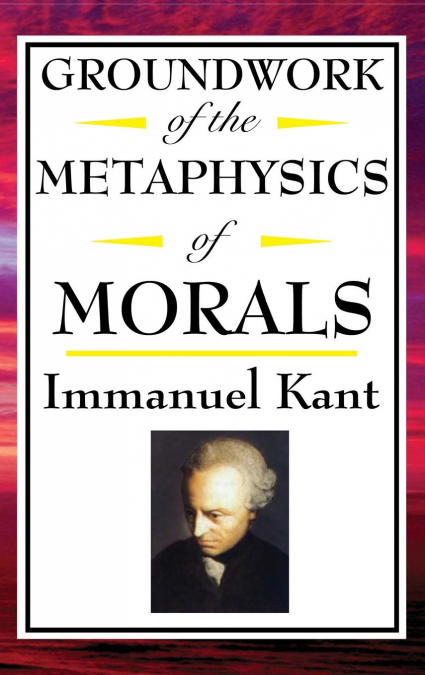
    Kant’s Groundwork of the Metaphysics of Morals is one of the most important works in modern moral philosophy. It belongs beside Plato, Aristotle, Machiavelli, and Hobbes. Here Kant sets out to articulate and defend the Categorical Imperative - the fundamental principle that underlies moral reasoning - and to lay the foundation for a comprehensive account of justice and human vi...
  • On the Duty of Civil Disobedience
    HENRY DAVID THOREAU
    Civil Disobedience argues that citizens should not permit their governments to overrule their consciences, and that they have a duty to avoid allowing their acquiescence to enable the government to make them the agents of injustice. Thoreau was motivated in part by his disgust with slavery and the Mexican-American War, but the sentiments he expresses here are just as pertinent ...
  • Beyond Good and Evil
    Friedrich Nietzsche
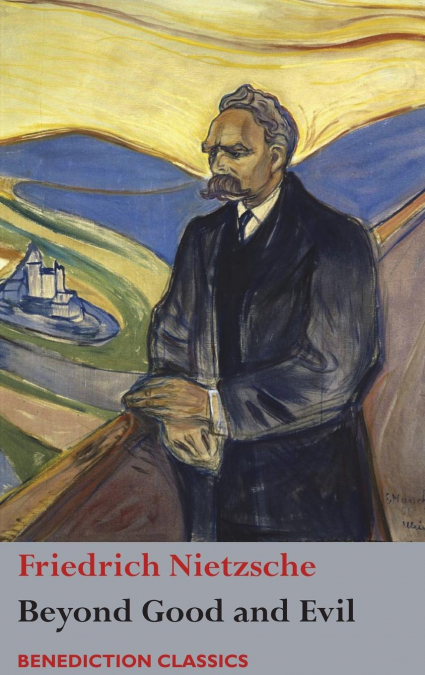
    Nietzsche, though primarily a philosopher, wrote widely on art, philology, history, religion, tragedy, culture, and science.  In 1886, at the height of his powers, he published Beyond Good and Evil.  Here he examines much of the best of human thought--dogmatic philosophy, Judeo-Christian morality, science and democracy – and finds it lacking.  Rejecting “slave-morality” he pres...
  • Beyond Good and Evil
    Friedrich Nietzsche
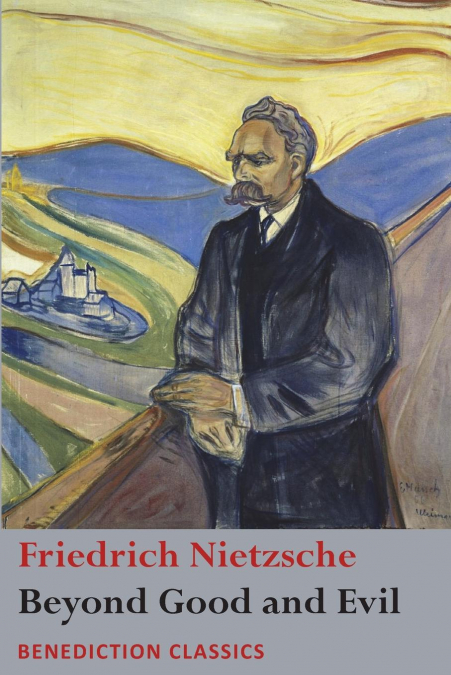
    Nietzsche, though primarily a philosopher, wrote widely on art, philology, history, religion, tragedy, culture, and science.  In 1886, at the height of his powers, he published Beyond Good and Evil.  Here he examines much of the best of human thought--dogmatic philosophy, Judeo-Christian morality, science and democracy – and finds it lacking.  Rejecting “slave-morality” he pres...
    Disponible

    9,99 €

Otros libros del autor

  • Making Sense of Advance Directives
    N.M. King
    One: Introduction.- Two: Treatment Refusal and the Patient’s Choice: Foundations in History, Law, and Ethics.- Three: The 'Future Factor': Conceptual Foundations of Advance Directives.- Four: Advance Directives: Current Forms, Legal Fears, Moral Goals.- Five: When Choices Fail.- Six: The Forecast for Advance Directives: Indispensable or Superfluous?.- Bibliography: Books and Ar...