
Inicio > Humanidades > Religión y creencias > Judaísmo > Making of Jewish Universalism
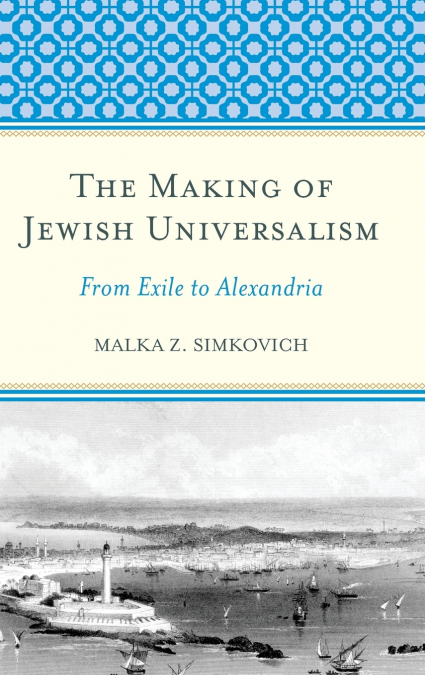
Making of Jewish Universalism

Making of Jewish Universalism

Making of Jewish Universalism

Malka Simkovich

114,02 €
IVA incluido
Consulta disponibilidad
Editorial:
Bloomsbury Publishing plc
Año de edición:
2016
Materia
Judaísmo
ISBN:
9781498542425

Selecciona una librería:

  • Librería Samer Atenea
  • Librería Aciertas (Toledo)
  • Kálamo Books
  • Librería Perelló (Valencia)
  • Librería Elías (Asturias)
  • Donde los libros
  • Librería Kolima (Madrid)
  • Librería Proteo (Málaga)

This book explores two kinds of universalist thought that circulated among Jews in the Greco-Roman world. The first, which is founded on the idea that all people may worship the One True God in an engaged and sustained manner, originates in biblical prophetic literature. The second, which underscores a common ethic that all people share, arose in the second century bce. This study offers one definition of Jewish universalism that applies to both of these types of universalist thought: universalist literature presumes that all people, regardless of religion and ethnicity, have access to a relationship with the Israelite God and the benefits promised to those loyal to this God, without demanding that they participate in the Israelite community as a Jew. This book opens with an exploration of four types of relationships between Israelites and non-Israelites in biblical prophetic literature: Israel as Subjugators, Israel as Standard-Bearers, Naturalized Nations, and Universalized Worship. In all of these relationships, the foreign nations will acknowledge the One True God, but it is only the Universalized Worship model that offers a truly universalist vision of the end-time. The second section of this book examines how these four relationship models are expressed in Second Temple literature, and the third section studies late Second Temple texts that employ a second kind of universalist thought that emphasizes ethical behavior. This book closes with the suggestion that Ethical Universalist ideas expressed in late Second Temple texts reflect exposure to Stoic thinkers who were developing universalist ideas in the second century BCE.
Artículos relacionados

  • Kabbalah Concepts
    Rabbi Raphael Afilalo
    The goal of this book is to provide a genuine picture of the true Kabbalah. The study of Kabbalah involves a good comprehension of its general idea, as well as its concepts. The Kabbalah explains often allegorically, the beginning of creation as well as all the dynamic systems that are put in place to interact with man, and for the guidance of the worlds. These systems make us ...
  • ספר תיקון הכללי השלם - לרבינו נחמן
    רבינו נחמן מברסלב
    ספר התיקון הכללירבינו נחמן מברסלבתיקון הכללי כולל עשרה פרקי תהלים: טז, לב, מא, מב, נט, עז, צ, קה, קלז, קנעשרה פרקי תהלים אלו גילה רבי נחמן כ'תיקון הכללי' לתיקון פגמי הברית. רבי נחמן הזכיר לראשונה את נושא 'התיקון הכללי' בשנת תקס'ה, אולם את עשרת מזמורי התהלים המדויקים המהווים את התיקון הכללי הוא גילה מאוחר יותר, רק בשנים תקס'ט - תק'עלראשונה הודפס ה'תיקון הכללי' כספר נפרד בשנת תק'...
    Disponible

    13,10 €

  • Sefer Chayim HaNitzchaim
    Zvi Hirsch Friedling / צבי הירש Friedling / צבי הירש פרידלינג
    This reprint is made available at cost by PublishYourSefer.com in partnership with HebrewBooks.org. The original scan is available as a free download at www.hebrewbooks.org/36410. The ID number for this title is 36410. PLEASE NOTE: due to the age, degradation in quality, and imperfections in the scanning process, some portions of this book may be obscured, damaged or incomplete...
  • No Religion without Idolatry
    Gideon Freudenthal
    No Religion without Idolatry offers an interpretation of Mendelssohn’s general philosophy and discusses for the first time his semiotic interpretation of idolatry in his commentaries. ...
  • Five Biblical Portraits
    Elie Wiesel
    Nobel Peace Prize-winner Elie Wiesel brings ancient religious leaders to literary life, framing his commentary with pressing and enduring questions as a survivor and witness to the Holocaust.Five Biblical Portraits represents an old-new approach to Jewish textual commentary. This sequel to Elie Wiesel’s Messengers of God continues the work done in that volume of bringing religi...
  • מדרש אותיות של רבי עקיבה - סוד אותיות התורה ומהזוהר הקדוש
    רבי עקיבה בן יוסף
    לְדַעַת רַבֵּנוּ הָאֲרִ'י זלה'ה צָרִיךְ לִכְתֹּב עֲקִיבָה עִם הָאוֹת ה’ וְלֹא א’, לָכֵן בְּסֵפֶר זֶה רַבִּי עֲקִיבָה הוּא עִם הָאוֹת הלִקּוּטֵי תּוֹרָה, כְּתוּבִים, תְּהִלִּים צז - אוּר’ זְרוֹעַ’ לַצַּדִּיק’ וּלְיִשְׁרֵי’ לֵב’ שְׂמֵחָה’. סוֹפִי תֵּבוֹת ר’ עֲקִיבָהשַׁעַר הַגִּלְגּוּלִים, הַקְדָּמָה לח - עֶרֶב שַׁבָּת בְּמִנְחָה, רְאֵה כָּתוּב בְּמִצְחִי בַּלָּשׁוֹן הַזֶּה, הֵכִי...

Otros libros del autor

  • Letters from Home
    Malka Simkovich
    The announcement by the Persian king Cyrus following his conquest of Babylon in 539 BCE that exiled Judahites could return to their homeland should have been cause for celebration. Instead, it plunged them into animated debate. Only a small community returned and participated in the construction of the Second Temple in Jerusalem. By the end of the sixth century BCE, they faced ...