 Librería Samer Atenea
 Kálamo Books
 Librería Elías (Asturias)
 Librería Kolima (Madrid)
 Librería Proteo (Málaga)
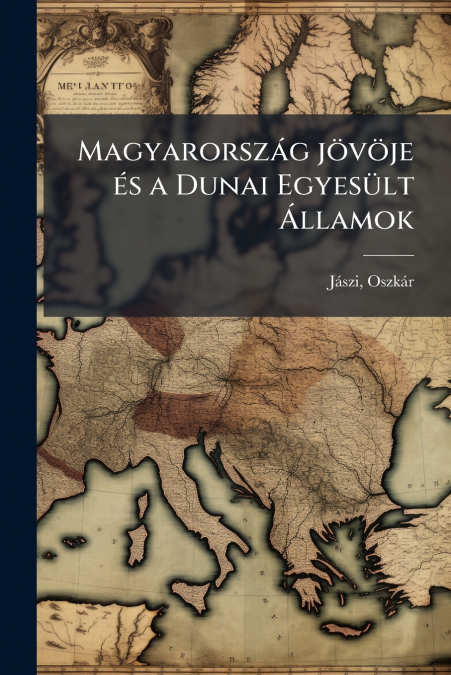
Magyarország jövöje és a Dunai Egyesült Államok (Hungary’s Future and the Danubian United States) by Oszkár Jászi, originally published in 1918, presents a vision for the future of Hungary and the broader Danube region following the collapse of the Austro-Hungarian Empire. Jászi, a prominent Hungarian politician and intellectual, advocates for the establishment of a Danubian federation as a means of ensuring peace, stability, and cooperation among the diverse nations of Central Europe.This work offers valuable insights into the political and intellectual debates of the era, exploring themes of national identity, regionalism, and the challenges of building a new political order in the wake of war and revolution. Jászi’s proposals for a federalized Danube region remain relevant to contemporary discussions about European integration and the ongoing quest for peaceful coexistence among nations.This work has been selected by scholars as being culturally important, and is part of the knowledge base of civilization as we know it. This work was reproduced from the original artifact, and remains as true to the original work as possible. Therefore, you will see the original copyright references, library stamps (as most of these works have been housed in our most important libraries around the world), and other notations in the work.This work is in the public domain in the United States of America, and possibly other nations. Within the United States, you may freely copy and distribute this work, as no entity (individual or corporate) has a copyright on the body of the work.As a reproduction of a historical artifact, this work may contain missing or blurred pages, poor pictures, errant marks, etc. Scholars believe, and we concur, that this work is important enough to be preserved, reproduced, and made generally available to the public. We appreciate your support of the preservation process, and thank you for being an important part of keeping this knowledge alive and relevant.