August Matthiae / Marcus Tullius Cicero
 Librería Samer Atenea
 Kálamo Books
 Librería Elías (Asturias)
 Librería Kolima (Madrid)
 Librería Proteo (Málaga)
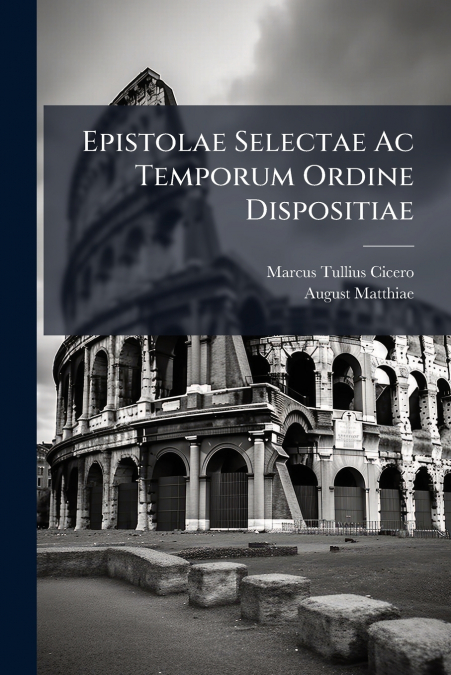
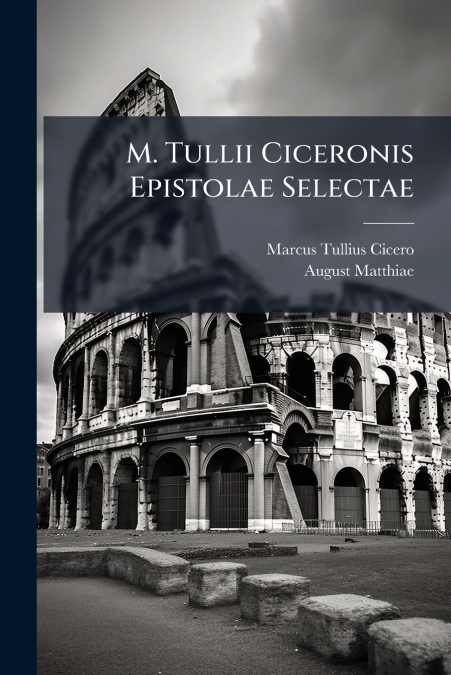
M. Tullii Ciceronis Epistolae Selectae, with the subtitle Ac Temporum Ordine Dispositae, is a carefully curated collection of letters from Marcus Tullius Cicero, thoughtfully arranged in chronological order. This edition, edited by August Matthiae, offers readers a unique window into the life and times of one of Rome’s most influential statesmen, orators, and writers. Cicero’s letters provide invaluable insights into the political, social, and intellectual landscape of the late Roman Republic. They reveal his thoughts on a wide range of topics, from the intricacies of Roman politics to his personal relationships and philosophical reflections. This selection allows students and enthusiasts of Roman history and Latin literature to engage directly with Cicero’s eloquent prose. The chronological arrangement enhances the reader’s understanding of the evolution of Cicero’s ideas and his engagement with the unfolding events of his era. M. Tullii Ciceronis Epistolae Selectae remains a valuable resource for anyone seeking a deeper understanding of Cicero and the world in which he lived.This work has been selected by scholars as being culturally important, and is part of the knowledge base of civilization as we know it. This work was reproduced from the original artifact, and remains as true to the original work as possible. Therefore, you will see the original copyright references, library stamps (as most of these works have been housed in our most important libraries around the world), and other notations in the work.This work is in the public domain in the United States of America, and possibly other nations. Within the United States, you may freely copy and distribute this work, as no entity (individual or corporate) has a copyright on the body of the work.As a reproduction of a historical artifact, this work may contain missing or blurred pages, poor pictures, errant marks, etc. Scholars believe, and we concur, that this work is important enough to be preserved, reproduced, and made generally available to the public. We appreciate your support of the preservation process, and thank you for being an important part of keeping this knowledge alive and relevant.