 Librería Samer Atenea
 Librería Aciertas (Toledo)
 Kálamo Books
 Librería Perelló (Valencia)
 Librería Elías (Asturias)
 Donde los libros
 Librería Kolima (Madrid)
 Librería Proteo (Málaga)
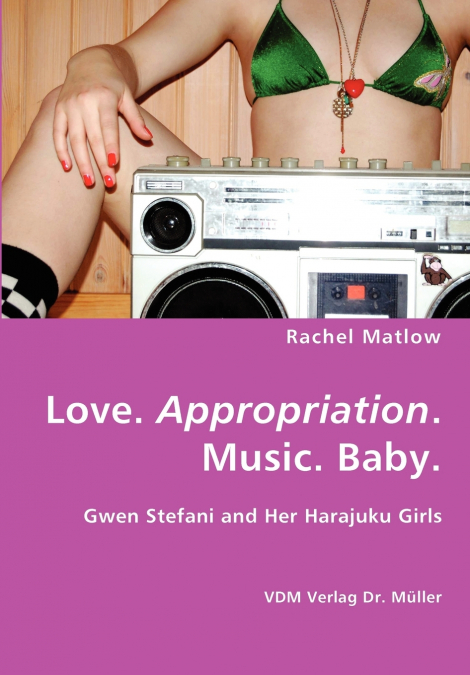
With the release of her debut solo album, 2004’s Love. Angel. Music. Baby.,No-Doubt front-woman Gwen Stefani turned to the street fashions of Tokyo’sHarajuku district for her inspiration. The platinum-blonde Stefani promotedherself by being constantly surrounded with an entourage of four voicelessAsian women, dubbed her 'Harajuku Girls'. They were on her CD cover, shededicated a track to them, they performed in her videos, and they danced onher Harajuku Lovers live tour. Stefani even re-named them, 'Love', 'Angel','Music', and 'Baby' after her new record and clothing line, L.A.M.B.. Thisstudy examines how the Harajuku Girls function as Stefani’s humanaccessories - silent, sexed-up, submissive, school-girl muses sent to save herfrom her dull whiteness. I introduce Stefani as an intertextual celebrity whoappropriates, absorbs and cross-references cultural texts and ethnicities inorder to market and brand herself as a distinct entity in the worlds of musicand fashion. This book questions: - How has Stefani appropriated Harajukuculture in ways that reinforce Orientalist ideas of Asian women? - How hasStefani used Harajuku culture in order to reinforce her whiteness anddistinguish herself as a distinct celebrity brand? - How we may compare thetranscultural differences between Harajuku appropriation of American cultureand Stefani’s appropriation of it? - What are the political and culturalimplications of Stefani’s ethnic signifiers? The book is directed towardsacademic scholars in Communications, media professionals, and popularculture enthusiasts alike.