
Inicio > Sociedad y ciencias sociales > Política y gobierno > Lordship, Reform, and the Development of Civil Society in Medieval Italy
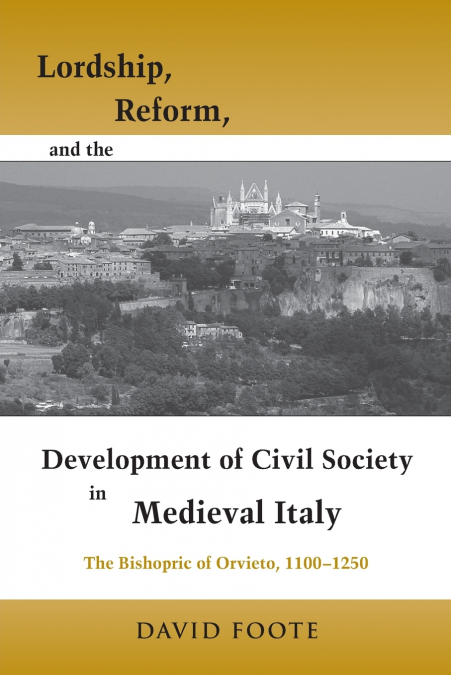
Lordship, Reform, and the Development of Civil Society in Medieval Italy

Lordship, Reform, and the Development of Civil Society in Medieval Italy

David Foote

143,61 €
IVA incluido
Consulta disponibilidad
Editorial:
Longleaf - Univ of Notre Dame du Lac
Año de edición:
2004
Materia
Política y gobierno
ISBN:
9780268028718

Selecciona una librería:

  • Librería Samer Atenea
  • Librería Aciertas (Toledo)
  • Kálamo Books
  • Librería Perelló (Valencia)
  • Librería Elías (Asturias)
  • Donde los libros
  • Librería Kolima (Madrid)
  • Librería Proteo (Málaga)

In his examination of the bishopric of Orvieto from 1100 to 1250, David Foote reveals how three defining developments of the High Middle Ages-the feudal revolution, ecclesiastical reform, and state building-played out in a typical medieval Italian commune. He challenges scholarship that overemphasizes the secular nature of Italian city-states by showing the extent to which developments in ecclesiastical institutions provided a model for the formation of civic institutions and defined a commune’s political and religious culture. Following the collapse of Carolingian authority in the tenth century, Italy experienced a period of political chaos. Rural lords, unrestrained by central authority, fought to dominate the countryside. Bishoprics, by virtue of their temporal and spiritual authority over dioceses, emerged in the midst of this disorder as the most effective institutions for rebuilding political authority at the local level. The Orvietan bishopric formed the center of an urban coalition attempting to conquer and pacify their contado, or surrounding countryside. Orvieto’s bishopric assisted the early city-state in administering its territory by developing innovative methods of written administration and record keeping. As the center of a wide range of religious interests, the bishopric was often caught between competing political and religious actors who leveraged their interests through ecclesiastical institutions and resources. This interaction had a profound effect on the city’s political and religious culture. As Orvietans struggled to define the norms that would govern their society, they had to adapt their quest for political power and autonomy to their religious values. David Foote’s deeply researched new book illuminates the process of state building in its early stages and the formation of political and religious culture in Europe during the High Middle Ages.
Artículos relacionados

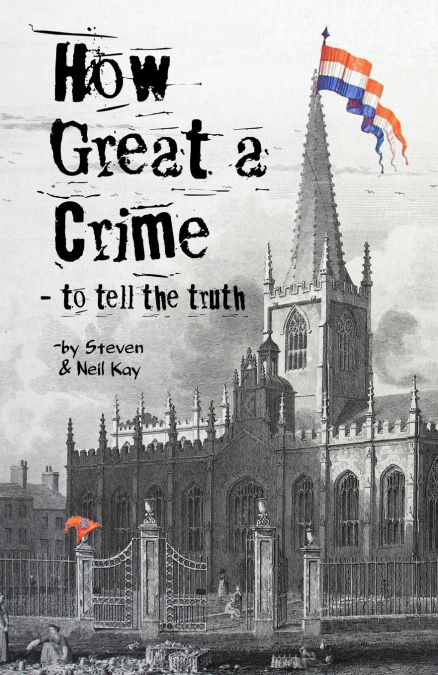
  • How Great a Crime - to tell the truth
    Neil Kay / Steven Kay
    Joseph Gales was one of the all-time great Sheffielders – forget Joe Cocker, Jessica Ennis-Hill, Sean Bean or Michael Palin. These are all minnows compared to Joseph Gales – and their stories are boring besides that of the Galeses. The Galeses story has been forgotten and has not been brought together in one place before – it is not just something dredged up from history – an i...
    Disponible

    10,33 €

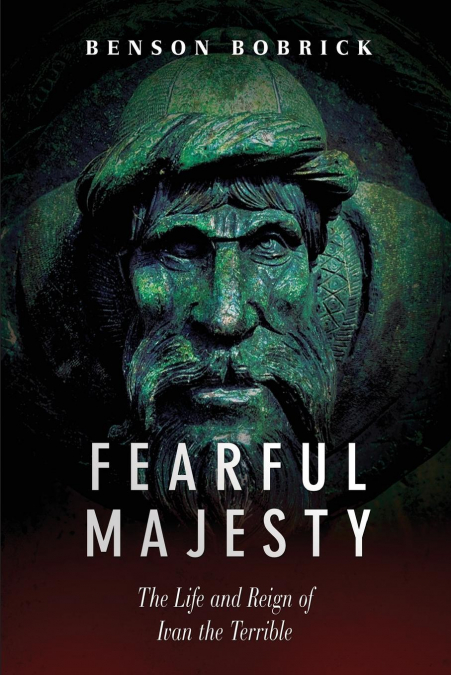
  • Fearful Majesty
    Benson Bobrick
    Ivan the Terrible - the name evokes the legend of a cruel and dangerously insane tyrant. Fearful Majesty explores that legend and exposes the man, his nature, and his time.This acclaimed biography of one of Russia’s most important and tyrannical rulers is not only a rich, readable biography, it is also surprisingly timely, revealing how many of the issues Russia faces today hav...
    Disponible

    19,27 €

  • Economic Optimization of Innovation & Risk
    Robert Shuler
    A Theory of Crash Rate for Private & Public Projects with Critical or non-Critical systems.Analyzing & managing risk has been a quest for 5000 years, and is essential to everything from water supplies, finance, and agriculture to computers and space travel. At last there is a quantitative theory and a simple equation that allows you to: - choose your failure rate - get there...
    Disponible

    13,02 €

  • The System
    Lincoln Steffens
    The 'muckraker' Lincoln Steffens dug deep into business criminality and political corruption in a powerful series of articles written for McClure's magazine. Establishment newspapers and 'System' politicians dismissed his work as just another example of the decrepit modern journalism that could never pass for genuine writing. But Steffens' dogged quest for truth and justice set...
    Disponible

    23,66 €

  • Digital Activism in Asia Reader
    The digital turn might as well be marked as an Asian turn. From flash-mobs in Taiwan to feminist mobilisations in India, from hybrid media strategies of Syrian activists to cultural protests in Thailand, we see the emergence of political acts that transform the citizen from being a beneficiary of change to becoming an agent of change. In co-shaping these changes, what the digit...
    Disponible

    22,19 €

  • The New Freedom
    Woodrow Wilson
    In 1912, Woodrow Wilson was the Democratic nominee for President of the United States. He campaigned against the Republican incumbent, William Howard Taft, and Taft’s predecessor, Theodore Roosevelt, who had split off from the Republican Party to form his own Progressive, or Bull Moose, Party. Much of the campaign focused on the US economy, particularly the candidates’ views of...
    Disponible

    8,67 €

Otros libros del autor

  • Lordship, Reform, and the Development of Civil Society in Medieval Italy
    David Foote
    In his examination of the bishopric of Orvieto from 1100 to 1250, David Foote reveals how three defining developments of the High Middle Ages-the feudal revolution, ecclesiastical reform, and state building-played out in a typical medieval Italian commune. He challenges scholarship that overemphasizes the secular nature of Italian city-states by showing the extent to which deve...
    Disponible

    35,45 €