Lord Lugard’s Nigeria

Lord Lugard’s Nigeria

Lord Lugard's Nigeria

Yinka Kolawole

30,37 €
IVA incluido
Consulta disponibilidad
Editorial:
Strategic Book Group, LLC
Año de edición:
2014
Materia
Historia de África
ISBN:
9781631352010

Selecciona una librería:

  • Librería Samer Atenea
  • Librería Aciertas (Toledo)
  • Kálamo Books
  • Librería Perelló (Valencia)
  • Librería Elías (Asturias)
  • Donde los libros
  • Librería Kolima (Madrid)
  • Librería Proteo (Málaga)

Nigerians are the most enduring and the most important natural resource of their country. Affordable electricity, access to the Internet, and qualitative education will unleash forces that will be greater than oil and gas, and will outlive them. Subjugation of these potential energies amounts to acerebral myopia and a waste.The military has destroyed Nigeria’s past; it must not be allowed to ruin the future.Give the poor and their children the 'tool' they need, and they will fly over Nigeria, far above the dark clouds that cover it.Lord Lugard’s Nigeria: A Century of Myopia and Acerebral Waste - A Perspective of a Post-Independence Nigerian (1914-2014) poses a lot of questions and provides a lot of answersAuthor Yinka Kolawole hails from Nigeria.His book offers an insightful look at his homeland, one of the most misunderstood countries on the planet. Lord Lugard’s Nigeria: A Century of Myopia and Acerebral Waste - A Perspective of a Post-Independence Nigerian (1914-2014) sheds new light on the history this West African nation. Says the author, 'Obstacles are those frightful things that you see when you take your eye off the goal. If the door does not open, knock again and again, and again, and again till it opens.'Nigeria is potentially one of the giants of Africa and indeed the world. Myopia and acrebral waste by functional semi-illiterate military dictators in khaki has ruined Nigeria and continues to ruin the country.The instinct of the military is akin to those of armed robbers, as they operate by force of arms over unarmed and defenceless civilians. Military rule imposed by force of arms against unarmed and defenceless civilians is government of the people, not by the people, and not for the people.Civilian rule is not always democratic rule. Civilian rule imposed upon the people by vote-rigging machines called political parties are as effective as guns as an instrument of oppression of the people and looting of the treasury.Civilian government of the people, not by the people, and not for the people, is exactly the same as military government, as they are the masters of the people. The people did not appoint them, and the people cannot sack them.Nigeria should be governed with the best interests of children at the forefront of all that is done. Their anticipated future needs must be the pillar of every plan.Nigerians are the country’s most important natural resource, and will last far longer than its gas and oil reserves. Treat the people well and the country will respond in kind.Above all, give the poor and their children the 'tool' they need to fly Nigeria above the dark clouds that cover it.Publisher’s website: http://sbprabooks.com/YinkaKolawole
Artículos relacionados

  • Kulubnarti I
    William Y. Adams / William YAdams
    Sudan Archaeological Research Society. Publication Number 18In 1998 and 1999 volumes II and III of the reports on the University of Kentucky excavations at Kulubnarti were published by the Sudan Archaeological Research Society as numbers 2 and 4 in its monograph series. Kulubnarti III was also available through British Archaeological Reports in its International Series no. 814....
    Disponible

    104,23 €

  • The Creole Elite and the Rise of Angolan Protonationalism
    Jacopo Corrado
    This book is about Angolan literature and culture. It investigates a segment of Angolan history and literature, with which even Portuguese-speaking readers are generally not familiar. Its main purpose is to define the features and the literary production of the so-called ’creole elite’, as well as its contribution to the early manifestations of dissatisfaction towards colonial ...
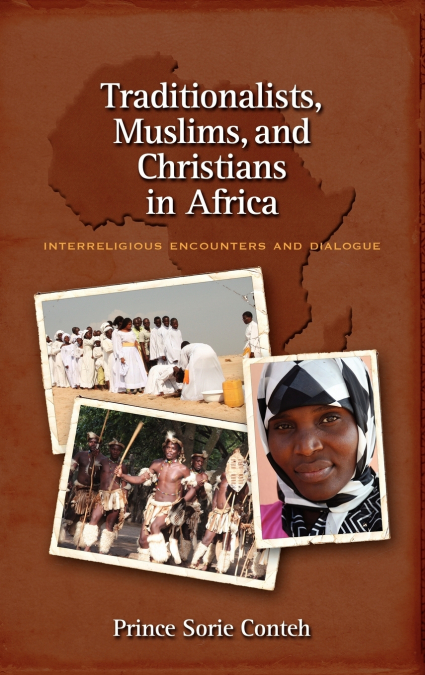
  • Traditionalists, Muslims, and Christians in Africa
    Prince Sorie Conteh
    As is the case for most of sub-Saharan Africa, African Traditional Religion (ATR) is the indigenous religion of Sierra Leone. When the early forebears and later progenitors of Islam and Christianity arrived, they met Sierra Leone indigenes with a remarkable knowledge of God and a structured religious system. Successive Muslim clerics, traders, and missionaries were respectful o...
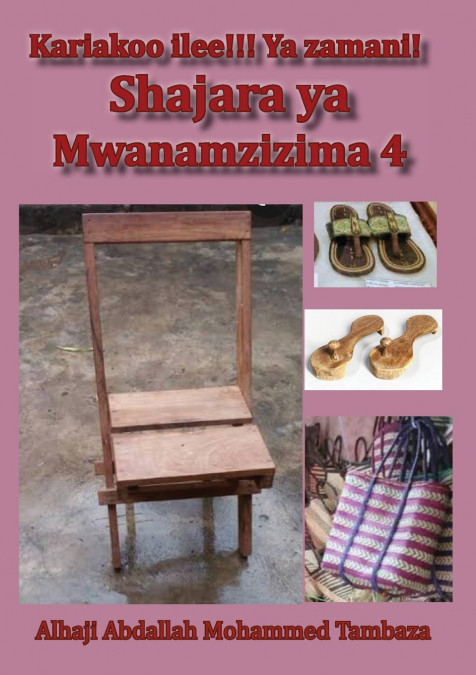
  • Shajara ya Mwana Mzizima 4
    Alhaji Abdallah Mohammed Tambaza
    This is the fourth part in the series of the history of Dar es salaam. This book is about Kariakoo, the first area where Africans were allowed to live and stay. It traces the history of the area before independence and up till the 1970’s.Kitabu hiki ni mfululizo wa vitabu vya kumbukumbu ya sehemu na watu mashuhuri katika jiji la Dar es Salaam. Kitabu hiki ni cha tatu ambacho ki...
    Disponible

    41,51 €

  • Britain, the Royal Air Force and relief flights to Biafra, 1968-1969
    Onianwa Oluchukwu Ignatus
    In this intriguing new book, Onianwa Oluchukwu Ignatus investigates Britain’s decision to engage the Royal Air Force (RAF) in the relief operations during the Nigerian Civil War. The main area badly ravaged by the conflict being the Republic of Biafra was declared 'a frontier of need.' Humanitarian concerns and mounting public pressures, both in Britain and other Western countr...
  • We Rest Here Content
    Robin Smith
    We Rest Here Content is not the history of the Imperial Light Horse Regiment - that was written by the regiment’s Intelligence Officer, Lieutenant George Fleming Gibson and published in 1937 as The Story of the Imperial Light Horse in the South African War 1899-1902. We Rest Here Content approaches the subject of the I.L.H. from a different viewpoint. It looks at all the known ...
    Disponible

    75,50 €