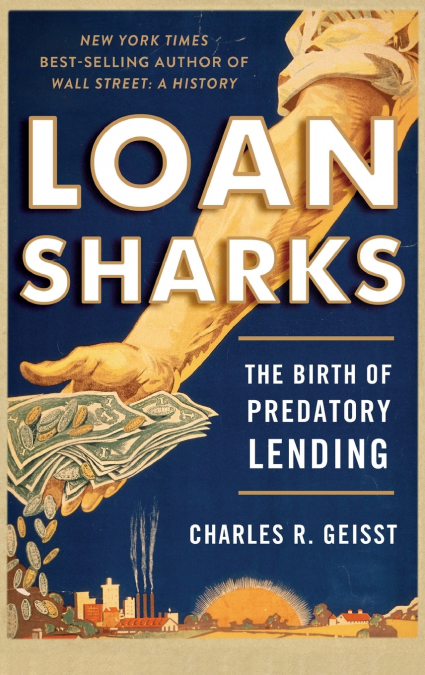

Loan Sharks

Loan Sharks

Charles R. Geisst

36,60 €
IVA incluido
Consulta disponibilidad
Editorial:
Bloomsbury Publishing plc
Año de edición:
2017
Materia
Ética empresarial y responsabilidad social
ISBN:
9780815729006

Selecciona una librería:

  • Librería Samer Atenea
  • Librería Aciertas (Toledo)
  • Kálamo Books
  • Librería Perelló (Valencia)
  • Librería Elías (Asturias)
  • Donde los libros
  • Librería Kolima (Madrid)
  • Librería Proteo (Málaga)

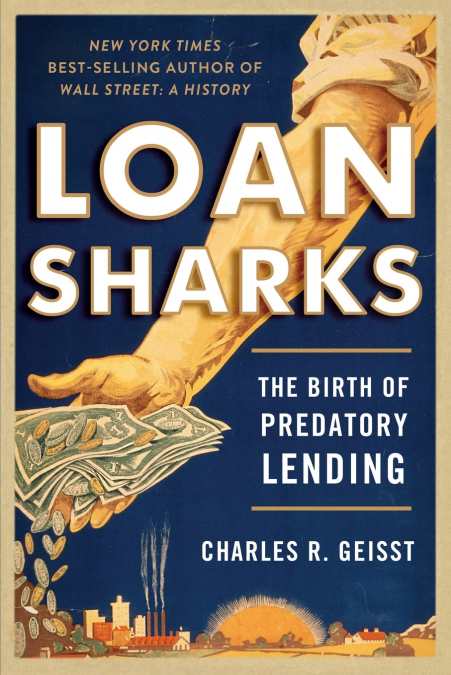
Predatory lending: A problem rooted in the past that continues today.Looking for an investment return that could exceed 500 percent annually; maybe even twice that much?Private, unregulated lending to high-risk borrowers is the answer, or at least it was in the United States for much of the period from the Civil War to the onset of the early decades of the twentieth century. Newspapers called the practice “loan sharking' because lenders employed the same ruthlessness as the great predators in the ocean. Slowly state and federal governments adopted laws and regulations curtailing the practice, but organized crime continued to operate much of the business. In the end, lending to high-margin investors contributed directly to the Wall Street crash of 1929.Loan Sharks is the first history of predatory lending in the United States. It traces the origins of modern consumer lending to such older practices as salary buying and hidden interest charges. Yet, as Geisst shows, no-holds barred loan sharking is not a thing of the past. Many current lending practices employed today by credit card companies, payday lenders, and providers of consumer loans would have been easily recognizable at the end of the nineteenth century. Geisst demonstrates the still prevalent custom of lenders charging high interest rates, especially to risky borrowers, despite attempts to control the practice by individual states. Usury and loan sharking have not disappeared a century and a half after the predatory practices first raised public concern.
Artículos relacionados

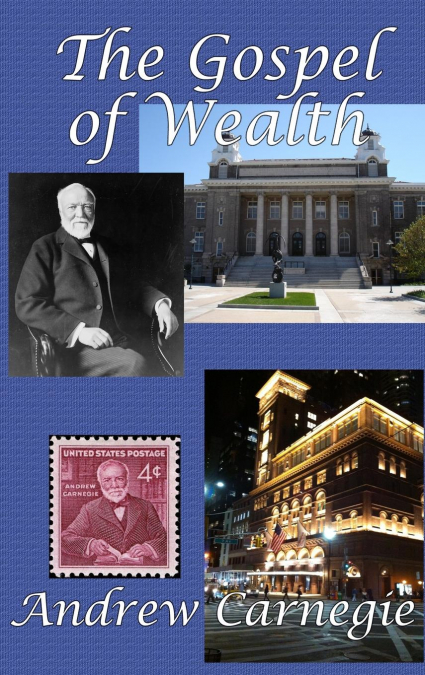
  • The Gospel of Wealth
    Andrew Carnegie
    Andrew Carnegie (1835-1919) was a Scottish immigrant to the United States. He arrived as a poor child, but—as the epitome of the 'rags to riches' story, built himself into one of the richest men in the world. As a young man, who worked as a telegraph operator, and used his wits and business acumen to parlay his job into greater investments during and after the Civil War. Those ...
  • Global Codes of Conduct
    Oliver F. Williams C.S.C.
    We are living in an exciting and challenging era, characterized by what many are calling globalization-the integration of economic activity on an international scale. It involves unparalleled movements not only of capital but also of goods and services, technologies, and people.Globalization is perceived as both a promise and a threat. The promise is seen in the rising prosperi...
    Disponible

    37,46 €

  • Research Anthology on Business Law, Policy, and Social Responsibility, VOL 1
    Information R... Management Association
    ...
  • Research Anthology on Business Law, Policy, and Social Responsibility, VOL 2
    Information R... Management Association
    ...
  • An Introduction to Business and Management Ethics
    Mike Harrison
    This text provides an introduction to some of the major challenges facing anyone concerned with standards of behaviour in organizations. It starts from a consideration of the resources provided by philosophical ethics and moves on to consider the challenges inherent in working in a competitive business environment. ...
    Disponible

    122,29 €

  • Research Anthology on Business Law, Policy, and Social Responsibility, VOL 4
    Information R... Management Association
    ...

Otros libros del autor

  • Wall Street
    Charles R. Geisst
    A timely update of the authoritative, engaging history of Wall Street and its role in the economic history of the United States and the world. ...
    Disponible

    39,09 €

  • Loan Sharks
    Charles R. Geisst
    Predatory lending: A problem rooted in the past that continues today.Looking for an investment return that could exceed 500 percent annually; maybe even twice that much?Private, unregulated lending to high-risk borrowers is the answer, or at least it was in the United States for much of the period from the Civil War to the onset of the early decades of the twentieth century. Ne...
    Disponible

    38,13 €

  • The Political Thought of John Milton
    Charles R. Geisst
    ...
    Disponible

    73,26 €