

 Librería Samer Atenea
 Kálamo Books
 Librería Elías (Asturias)
 Librería Kolima (Madrid)
 Librería Proteo (Málaga)
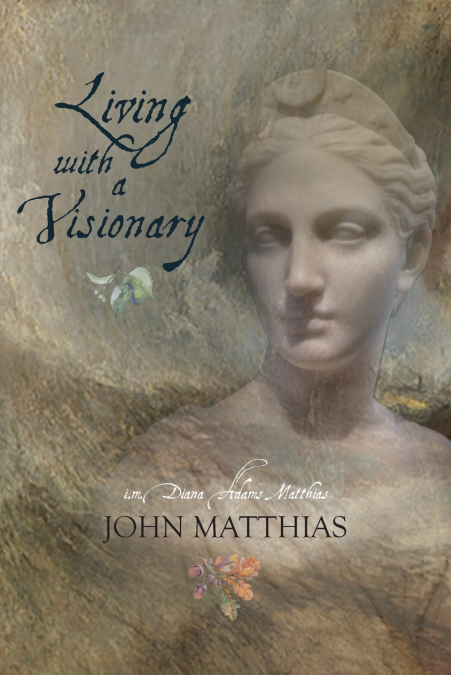
Collected here are a remarkable-lovely but also wrenching-group of love poems from a man to his wife. The poet, editor, and translator John Matthias met Diana Adams while on a Fulbright to London in the fall of 1966, and not many months later the couple married in an old church near Diana’s family home in Hacheston, Suffolk. At the time of Diana’s death in late November 2020, they had been married for over fifty years. I have called these works love poems, which they are. But the love story is shadowed by affliction. Around eight years before her death Diana began to show the symptoms of what was eventually diagnosed as Parkinson’s, the harrowing disease which, along with Covid-19, finally took her life. These are love poems in the haunting form of laments.The lament, uttered when love and death are most closely bound, is something like an essential accessory to mortality. The title section was published in the New Yorker on February 1, 2021. The essay must have touched a nerve among many readers, as I received literally hundreds of responses to the piece-email, old-fashioned mail in envelopes, phone calls, poems, even prayers-and I am not even yet finished answering all of them. I found the experience of hearing from so many readers very strange and utterly overwhelming. Many of those who wrote wanted to tell me their own stories, some of which were very painful to read. What I promised these readers was that I would try within a year to publish the essay in a context more permanent than the back issue of a magazine, even one as esteemable as the New Yorker. This booklet is an attempt to do that.Besides 'Living with a Visionary,' I include three poems at the beginning, and a kind of prose poem at the end. 'Rhododendron' was written when Diana was still in her thirties. She was in her mid-sixties when I wrote 'Of Artemis, Aging,' which was dedicated to her in Complayntes for Doctor Neuro and Other Poems. 'Good Dream' is the last section of the title piece of that collection, but appears here as a freestanding poem. As the title of the sequence suggests, we were by this time struggling together with, and sometimes against, Diana’s neurologists after she had begun her battle with Parkinson’s in her early seventies. The 'Good Dream' of that poem prefigures the nightmare we inhabited that is described in the essay.'Some of Her Things' might be considered a kind of coda to 'Living with a Visionary.' It is much more consciously an artefact than is the essay, which was in fact first written simply to tell family members and friends what had happened to us. It is a strange thing that something intended to have very few readers ended up having so many. 6








