Librería Samer Atenea
 Kálamo Books
 Librería Elías (Asturias)
 Librería Kolima (Madrid)
 Librería Proteo (Málaga)
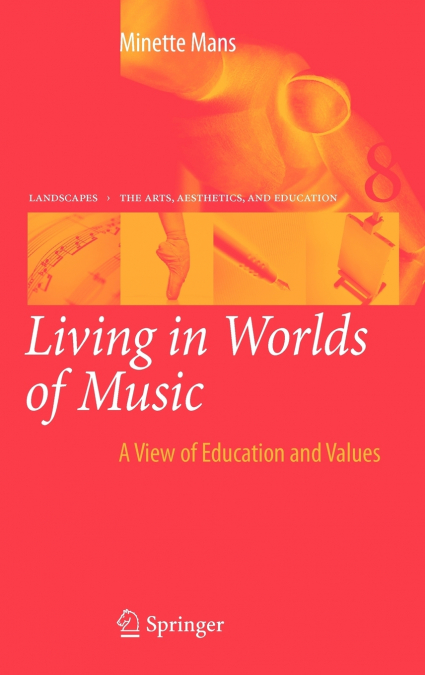
Chapter 1 Why a musical world?1.1 Theoretical Background1.1.1 Cultural sensitivities1.1.2 Music emanates from communities of music practice drawn upon cultural landscapes1.2 Educational theory principlesChapter 2 Thinking music: Processes of musical cognition2.1 Socio-cultural processes of musical thinking2.1.1 Classifying musical sounds into categories2.1.2 Recognition, identification, selection, and anticipation2.1.3 Memory 2.1.4 Development of templates2.1.5 Cultural immersion and creative thinking2.1.6 Understanding symbols and value systemsA Musician’s Narrative by Koji MatsonobuChapter 3 A functioning musical world3.1 Social musical organization3.2 Musical Practice and Behavior3.3 Musical systems3.3.1 Macro-organization determined by society and its systemsCounterpoint and interlock by Magne Espeland3.3.2 Meso-organization into RepertoiresCounterpoint and interlock by Emmanuelle Olivier3.3.3 Micro-organizatioCounterpoint and interlock by Trevor Wiggins3.3.4 Framework with its parameters and rulesCounterpoint and Interlock by Rena UpitisA Musician’s Narrative by Jackson KaujeuaChapter 4 Inhabiting a Musical World4.1 Identity4.1.1 Interpretations of cultural and musical identitiesCounterpoint and Interlock by Even Ruud4.2 Normative and aesthetic values invoked by musical worlds4.2.1 Values and music4.2.2 Aesthetic evaluations4.3 Meaning4.4 Perspectives on musical worlds located in complex cultural-political settings4.4.1 African metropolitan versus rural worlds by Meki Nzewi (South Africa and Nigeria)4.4.2 Multicultural Europe by Eva Fock (Denmark)4.4.3 Modern and traditional Asia by Koji Matsunobu(Japan)4.4.4 A South American melting pot by Alda Oliveira (Brazil)4.4.5 Socio-cultural contexts of music education: One North American perspective by Kari Veblen (Canada)Chapter 5 Educating in living musical worlds *5.1 The relation of arts education to cultural musical worlds.5.2 Musical development in classrooms?5.3 Cultural intersections or collisions?5.4 Creativity and issues of continuity and changeCounterpoint and interlock by Boh Wah Leung5.5 Music as social practice and normative education through music5.6 Suggestions for enhancing musical learning processes within musical worldsCounterpoint and interlock by Roger Avenstru5.7 Assessment issues in complex musical worldsCounterpoint and interlock by Regina Murphy5.8 Teacher educationA Musician’s Narrative by Eva SætherChapter 6. Concluding thoughts - aluta continuaReferencesEndnotesAuthor biographiesIndex