
Inicio > Humanidades > Filosofía > Ética y filosofía moral > Liquidación de existencias: sobre la imposibilidad de rebelarnos
Liquidación de existencias: sobre la imposibilidad de rebelarnos

Liquidación de existencias: sobre la imposibilidad de rebelarnos

Jorge de los Santos

28,03 €
IVA incluido
Disponible
Editorial:
Pensódromo
Año de edición:
2022
Materia
Ética y filosofía moral
ISBN:
9788412593235
28,03 €
IVA incluido
Disponible

Selecciona una librería:

  • Librería Desdémona
  • Librería Samer Atenea
  • Librería Aciertas (Toledo)
  • Kálamo Books
  • Librería Perelló (Valencia)
  • Librería Elías (Asturias)
  • Donde los libros
  • Librería Kolima (Madrid)
  • Librería Proteo (Málaga)

Cuando ya no hay forma de extinguir las llamas, ¿qué hacer cuando todo arde?«Cada generación, sin duda, se cree destinada a rehacer el mundo. La mía sabe, sin embargo, que no lo rehará. Pero su labor quizá es más grande. Consiste en evitar que el mundo se deshaga». Es el 10 de diciembre de 1957 y Albert Camus lo enuncia en su discurso de aceptación del Premio Nobel.En las páginas de “Liquidación de existencias: sobre la imposibilidad de rebelarnos, Jorge de los Santos aborda otra constatación: las generaciones posteriores saben que no lograrán evitar que el mundo se deshaga, pero que su labor es aún si cabe más grande. Consiste en intentar lograr que el mundo se deshaga con dignidad.Intentando demostrar cómo hemos dejado ya de ser sujetos de la historia, que lo que pasa, pasa por nosotros, pero no bajo nuestro dominio, o que cualquier rebelión puede ser tomada por nosotros pero no se engendrará en nosotros, el autor plantea la imposibilidad que tenemos de generar una fuerza que altere un orden que se hace cada vez más fuerte.La conclusión es inquietante. Negado el futuro solo nos queda la ventura. No hay posibilidad alguna de rebelión, sólo la constatación de su imposibilidad. No hay ya dominio ni medios de reconstrucción. Una conclusión en ningún caso apática o derrotista que apele a la indiferencia o a la negación frente a lo ineludible, sino que anticipa la ingente tarea que se anunciaba al principio: «irse despidiendo», pero aun sabiendo que nuestro receptor es la nada, hacerlo con la dignidad del que debe entregar un legado al porvenir.Un libro, por su agudeza y contundencia, llamado a ser una demostración de lo que ya hemos perdido pero que hay que tratarlo como si aún lo sostuviéramos. Un libro demoledor que hace del arte de la demolición una exhibición de lo que los humanos fuimos capaces de construir. 10


Artículos relacionados

  • Ka Ab Ba Building The Lighted Temple
    Dr Terri R. Nelson
    The book KaAbBa Building The Lighted Temple/Metaphysical Keys to the Tree of Life draws a circle that is inclusive of the Afrikan origin of the Ancient Kemetic/Egyptian wisdom. It reveals the undeniable root and link of Ancient Africa to all the religious systems that would develop worldwide. This book is explosive in its power to convey the meaning of KaAbBa, the Medu Neter  (...
    Disponible

    37,41 €

  • Aquinas, Ethics, and Philosophy of Religion
    Thomas Hibbs
    In Aquinas, Ethics, and Philosophy of Religion, Thomas Hibbs recovers the notion of practice to develop a more descriptive account of human action and knowing, grounded in the venerable vocabulary of virtue and vice. Drawing on Aquinas, who believed that all good works originate from virtue, Hibbs postulates how epistemology, ethics, metaphysics, and theology combine into a set...
  • Technoethics and the Evolving Knowledge Society
    Rocci Luppicini
    Recently, there has been a major push to rediscover the ethical dimension of technology across the sciences, social sciences, and humanities. Technoethics and the Evolving Knowledge Society: Ethical Issues in Technological Design, Research, Development, and Innovation examines human processes and practices connected to technology embedded within social, political, and moral sph...
    Disponible

    236,22 €

  • Kant
    Immanuel Kant
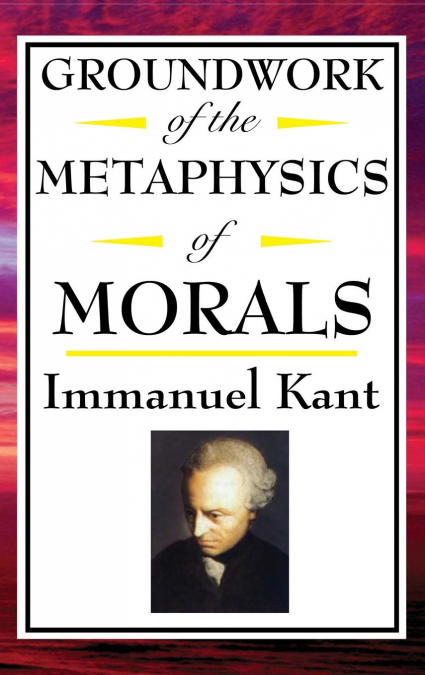
    Kant’s Groundwork of the Metaphysics of Morals is one of the most important works in modern moral philosophy. It belongs beside Plato, Aristotle, Machiavelli, and Hobbes. Here Kant sets out to articulate and defend the Categorical Imperative - the fundamental principle that underlies moral reasoning - and to lay the foundation for a comprehensive account of justice and human vi...
    Disponible

    20,26 €

  • On the Duty of Civil Disobedience
    HENRY DAVID THOREAU
    Civil Disobedience argues that citizens should not permit their governments to overrule their consciences, and that they have a duty to avoid allowing their acquiescence to enable the government to make them the agents of injustice. Thoreau was motivated in part by his disgust with slavery and the Mexican-American War, but the sentiments he expresses here are just as pertinent ...
    Disponible

    17,75 €

  • Beyond Good and Evil
    Friedrich Nietzsche
    Nietzsche, though primarily a philosopher, wrote widely on art, philology, history, religion, tragedy, culture, and science.  In 1886, at the height of his powers, he published Beyond Good and Evil.  Here he examines much of the best of human thought--dogmatic philosophy, Judeo-Christian morality, science and democracy – and finds it lacking.  Rejecting “slave-morality” he pres...
    Disponible

    20,39 €