 Librería Samer Atenea
 Kálamo Books
 Librería Elías (Asturias)
 Librería Kolima (Madrid)
 Librería Proteo (Málaga)
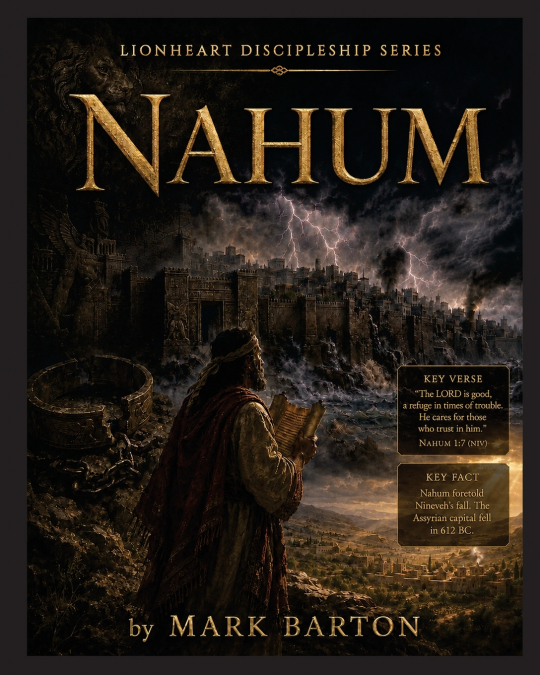
The Book of Nahum is a three-chapter prophetic oracle announcing the downfall of Nineveh, capital of the Assyrian Empire. Its message is severe, but its purpose is not cruelty: it comforts people who had lived beneath a violent, seemingly invincible power. Nahum declares that God sees oppression, rules every nation, and will not permit organized evil to continue forever.Nahum likely ministered after Assyria destroyed the Egyptian city of Thebes in 663 BC-an event recalled in Nahum 3:8-10-and before Nineveh fell to forces led by the Babylonians and Medes in 612 BC. Assyria had already conquered the northern kingdom of Israel and deported many of its people in 722/721 BC. Judah remained, but it had endured invasion, tribute, intimidation, and the memory of Assyria’s campaign against Jerusalem in 701 BC. Nahum thus addressed a wounded covenant people living under imperial violence. This dating is the most common conclusion from the book’s own historical references and Nineveh’s known fall (historical background).Chapter 1 opens with a majestic portrait of the LORD. He is 'slow to anger' yet will not leave the guilty unpunished. His jealousy is not petty envy, but His holy commitment to His covenant, honor, and people. Creation trembles before His power, yet 'the LORD is good, a refuge in times of trouble' for those who trust Him. These truths belong together: the God who shelters the oppressed confronts the oppressor. Judah is assured that its affliction will not continue indefinitely; the yoke will be broken, worship restored, and good news proclaimed.Chapter 2 portrays Nineveh’s fall in rapid, vivid poetry. Shields flash, chariots race, defenses fail, gates open, the palace collapses, and accumulated wealth is plundered. Nineveh had acted like a lion’s den, filling itself with prey taken from other nations; now God stands against it. Assyria’s history is reversed: the empire that emptied cities is emptied, the power that terrified others trembles, and the predator becomes prey.Chapter 3 explains why judgment is deserved. Nineveh is a city of blood, lies, theft, exploitation, and ceaseless plunder. Its political seduction and deception are pictured as prostitution and sorcery-an indictment of an empire that enticed, manipulated, and enslaved nations. Nahum points to Thebes: if that fortified city fell, Nineveh is not untouchable. Assyria’s wound is finally beyond healing, and the nations rejoice at its end because all have suffered under its cruelty. These movements can be followed directly in Nahum 1-3.Scripture tells us little about Nahum beyond calling him 'the Elkoshite'; even Elkosh’s location is uncertain. It records no call narrative, family history, or personal conversation with God, so we should not invent a biography. The book nevertheless reveals a prophet who received God’s vision, trusted His character, and faithfully spoke a difficult but hope-filled truth: earthly power is never ultimate. Nahum’s name is commonly associated with comfort, and his prophecy comforts not by minimizing suffering, but by promising that God has neither ignored nor forgotten it.Nahum must not be used to justify personal revenge, hatred of peoples, or delight in suffering. Its target is arrogant, predatory power, and vengeance belongs to God. Read alongside Jonah, it displays two harmonious truths about God’s rule: He genuinely shows mercy to those who repent, but former mercy is not permission for later generations to return to violence. Nahum remains both warning and consolation. God’s patience is not indifference, and His compassion does not cancel justice. Violent kingdoms fall, the oppressed are seen, and the LORD remains both righteous Judge and trustworthy refuge.