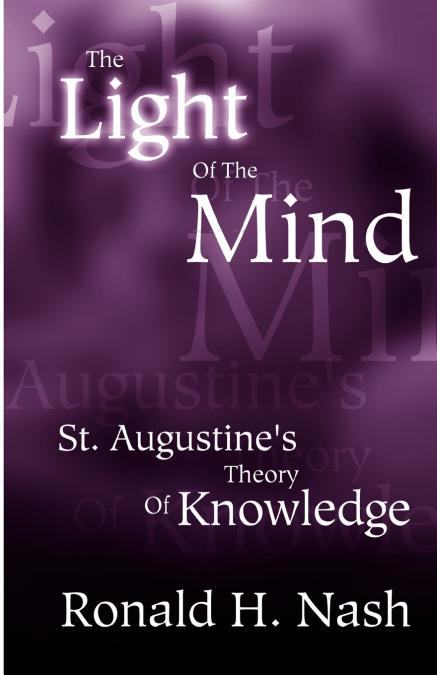

LIGHT OF THE MIND, THE

LIGHT OF THE MIND, THE

LIGHT OF THE MIND, THE

RONALD H NASH

16,53 €
IVA incluido
Disponible
Editorial:
CSS Publishing
Año de edición:
2003
Materia
Filosofía de la religión
ISBN:
9780788099175
16,53 €
IVA incluido
Disponible

Selecciona una librería:

  • Librería Samer Atenea
  • Librería Aciertas (Toledo)
  • Kálamo Books
  • Librería Perelló (Valencia)
  • Librería Elías (Asturias)
  • Donde los libros
  • Librería Kolima (Madrid)
  • Librería Proteo (Málaga)

St. Augustine is not only the bridge that links ancient philosophy and early Christian theology with the thought of the Middle Ages, but one who, in his philosophy and especially in his epistemology, anticipated some of the most important ideas of Descartes and Malbranche, Berkeley and Kant. In this study of the central aspect of St. Augustine’s thought, the author analyzes the various facets of his theory of knowledge and offers a new interpretation of his idea of divine illumination.St. Augustine’s views on skepticism and truth, on faith and reason, and on sense perception and cogitation are first examined in order to show their relation to this theory of divine illumination as the ultimate source of truth for man. The proper understanding of the theory of illumination, of how man apprehends the divine ideas, is the most difficult problem in St. Augustine’s epistemology, for he did not formulate any systematic theory of knowledge. Any account of the Augustinian epistemology, Mr. Nash believes, must resolve three paradoxes: how the intellect is both passive and active; how the forms are distinct from - and not distinct from - the human mind; and how man’s mind is and is not the light that makes knowledge possible.In explaining the nature of divine illumination, Nash discusses four interpretations that have been advanced; the Thomist (which he rejects as not faithful to St. Augustine’s general philosophy), the Franciscan, the Formalist, and the Ontologist. He argues here for a modified Ontologist view. In his synthesis of Christian theology and Neoplatonic philosophy, St. Augustine held that all creation partakes of truth in varying degrees, that man as the highest part of creation, created in God’s image and thus sharing to some degree the divine nature, is able to know truth through the divine light and the light of his own mind. In attempting to find an answer to the perennial problem of knowledge, St. Augustine, Nash suggests, was struggling to find a theory that would combine the benefits of conceptualism and realism, and his answer was more modern than many have given him credit for.Ronald Nash is widely regarded as one of the premier evangelical philosophers in the world. He is professor of philosophy at Southern Baptist Theological Seminary in Louisville, Kentucky. He has taught at a number of other colleges and seminaries, including Western Kentucky University and Reformed Theological Seminary. The author of more than 35 books on philosophy, theology and economics, Dr. Nash is in constant demand as a speaker throughout the world.
Artículos relacionados

  • The Writings of Charles De Koninck
    Charles De Koninck
    The Writings of Charles De Koninck, volumes 1 and 2, present the first English editions of collected works of the Catholic Thomist philosopher Charles De Koninck (1906-1965). Ralph McInerny (1929-2010) was the project editor and prepared the excellent translations. Volume 1 contains writings ranging from De Koninck’s 1934 dissertation at the University of Louvain on the philoso...
  • The Constitution of Shambhala (Vol. 7B of a Treatise on Mind)
    Bodo Balsys
    The theme of the first of the two parts of this volume concerns the feminine deva hierarchy, their relation to Hierarchy and Shambhala. Many concepts are introduced that most seekers have little cognisance (e.g., the nature of the deva Lord Varuna). The Mother of the World’s role is revealed, and the feminine function in cosmos, (e.g., the Pleiades). Advanced teaching concernin...
    Disponible

    44,89 €

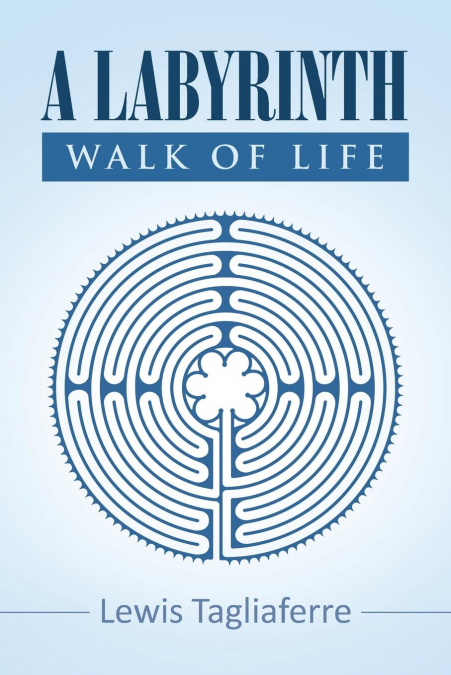
  • A Labyrinth Walk Of Life
    Lewis Tagliaferre
    Here is a collection of journaled essays leading to the inevitable belief in theological fatalism, aka Theofatalism. They include arguments from theology, psychology, politics, geology, technology, sociology, economics, history, cosmology and more. With this belief system, you can feel good inside no matter what happens outside. It may take several readings to get it, but anyth...
    Disponible

    13,41 €

  • Religion
    Arthur Schopenhauer
    Collected here are five short essays, A Dialogue, A Few Words on Pantheism, On Books and Reading, Physiognomy, and, Psychological Observations, by the world renowned philosopher Arthur Schopenhauer. ...
  • The Handbook
    Epictetus Epictetus
    No writings of Epictetus himself are really known. His discourses were transcribed and compiled by his pupil Arrian (author of the Anabasis Alexandri). The main work is The Discourses, four books of which have been preserved (out of an original eight). Arrian also compiled a popular digest, entitled the Enchiridion, or Handbook. In a preface to the Discourses, addressed to Luci...
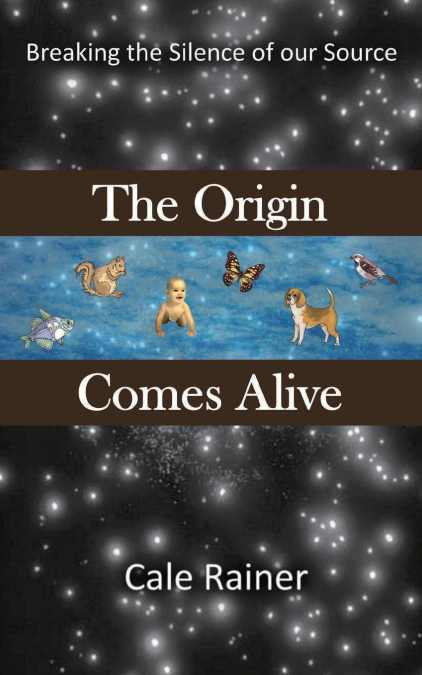
  • The Origin Comes Alive
    Cale Rainer
    Believers and Atheists alike will get a firsthand look at the Divine Presence as it reveals the intimate behaviors and processes that compose a sense of GOD, and how this arose in social consciousness to inspire a global phenomenon known as Religion.The sense of life is taken to the limits of extreme perspective in this somewhat involved, yet intimate look into our social origi...
    Disponible

    9,92 €