

 Librería Samer Atenea
 Kálamo Books
 Librería Elías (Asturias)
 Librería Kolima (Madrid)
 Librería Proteo (Málaga)
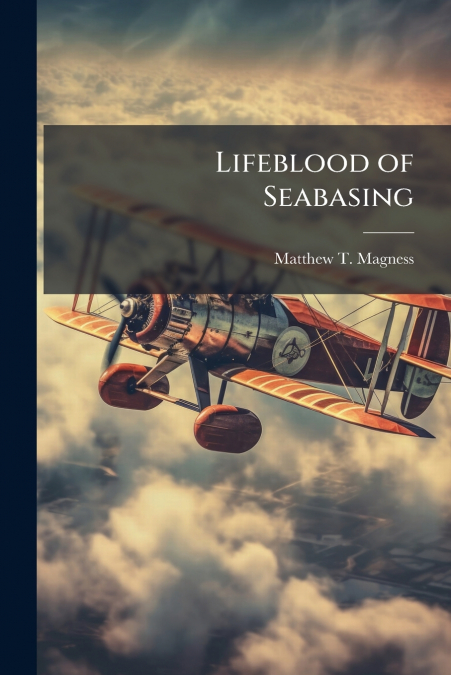
The future of Seabasing rests with the capability to rapidly re-supply and sustain forces from strategic distances. Sealift presents one way of accomplishing this sustainment; however, it is slow. The solution for rapid long-range sustainment of a Seabase must come in the form of aircraft capable of lifting massive weights over vast distances and delivering them directly to the structure. This thesis explores the primary research question: What are the long-range, heavy lift aircraft programs that could sustain Seabasing? The question is explored by using the Wisconsin 7-Step Problem-Solving Strategy: state the problem, determine the solution criteria, gather needed information, generate potential solutions, compare solutions and problem, select the solution, and prepare communications. Four concepts were identified (Lighter-than-Air, Wing-in-Ground, Advanced Theater Transport, and Seaplanes) as having the capabilities to support Seabasing. Due to the many factors associated with determining the best solution, a technique of performing a grid analysis with weighted criteria is used. The results indicate that the best types of aircraft suited to sustain a Seabase are ones that are large, joint in development and operation, can be utilized outside standard military applications, and are capable of carrying massive payloads great distances.This work has been selected by scholars as being culturally important, and is part of the knowledge base of civilization as we know it. This work was reproduced from the original artifact, and remains as true to the original work as possible. Therefore, you will see the original copyright references, library stamps (as most of these works have been housed in our most important libraries around the world), and other notations in the work.This work is in the public domain in the United States of America, and possibly other nations. Within the United States, you may freely copy and distribute this work, as no entity (individual or corporate) has a copyright on the body of the work.As a reproduction of a historical artifact, this work may contain missing or blurred pages, poor pictures, errant marks, etc. Scholars believe, and we concur, that this work is important enough to be preserved, reproduced, and made generally available to the public. We appreciate your support of the preservation process, and thank you for being an important part of keeping this knowledge alive and relevant.





