 Librería Samer Atenea
 Kálamo Books
 Librería Elías (Asturias)
 Librería Kolima (Madrid)
 Librería Proteo (Málaga)
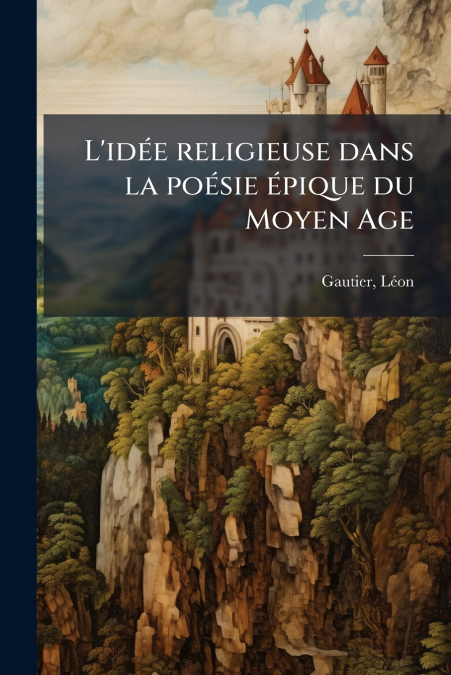
L’idée religieuse dans la poésie épique du Moyen Age by Léon Gautier explores the intersection of religious thought and epic poetry during the Middle Ages. This work examines how religious beliefs influenced and shaped the narratives, characters, and themes present in medieval epic poems. Gautier delves into the ways in which poets integrated Christian doctrines, moral values, and spiritual concepts into their works, providing insights into the cultural and religious landscape of the time.This book offers a valuable resource for scholars and enthusiasts interested in medieval literature, religious history, and the evolution of epic poetry. Gautier’s analysis reveals the profound impact of religious ideas on the artistic expression of the medieval period, making it an essential read for understanding the intellectual and spiritual foundations of medieval European culture.This work has been selected by scholars as being culturally important, and is part of the knowledge base of civilization as we know it. This work was reproduced from the original artifact, and remains as true to the original work as possible. Therefore, you will see the original copyright references, library stamps (as most of these works have been housed in our most important libraries around the world), and other notations in the work.This work is in the public domain in the United States of America, and possibly other nations. Within the United States, you may freely copy and distribute this work, as no entity (individual or corporate) has a copyright on the body of the work.As a reproduction of a historical artifact, this work may contain missing or blurred pages, poor pictures, errant marks, etc. Scholars believe, and we concur, that this work is important enough to be preserved, reproduced, and made generally available to the public. We appreciate your support of the preservation process, and thank you for being an important part of keeping this knowledge alive and relevant.