 Librería Samer Atenea
 Kálamo Books
 Librería Elías (Asturias)
 Librería Kolima (Madrid)
 Librería Proteo (Málaga)
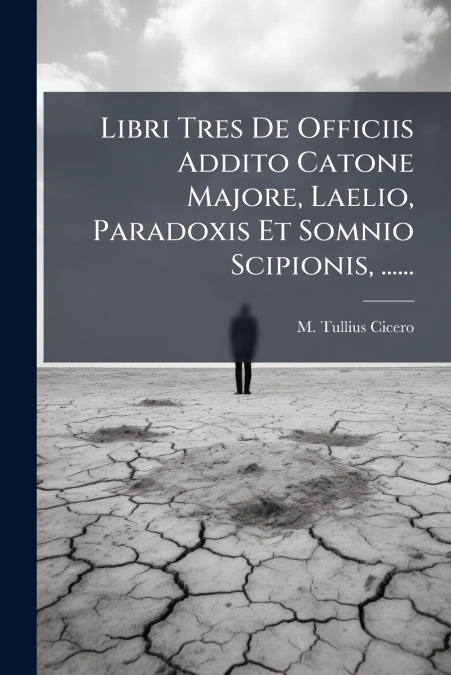
Libri Tres De Officiis, by M. Tullius Cicero, is a timeless work of Roman philosophy and ethics. This edition includes not only Cicero’s renowned treatise 'De Officiis' (On Duties) in three books, but also Cato Maior (Cato the Elder), Laelius de Amicitia (Laelius on Friendship), Paradoxa Stoicorum, and Somnium Scipionis (Scipio’s Dream). 'De Officiis' explores moral duties and proper conduct for citizens, providing guidance on virtue, justice, and the common good. Cato Maior discusses old age, while Laelius delves into the profound nature of friendship. Paradoxa Stoicorum presents a series of Stoic paradoxes for contemplation, and Somnium Scipionis offers a visionary glimpse into the afterlife and the importance of civic duty. This collection provides a comprehensive view of Cicero’s philosophical thought and remains relevant for students of Latin literature, philosophy, and history.This work has been selected by scholars as being culturally important, and is part of the knowledge base of civilization as we know it. This work was reproduced from the original artifact, and remains as true to the original work as possible. Therefore, you will see the original copyright references, library stamps (as most of these works have been housed in our most important libraries around the world), and other notations in the work.This work is in the public domain in the United States of America, and possibly other nations. Within the United States, you may freely copy and distribute this work, as no entity (individual or corporate) has a copyright on the body of the work.As a reproduction of a historical artifact, this work may contain missing or blurred pages, poor pictures, errant marks, etc. Scholars believe, and we concur, that this work is important enough to be preserved, reproduced, and made generally available to the public. We appreciate your support of the preservation process, and thank you for being an important part of keeping this knowledge alive and relevant.