Inicio > Derecho > Teoría general del derecho > Historia del derecho > Liberty, Slavery and the Law in Early Modern Western Europe
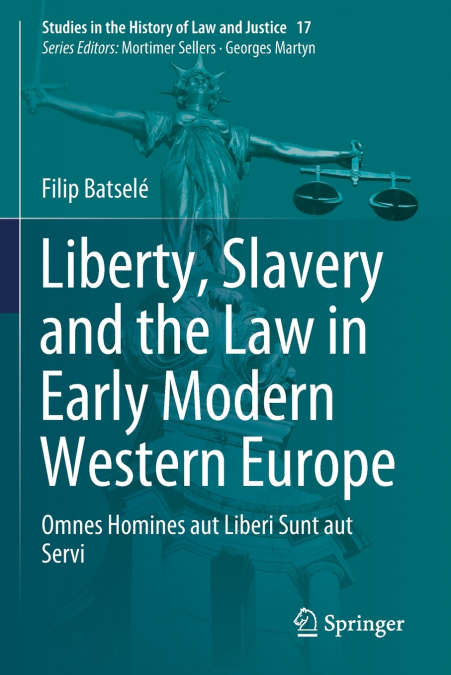
Liberty, Slavery and the Law in Early Modern Western Europe

Liberty, Slavery and the Law in Early Modern Western Europe

Filip Batselé

157,39 €
IVA incluido
Consulta disponibilidad
Editorial:
Springer Nature B.V.
Año de edición:
2020
Materia
Historia del derecho
ISBN:
9783030368548

Selecciona una librería:

  • Librería Samer Atenea
  • Librería Aciertas (Toledo)
  • Kálamo Books
  • Librería Perelló (Valencia)
  • Librería Elías (Asturias)
  • Donde los libros
  • Librería Kolima (Madrid)
  • Librería Proteo (Málaga)

This book investigates the legal evolution of the 'free soil principle' in England, France and the Low Countries during the Early Modern period (ca. 1500-1800), which essentially stated that, as soon as slaves entered a certain country, they would immediately gain their freedom. This book synthesizes the existing literature on the origins and evolution of the principle, adds new insights by drawing on previously undiscussed primary sources on the development of free soil in the Low Countries and employs a pan-Western, European and comparative approach to identify and explain the differences and similarities in the application of this principle in France, England and the Low Countries. Divided into four sections, the book begins with a brief introduction to the subject matter, putting it in its historical context. Slavery is legally defined, using the established international law definition, and both the status of slavery in Europe before the Early Modern Period and the Atlantic slave trade are discussed. Secondly, the book assesses the legal origins of the free soil principle in England, France and the Low Countries during the period 1500-1650 and discusses the legal repercussions of slaves coming to England, France and the Low Countries from other countries, where the institution was legally recognized. Thirdly, it addresses the further development of the free soil principle during the period 1650-1800. In the fourth and last section, the book uses the insights gained to provide a pan-Western, European and comparative perspective on the origins and application of the free soil principle in Western Europe. In this regard, it compares the origins of free soil for the respective countries discussed, as well as its application during the heyday of the Atlantic slave trade. This perspective makes it possible to explain some of the divergences in approaches between the countries examined and represents the first-ever full-scale country comparison on this subject in a book.

Artículos relacionados

  • Court-Hand Restored [1879]
    Andrew Wright
    A Rosetta Stone for Early English Legal Documents By 1776, the year Wright published the first edition of Court-Hand Restored, the written conventions of early English legal documents, which had been taught for generations, were becoming esoteric. Concerned that younger lawyers would be unable to understand the work of their predecessors, Wright intended his work to be a kind o...
    Disponible

    32,79 €

  • Commentary to the Germanic Laws and Mediaeval Documents [1915]
    Leo Wiener
    Based on an ambitious study of all accessible records from the early decades of the Roman Empire to 1300, this work proposes that the Visigothic, Burgundian, Salic and other Germanic legal systems were based almost entirely on Roman law. This was a controversial argument because it challenged the prevailing consensus about Germanic law. Though scholars have subsequently disprov...
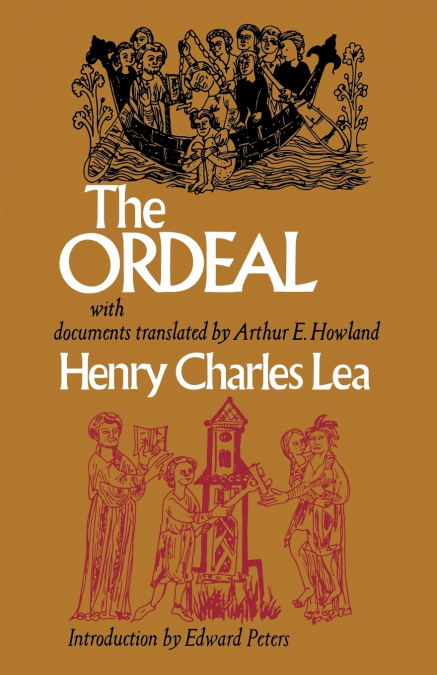
  • The Ordeal
    Henry Charles Lea / Arthur E. Howland / Arthur EHowland
    Henry Charles Lea was one of the first American historians to use what would later be termed comparative and anthropological approaches to history. Under his pen, the study of the medieval ordeal becomes a study in cultural history.Reprinted here from the fourth revised edition of 1892, the book begins by tracing the role of the ordeal in non-Western and ancient societies, show...
    Disponible

    23,88 €

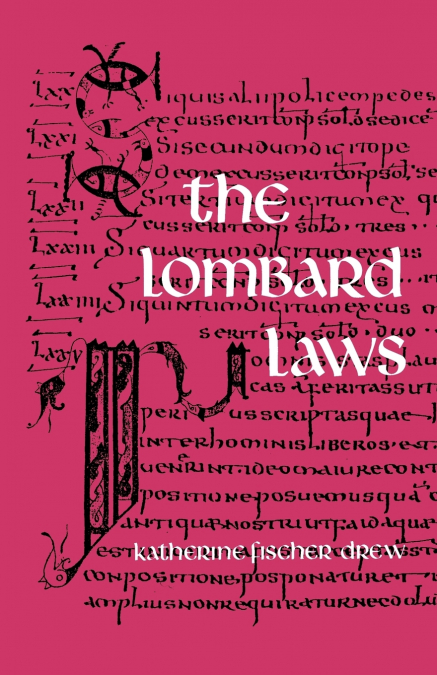
  • The Lombard Laws
    Katherine Fisher Drew
    ...
    Disponible

    31,40 €

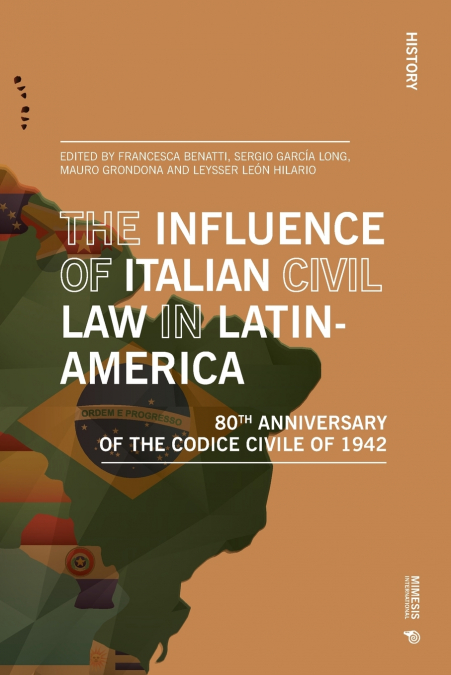
  • The Influence of Italian Civil Law in Latin-America
    There are many ways to mark the anniversary of a civil code: one of them is to analyse the cultural messages it has produced, in order to understand not only by whom such messages have been received but also how, when and to what extent. The current volume is based on a dialogue between European (and, in particular, Italian) legal culture on the one hand, and Latin American leg...
    Disponible

    42,00 €

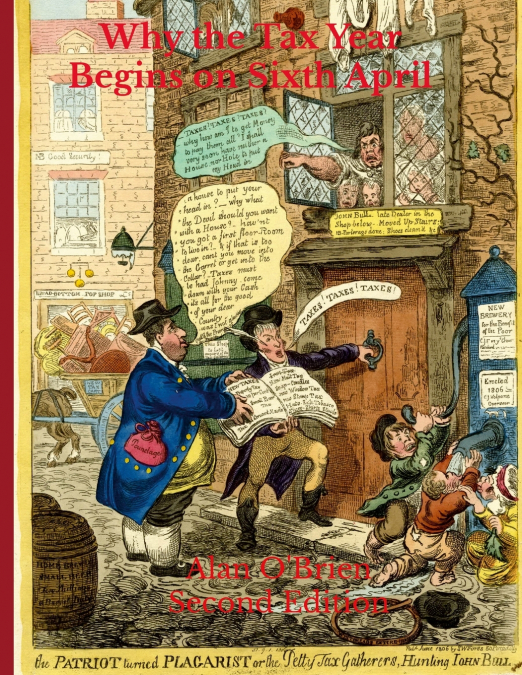
  • Why the Tax Year Begins on Sixth April
    Alan O’Brien
    Second Edition 2024This book explains why the UK tax year begins on 6 April and traces the history of the old tax year which ran from 25 March. It also covers other aspects of calendar history and related issues, including the continuing application of the 1750 British calendar reform statute to the USA and elsewhere.The move from the Julian to the Gregorian calendar in 1752 re...
    Disponible

    70,12 €

Otros libros del autor

  • Liberty, Slavery and the Law in Early Modern Western Europe
    Filip Batselé
    This book investigates the legal evolution of the 'free soil principle' in England, France and the Low Countries during the Early Modern period (ca. 1500-1800), which essentially stated that, as soon as slaves entered a certain country, they would immediately gain their freedom. This book synthesizes the existing literature on the origins and evolution of the principle, adds ne...
    Disponible

    158,75 €