 Librería Samer Atenea
 Kálamo Books
 Librería Elías (Asturias)
 Librería Kolima (Madrid)
 Librería Proteo (Málaga)
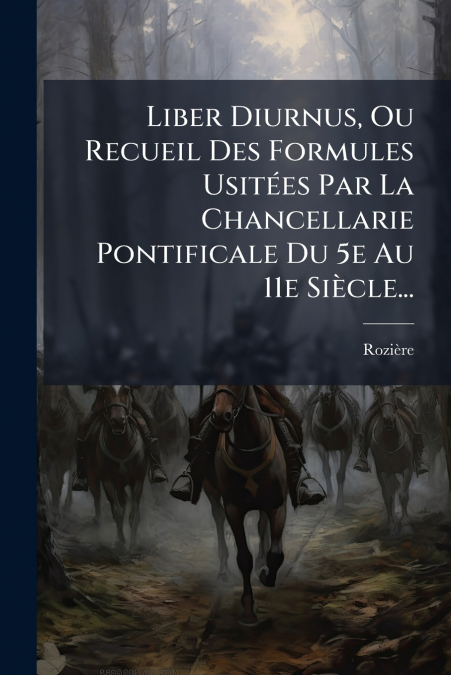
Liber Diurnus, Ou Recueil Des Formules Usitées Par La Chancellarie Pontificale Du 5e Au 11e Siècle... is a valuable historical document offering a glimpse into the operational procedures of the Papal Chancery during the early Middle Ages. Compiled by Rozière, this formulary, written in Latin, presents a collection of official forms, letters, and protocols used by the papacy from the 5th to the 11th centuries. This work serves as a primary source for understanding the administrative, legal, and ecclesiastical practices of the Roman Catholic Church during this period. The 'Liber Diurnus' provides insights into the structure and functions of the papal bureaucracy, revealing the standardized language and procedures employed in papal correspondence and decrees. It is an essential resource for historians, linguists, and scholars of canon law seeking to understand the development of papal authority and the evolution of ecclesiastical administration. Its enduring value lies in its detailed record of the daily workings of one of the most influential institutions in Western history.This work has been selected by scholars as being culturally important, and is part of the knowledge base of civilization as we know it. This work was reproduced from the original artifact, and remains as true to the original work as possible. Therefore, you will see the original copyright references, library stamps (as most of these works have been housed in our most important libraries around the world), and other notations in the work.This work is in the public domain in the United States of America, and possibly other nations. Within the United States, you may freely copy and distribute this work, as no entity (individual or corporate) has a copyright on the body of the work.As a reproduction of a historical artifact, this work may contain missing or blurred pages, poor pictures, errant marks, etc. Scholars believe, and we concur, that this work is important enough to be preserved, reproduced, and made generally available to the public. We appreciate your support of the preservation process, and thank you for being an important part of keeping this knowledge alive and relevant.