 Librería Samer Atenea
 Kálamo Books
 Librería Elías (Asturias)
 Librería Kolima (Madrid)
 Librería Proteo (Málaga)
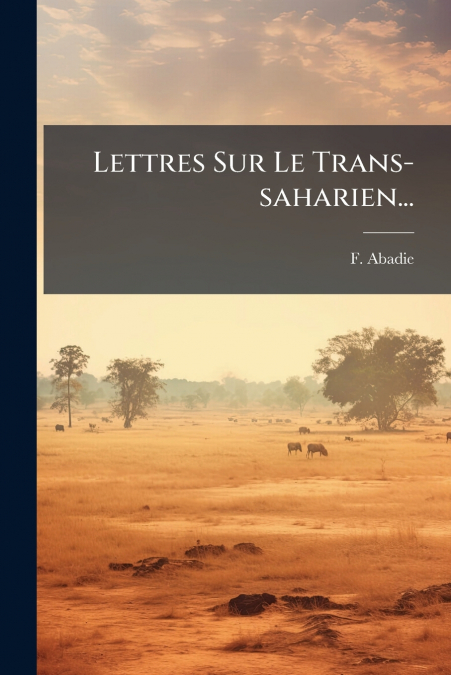
Lettres Sur Le Trans-saharien... explores the ambitious, yet ultimately unrealized, plan to construct a railway across the Sahara Desert. Written by F. Abadie, this collection of letters provides a fascinating glimpse into the logistical, political, and engineering challenges of such a project in the late 19th century. The book details the potential benefits envisioned by French colonial administrators, including increased trade, improved communication, and enhanced military control over vast territories. Abadie’s letters shed light on the complex interactions between the French government, local populations, and various stakeholders involved in the proposed railway. While the Trans-Saharan railway never came to fruition, this historical account offers valuable insights into the ambitions and limitations of European colonialism in Africa and remains relevant to understanding the enduring legacy of these endeavors.This work has been selected by scholars as being culturally important, and is part of the knowledge base of civilization as we know it. This work was reproduced from the original artifact, and remains as true to the original work as possible. Therefore, you will see the original copyright references, library stamps (as most of these works have been housed in our most important libraries around the world), and other notations in the work.This work is in the public domain in the United States of America, and possibly other nations. Within the United States, you may freely copy and distribute this work, as no entity (individual or corporate) has a copyright on the body of the work.As a reproduction of a historical artifact, this work may contain missing or blurred pages, poor pictures, errant marks, etc. Scholars believe, and we concur, that this work is important enough to be preserved, reproduced, and made generally available to the public. We appreciate your support of the preservation process, and thank you for being an important part of keeping this knowledge alive and relevant.