 Librería Samer Atenea
 Kálamo Books
 Librería Elías (Asturias)
 Librería Kolima (Madrid)
 Librería Proteo (Málaga)
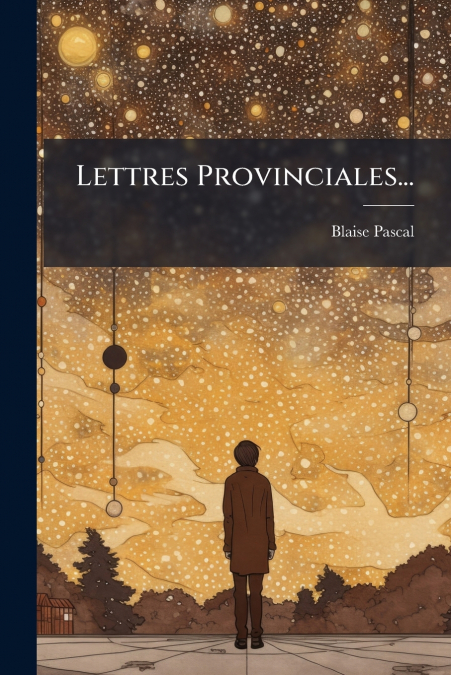
Lettres Provinciales, written by Blaise Pascal in 1656-57, is a seminal work of French literature and a landmark in the history of religious polemic. Composed as a series of eighteen letters, the work critiques the moral theology of the Jesuits and defends the Jansenist theological position, particularly concerning the doctrine of grace. Written under the pseudonym Louis de Montalte, Pascal employs wit, irony, and rigorous argumentation to expose what he perceived as the lax moral reasoning of the Jesuit order. The letters are not only a theological treatise but also a masterclass in persuasive writing, showcasing Pascal’s elegant prose and sharp intellect. Addressed to a fictional friend in the provinces, the letters discuss complex theological issues in an accessible and engaging manner, making them widely read and influential during Pascal’s time and continuing to resonate with readers today. Lettres Provinciales remains a significant work for those interested in French literature, religious history, and the art of argumentation.This work has been selected by scholars as being culturally important, and is part of the knowledge base of civilization as we know it. This work was reproduced from the original artifact, and remains as true to the original work as possible. Therefore, you will see the original copyright references, library stamps (as most of these works have been housed in our most important libraries around the world), and other notations in the work.This work is in the public domain in the United States of America, and possibly other nations. Within the United States, you may freely copy and distribute this work, as no entity (individual or corporate) has a copyright on the body of the work.As a reproduction of a historical artifact, this work may contain missing or blurred pages, poor pictures, errant marks, etc. Scholars believe, and we concur, that this work is important enough to be preserved, reproduced, and made generally available to the public. We appreciate your support of the preservation process, and thank you for being an important part of keeping this knowledge alive and relevant.