 Librería Samer Atenea
 Kálamo Books
 Librería Elías (Asturias)
 Librería Kolima (Madrid)
 Librería Proteo (Málaga)
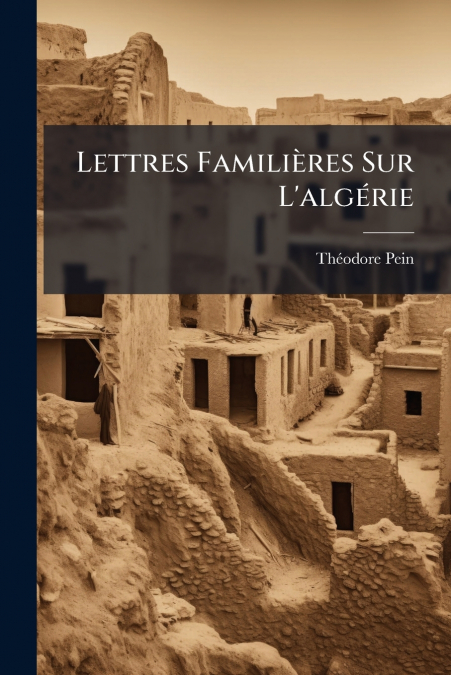
Lettres Familières Sur L’Algérie by Théodore Pein offers a captivating glimpse into 19th-century Algeria through the eyes of a European observer. This collection of letters, subtitled ’Un Petit Royaume Arabe...’, provides insightful cultural observations and personal anecdotes, painting a vivid picture of Algerian society during a period of significant change. Pein’s writings shed light on the interactions between French colonial influence and the rich traditions of the local Arab population. These letters serve as a valuable historical document, offering a unique perspective on the daily life, customs, and challenges faced by the Algerian people. Readers interested in the history of French colonialism, North African culture, and the art of travel writing will find this collection both informative and engaging. Discover the nuances of a fascinating era through Pein’s engaging prose and firsthand accounts.This work has been selected by scholars as being culturally important, and is part of the knowledge base of civilization as we know it. This work was reproduced from the original artifact, and remains as true to the original work as possible. Therefore, you will see the original copyright references, library stamps (as most of these works have been housed in our most important libraries around the world), and other notations in the work.This work is in the public domain in the United States of America, and possibly other nations. Within the United States, you may freely copy and distribute this work, as no entity (individual or corporate) has a copyright on the body of the work.As a reproduction of a historical artifact, this work may contain missing or blurred pages, poor pictures, errant marks, etc. Scholars believe, and we concur, that this work is important enough to be preserved, reproduced, and made generally available to the public. We appreciate your support of the preservation process, and thank you for being an important part of keeping this knowledge alive and relevant.